Shun and God
The Reason I JumpShun and God are joined by a conversation that begins after Shun’s death and culminates in a sacrifice: Shun chooses to return to his family as their child, knowing that rebirth will erase his memories of being himself. God first names the truth Shun cannot yet grasp, then becomes the listener to his grief and the guide to a choice between preserving his identity in Heaven and giving it up for his parents’ sake. Their relationship gives the afterlife narrative its moral hinge: love continues, but not as an uncomplicated escape from loss.
The First Encounter
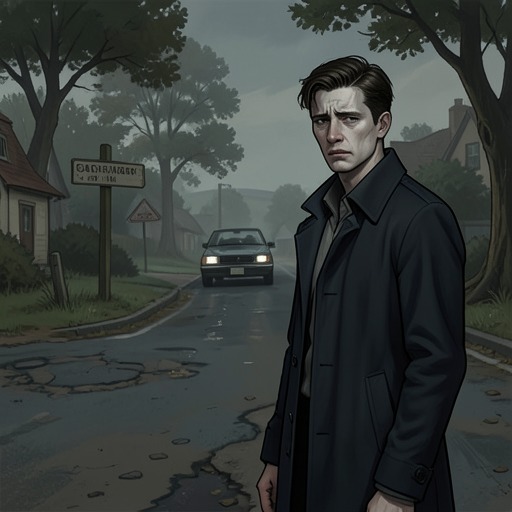
After Shun dies on his way to the supermarket, struck by a car that ran a red light, his memory of the accident slowly returns. He recalls trying to dodge the car, freezing, and then coming round outside the supermarket. When the old man tells him that he died, Shun breaks into tears and struggles to comprehend the news. This account establishes the circumstances in which the relationship with God begins: Shun has to be told what has happened to him before he can make sense of his new existence.
After Shun collapses and wakes from a deep, dreamless sleep, he sees an ancient man in white robes and recognizes him as God, whose appearance recalls a figure Shun once saw at an art museum. Shun tries to rise respectfully, only to discover that he has no feet and, more startlingly, no body at all. His alarm gives the meeting a distinctly practical immediacy: before asking about Heaven or what comes next, he has to confront the bodily absence of death.
God answers that Shun no longer needs the body that had tied him down and held him back. He tells Shun that he has gone to Heaven, where the dark is scattered with pulsing stars. The scene moves from Shun’s panic at bodily disappearance to wonder at the star-filled surroundings. God does not offer a detailed explanation of the afterlife; instead, he gives Shun room to look, feel, and gradually understand what has happened.
Permission and Distance
God tells Shun that he may do whatever he wishes for the time being. He recognizes that Shun remains attached to his last life and has unfinished business, but says that Shun will come to understand his new circumstances in time. That permission leaves the direction of the next stage to Shun: Heaven offers possibilities, but it does not instantly loosen his bond with the family he has left behind.
God then vanishes, his outline wavering like mist dissolving into mist. The disappearance makes the relationship intermittent rather than continuously guiding. Shun must spend time in Heaven and return to the questions of his former life before he calls on God again; the help he receives later comes in response to a need he has learned through experience.
Grief and the Request for Help
Shun’s continuing attachment becomes painful as he visits his parents’ home. He can see them, hear them speak about him, and take comfort in their faces, but he cannot speak to them directly. During one visit, he finds his mother staring at his photograph, miserable and apparently not eating. She says that she cannot go on living without him and wants to be where he is, then collapses over the table in tears. Shun cries too and gently hugs her shoulders, though he knows he is invisible to her. He stays beside her until dark.
Back in Heaven, the visit changes Shun’s understanding of his parents’ mourning. He had believed that they would eventually return to normal, but now fears that their grief will last for the rest of their lives. His ability to be near them offers no way to relieve their pain, and the helplessness becomes unbearable. He calls loudly for God and asks for a favour, turning their earlier exchange from an introduction into an appeal for intervention.
God appears from the mist and listens as Shun explains that his parents are still mourning and that he cannot bear being unable to help them. God acknowledges Shun’s feelings, while pointing out that his parents will be able to see him again in Heaven when their own lives end. That future reunion does not comfort Shun: he insists that he cannot live happily in Heaven while his parents suffer. The exchange makes the difference between their positions clear. God offers the consolation of an eventual meeting; Shun is concerned with their suffering now.
Rebirth and Its Cost
God considers the problem and proposes that Shun could help his parents by being born to them again as their child. Shun’s heart leaps at the prospect of returning to them, and he immediately wants to go back. The proposal makes a renewed family bond possible, but God does not present it as a simple restoration of the life Shun lost.
There is a decisive condition: once born again, Shun will no longer be Shun, because all his memories of having been Shun will cease to exist. The offer therefore places two forms of continuity in conflict. Shun could remain himself in Heaven, retaining the identity that makes him remember and love his parents, or return to them as their child without carrying those memories into his new life. The thought that his existence will be wiped out causes his hopes to wither. He also understands why Kazuo and his other friends remain in Heaven for so long: giving up the self they remember is not an easy price to accept.
Shun wavers over whether rebirth can be worthwhile if the person returning will no longer remember being him. Yet his parents’ grief ultimately determines his answer. He summons all his courage and calmly asks God to return him to his mother. The decision answers the question at the centre of their relationship: God makes the cost and possibility plain, but Shun chooses what to do with them. His request is not to preserve his own conscious identity; it is to make renewed life with his family possible.
Snow, Memory, and Renewal
The story closes on Shun’s parents after his choice. His father says that Shun is always watching over them and suggests that they somehow begin again. At the window, the first snow of the year falls lightly. Its crystals are formed from Shun’s tears and serve as God’s proof that a boy called Shun once lived in the world. Shun’s parents recognize the snowfall and remember that he loved it.
The ending holds presence and absence together rather than making grief disappear. Shun has asked to return as his mother’s child, but the story’s final image does not claim that his parents can recover the same son or that mourning is simply over. Instead, snow carries a trace of the lost boy into the parents’ tentative fresh start. God’s role is to disclose the possibility and its limit; Shun’s choice turns the promise of another life toward his parents, while the final sign allows remembrance to persist even as their family faces a changed future.