Shun's afterlife
The Reason I JumpShun’s afterlife is the story’s imaginative passage from sudden death to a changed family life: although he reaches a realm of freedom and wonder, his bond with his parents draws him back toward them, at the cost of losing every memory of himself as Shun. Heaven does not simply erase grief. It gives him a way to remain connected, while making clear that return will transform rather than restore the family.
Death and the Arrival in Heaven
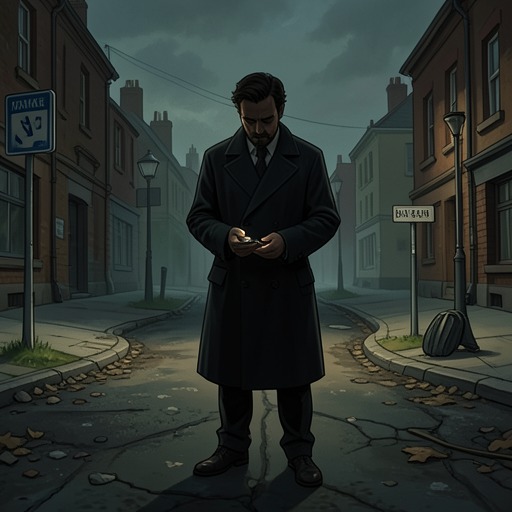
The afterlife begins with an explanation Shun cannot initially understand. The old man he had met outside the supermarket finds him and says that Shun no longer belongs to the world of the living. He tells Shun that he died without noticing the moment: on his way to the supermarket, a car had run a red light and hit him. Shun’s memory returns in fragments. He recalls meaning to dodge, freezing instead, and then being struck. The shock of recognition gives way to the blunt fact of his death, and he cries because he does not want to be dead.
After the old man’s words, the scene grows hazy and Shun collapses. In a deep, dreamless sleep, he wonders why people have to die when he still has so much he wants to do. On opening his eyes, he sees an ancient man in white robes and realizes that this must be God, whose face resembles the figure he saw at the art museum. Shun tries to rise respectfully, then discovers that his feet and body are gone. God tells him that his body is no longer needed and that the things which tied him down in life have disappeared. When Shun asks what will happen to him, God says that he has gone to Heaven.
Heaven is first presented not as a familiar paradise but as a dark expanse scattered with pulsing stars. Their number and beauty hold Shun’s attention long enough for thoughts of death to recede. God lets him do as he wishes for the time being, recognizing that he remains attached to his former life and has unfinished business to think over. This open-ended welcome establishes Heaven as a place where Shun can explore, but not as an answer that immediately settles his loss.
A Community Beyond Time and Space
Shun initially cannot tell what to do with a place that offers perfect freedom but seems to contain nothing. He meets Kazuo, who explains that Heaven is full of people, as numerous as the stars, though Shun cannot yet make them out. If he wishes, he will be able to speak with anyone there. Kazuo describes this world as beyond time and outside space, and says that he has lived in Heaven for eighty years. His practical suggestion is that Shun try the things he could not do while alive.
As Shun grows accustomed to the afterlife, that advice becomes experience. He makes many friends, and Heaven’s inhabitants live without barriers of language, ethnicity, or era. People who fought and quarrelled in life coexist peacefully there. Shun discovers that possessing nothing can itself be blissful. He visits every corner of Earth, speaks with people in Heaven, and finds the world continually fresh and exciting. The scale of his freedom is expansive, but the scenes that matter most to him are not distant journeys: they are visits to his parents’ home.
He cannot speak directly with his parents, yet seeing their faces and hearing them talk about him is enough to help him stay brave and continue. His afterlife therefore holds two conditions at once. He is free to travel and form relationships in a realm that exceeds earthly divisions, but he remains unable to make himself known to the people whose presence matters most to him. The separation is not ended by Heaven; it is made bearable, until his mother’s grief shows how much remains unresolved.
Presence and Bereavement
During one visit home, Shun sees his mother staring at his photograph, miserable and apparently unable to eat. She says that she does not think she can go on living without him and wants to be where he is, then collapses on the table and weeps. Shun is shaken and begins crying too. He had believed that she was recovering and that things would be all right; now he understands that her mourning has not passed.
Shun tries to comfort her by hugging her shoulders, though she cannot see him and does not know he is there. He stays beside her until dark as she continues to cry. This is the afterlife’s most painful contradiction: Shun can be physically present enough to embrace his mother, but his presence cannot become knowledge or conversation for her. An earlier visit had already given their separation a gentler, wordless form. A subtle breeze passed between them as her hand touched the body she could not see, and Shun felt the warmth he remembered from being small and receiving her cuddles. The contact preserves intimacy without undoing absence.
Shun turns to God because his parents’ suffering has made it impossible for him to be happy in Heaven. God acknowledges the difficulty and first points out that his parents will be able to see him again when their own lives end. That promise does not ease Shun’s distress: he cannot accept waiting while they bear the pain now. God then offers an unexpected possibility—Shun could be born to his parents again. The proposal gives him hope, but it is not a simple return to the life he lost.
Choosing Return and Its Cost
God explains the condition attached to rebirth: once born, Shun will no longer be Shun, because all memories of being Shun will cease to exist. The prospect of helping his parents comes bound to the loss of his own remembered identity. Shun nevertheless makes up his mind. He gathers his courage and calmly asks God to return him to his mother. The request turns the story away from Heaven’s freedom and toward a new life whose connection to Shun will be real but not consciously remembered by the child who receives it.
After the decision, many-coloured orbs appear in the air, each containing a tiny gold sphere. One by one, the orbs pop. The image gives the passage from choice to consequence a visible, delicate form: Shun’s return is not a reversal that restores the boy his parents lost, but a passage into another beginning. The promise that he will forget means that the bond must continue through his family’s experience and remembrance, rather than through the new child’s conscious recollection of Heaven.
Snow, Remembrance, and Nozomi
After Shun’s death, the first snow of the year falls lightly outside his family’s window. The story says that the snow crystals formed from Shun’s tears and were God’s proof that a boy called Shun had once lived in the world. His parents look at the snow together: his mother calls it beautiful, and his father recalls that Shun loved it. The scene lets grief and remembrance occupy the same moment. The snow does not return their son, but it gives their shared memory a presence in the world and lets them speak about him together.
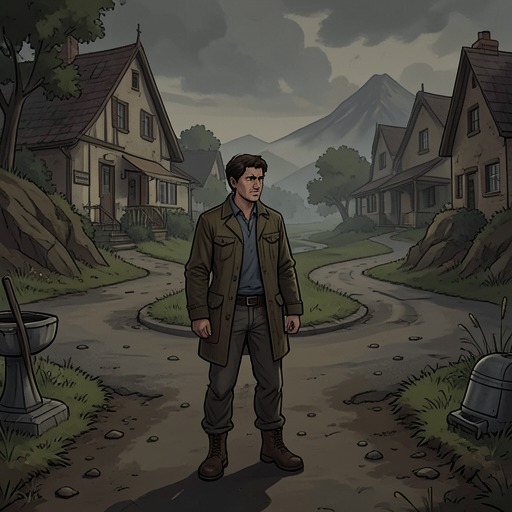
Five years pass. As promised, a new baby arrives in the year after Shun’s decision: a girl named Nozomi, a name signifying hope, who is due to start kindergarten in the spring. Her arrival establishes the outcome of Shun’s choice without suggesting that the family has simply recovered its former life. The years, the name, and the child’s distinct future all matter: the parents have a new daughter, not the remembered boy restored to them.
The afterlife narrative thus makes continuing attachment neither a cure for bereavement nor a denial of death. Shun’s visits offer him a way to witness his parents and a brief, invisible closeness, while also exposing the limits of what he can do for them from Heaven. His decision responds to their grief by accepting the erasure of his own memories, and the first snow and Nozomi’s birth carry the story into a future shaped by both loss and hope.