Shun’s fatal car accident
The Reason I JumpShun’s fatal car accident is the decisive rupture that ends his earthly life and begins his journey in the afterlife. The collision occurs on the way to a supermarket, when a car runs a red light; Shun’s delayed recognition of what happened makes the scene a passage from bewilderment to the knowledge that he is dead.
The Collision and Its Cause
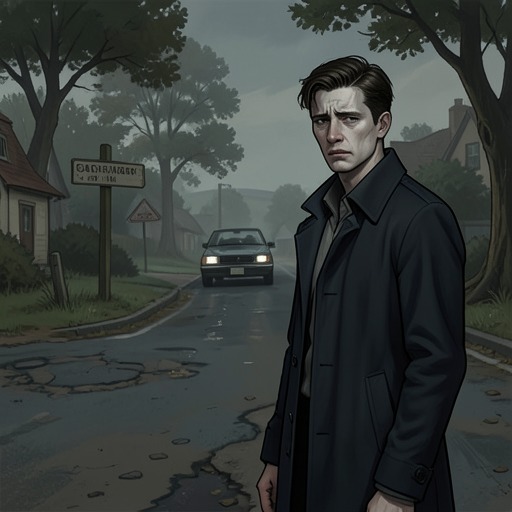
The old man tells Shun that he was hit by a car that jumped the red light while he was on his way to the supermarket. The account establishes the accident as sudden and externally caused. Shun had not understood that the collision was fatal, and at first the news that he no longer belonged to the world makes little sense to him.
Memory and Recognition
The old man’s explanation prompts the scene to return gradually to Shun. He remembers intending to dodge the car, then freezing and being unable to move before he was hit. In that memory, his attention turns to the practical aftermath he imagines the crash will create, rather than to the possibility that he himself has died. The thought that he has come round outside the supermarket seems to confirm that he survived, but the old man’s account forces that apparent continuity to break.
Shun’s understanding arrives as a question he can scarcely accept: he is dead. His eyes fill with tears, and he cries repeatedly, resisting the news with a series of increasingly emphatic refusals. The sequence makes the accident’s consequence more than a fact imparted by another character: it is a change in Shun’s own understanding of his existence, from believing himself alive to confronting his death.
Aftermath and Narrative Significance
Shun continues crying until his tears dry, but the end of the crying does not mean that he has absorbed what happened. His mind remains blank as the old man speaks again. The scene thus leaves recognition incomplete: the cause and finality of the accident have been disclosed, while Shun’s response is still unfolding.
The accident also gives the story’s afterlife narrative its starting point. Its presentation depends on delayed recall: the reader first encounters Shun’s confusion, then receives the explanation and partial memory that clarify it. That gap between the event and Shun’s knowledge carries the emotional force of the revelation, while his remembered attempt to evade the car underscores how abruptly the possibility of action ended.