The old man (angel)
The Reason I JumpThe old man (angel) is a calm guide between the living world and the afterlife. He meets Shun in the immediate aftermath of death, names the change Shun cannot understand, and leads him toward Heaven; later, he appears to Nozomi near the supermarket, where his identity is disclosed again. Across these encounters, he brings extraordinary news in an unhurried, reassuring manner, linking a dead child’s fearful passage with the ordinary forward motion of his family’s life.
Identity and Introduction
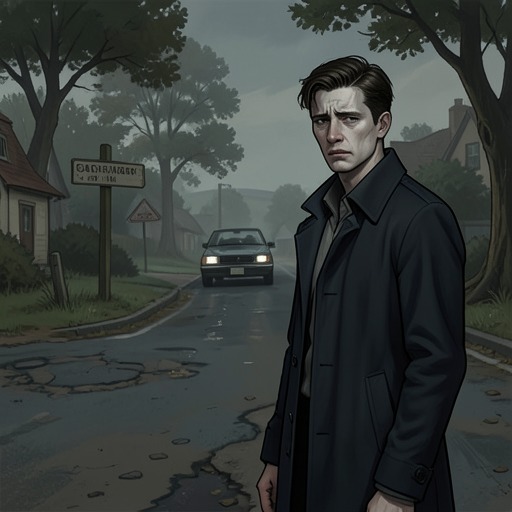
The old man first appears to Shun as someone already familiar: Shun recognizes him as the man he had met outside the supermarket. When Shun is crouched on the ground, hugging his knees and unable to make sense of what is happening, the old man looks down at him with a kind face. He reassures Shun that he is all right and proposes that they go back together, then takes hold of his hand. The touch and the familiar face offer immediate companionship, although Shun does not yet understand the change that has made their meeting necessary.
The old man’s identity is initially conveyed through this practical, gentle approach rather than through spectacle. He does not arrive with visible signs of supernatural power; he stands beside a frightened child, speaks softly, and takes his hand. This ordinary manner gives the scene its contrast: the event is as absolute as death, but the guide’s response is intimate and matter-of-fact.
Guiding Shun After Death
The old man tells Shun that he no longer belongs to this world. Shun has no idea what he means, and his confusion persists even as the old man explains that Shun did not notice the moment he died. The revelation does not immediately bring comprehension or calm. Shun’s eyes fill with tears, and the question of what he is supposed to do now gives voice to the helplessness of a child who has discovered that his familiar world has ended without recognizing the instant it happened.
The old man answers this disorientation by setting their journey in motion. He motions for Shun to follow and begins walking west; Shun follows as if drawn after him by an invisible cord. The image makes the guidance feel both chosen and involuntary: the old man leads, while Shun, with no clearer plan of his own, is carried forward by the connection between them. Even though he is already dead, Shun remains afraid of death and asks, in a quaking voice, where they are going.
The answer is Heaven. The old man puts an arm around Shun’s shoulder and tells him they are going there as a matter of course. Shun can only reply that he has never been there before. His response holds on to the plain, childlike terms of the moment: the destination is new and unknown, even after the old man has explained that Shun is dead. Rather than requiring Shun to overcome his fear before proceeding, the old man accompanies him through it, hand in hand and then with an arm around his shoulder.
Encounter with Nozomi
The later meeting near the supermarket brings the old man into the orbit of Shun’s family from Nozomi’s point of view. Nozomi is running ahead of her mother, eager to reach the supermarket and buy chocolate, when she fails to watch where she is going and bumps into someone. The man in a red hat asks whether she is all right and begins to recognize her; Nozomi, curious, asks whether he knows her and who he is. The encounter grows out of an ordinary errand, not a deliberate search for the supernatural.
The man crouches on his heels and tells Nozomi that she is back already, then identifies the old man as an angel, adding that she may or may not believe it. Nozomi finds the claim suspect: angels are supposed to have wings and live in Heaven, and the old man does not fit that expectation. She stares at him and rejects the identification. The scene gives the revelation a different texture from Shun’s encounter. Shun is too shaken to understand what the old man says about death; Nozomi can openly doubt what she is told, testing the claim against her own picture of what an angel should look like.
The old man responds to her disbelief with a cheerful laugh rather than an argument. He then asks whether she is having a content enough life. The question shifts attention from proving his identity to the quality of Nozomi’s life on Earth. It also places the supernatural encounter beside the ordinary details of her day: her mother walking slowly, her wish to get chocolate, and her impatient run toward the supermarket.
Narrative Role and Significance
The old man’s two encounters make him a guide whose manner remains gentle across sharply different circumstances. With Shun, he supplies the essential truth that Shun has died and the practical next step of walking toward Heaven. With Nozomi, he appears in a public, everyday setting, is named as an angel, and turns the conversation toward whether her life feels content. In both cases, he meets a child where that child is: beside a frightened, grieving aftermath in one scene, amid curiosity and skepticism in the other.
The supermarket links the encounters without making them identical. Shun remembers meeting the old man outside it while he is being led away from the world of the living; Nozomi meets him near it while running ahead on an errand with her mother. The same everyday landmark thus sits at the edge of two different passages, one away from earthly life and one continuing within it. The old man’s calm, unshowy presence holds those passages together, offering reassurance to Shun and, to Nozomi, a question about the life she is still living.