
The Burden of the Dead Crew’s Gaze
The Rime of the Ancient MarinerThis flow follows the dead sailors’ accusing presence as it turns the Ancient Mariner’s survival into an ordeal of memory and witnessing.
increasing Bearing strength in each event
 decreasing
Bearing strength in each eventdecreasingFaces Turn Toward Him
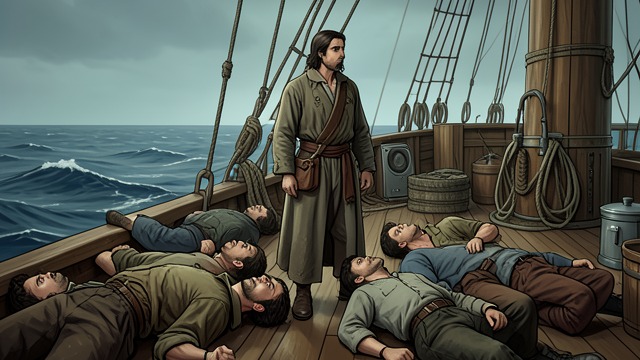
Faces Turn Toward Him
Silent Accusation
The sailors turn their faces toward the Ancient Mariner before they fall. Their looks take the place of spoken judgment.
Witness Becomes Personal
The Mariner does not merely observe a general disaster. He is made its focus, linking his continued life to the crew’s dying gaze.
The Bodies Remain
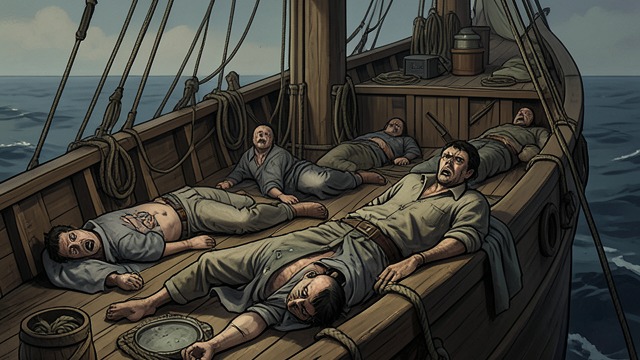
The Bodies Remain
Death Without Decay
The sailors’ bodies lie on deck, yet they do not rot or lose the expressions with which they looked at the Mariner.
A Frozen Judgment
Their preserved appearance prevents time from softening the scene. The dead remain present as a continuing moral pressure on the lone survivor.
The Mariner Cannot Look Away
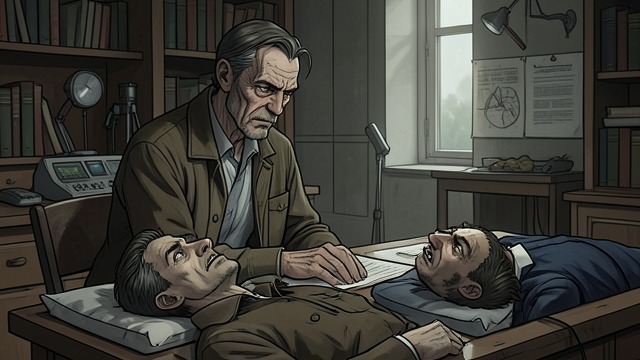
The Mariner Cannot Look Away
Gaze as Captivity
The Ancient Mariner’s eyes are drawn toward the dead sailors, and he cannot turn them upward to pray. Their look becomes a trap.
Conscience Embodied
The poem gives guilt a visible and relational form. The dead men’s expressions make the Mariner’s past action impossible to keep at a distance.
Seven Nights of Torment
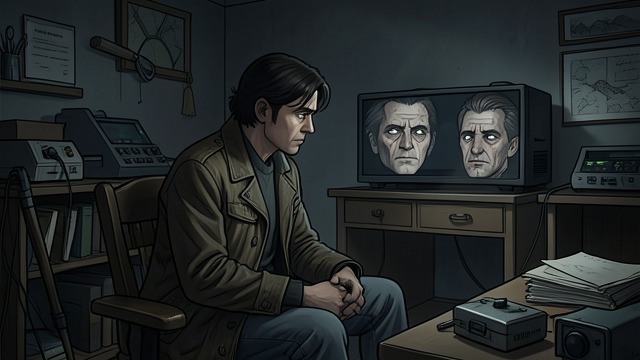
Seven Nights of Torment
Duration Without Release
The Ancient Mariner sees the curse in the dead men’s eyes for seven days and seven nights. He cannot die and cannot escape the sight.
Survival as Judgment
The period turns a moment of killing into prolonged emotional consequence. Time itself extends the Mariner’s responsibility rather than diminishing it.
Memory Carried Into Testimony
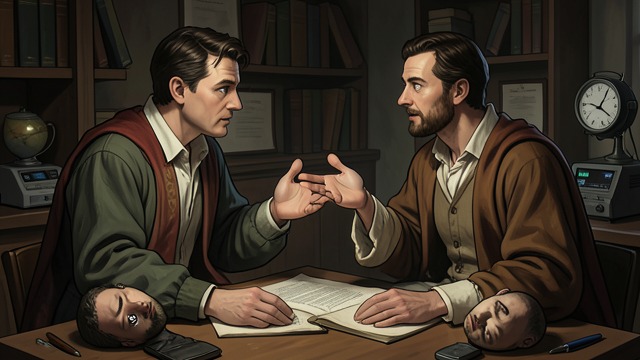
Memory Carried Into Testimony
The Past Is Recounted
The Ancient Mariner tells a listener about the crew’s deaths and their accusing looks. The memory remains active enough to require telling.
Warning Across Generations
The Wedding-Guest receives the story and leaves changed. The dead men’s gaze is converted into a lesson that can reach someone who never saw the ship.
As each sailor dies
Immediately after the deaths
During the days after the deaths
During the seven days and seven nights of the curse
When the Mariner tells the Wedding-Guest his tale
