
The Structure of Moral Consequence
The Rime of the Ancient MarinerThis flow traces how an impulsive act generates consequences that are social, physical, spiritual, and finally instructive.
increasing Bearing strength in each event
 decreasing
Bearing strength in each eventdecreasingThe Unexplained Choice
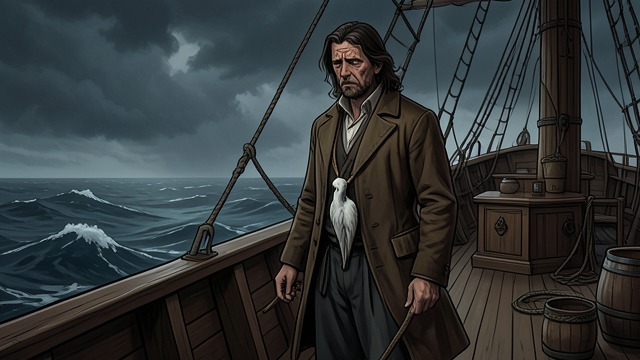
The Unexplained Choice
Violence Without Necessity
The Ancient Mariner kills the Albatross even though the bird has accompanied and comforted the crew. The poem gives no practical reason for the shooting.
Consequence Begins
The absence of an explanation leaves the act morally exposed. The story’s conflicts unfold from a choice that cannot be justified by survival.
The Crew’s Accusation
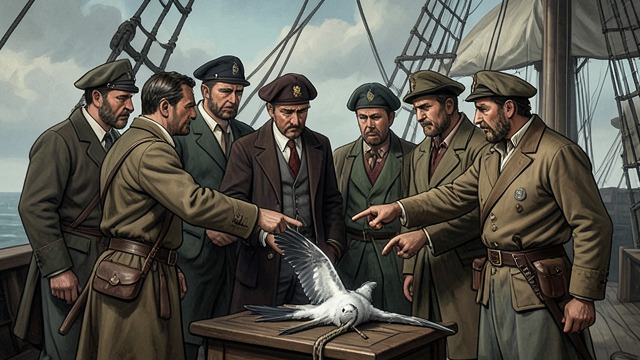
The Crew’s Accusation
Immediate Blame
The sailors say the Ancient Mariner has killed the bird that made the breeze blow. The consequences first appear as a dispute within the crew.
Judgment Shifts
When fog returns, the crew approves the killing. Their changing opinion complicates the conflict but does not remove the Mariner’s responsibility.
Physical Deprivation
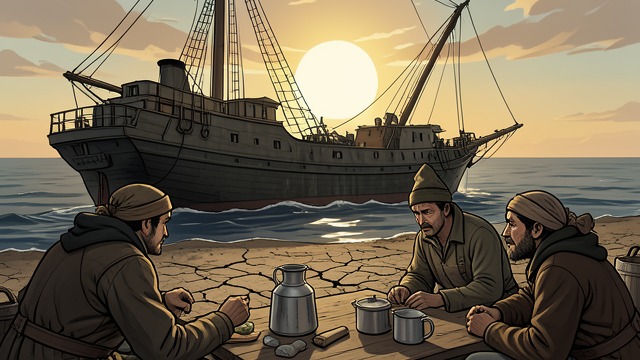
Physical Deprivation
The Ship Stops
The ship lies motionless beneath a burning sun. The crew faces thirst, shrinking supplies, and water that cannot be drunk.
Consequence Becomes Bodily
The moral disturbance is accompanied by physical suffering. The stalled vessel makes the result of the earlier rupture inescapable to everyone aboard.
Unequal Punishment
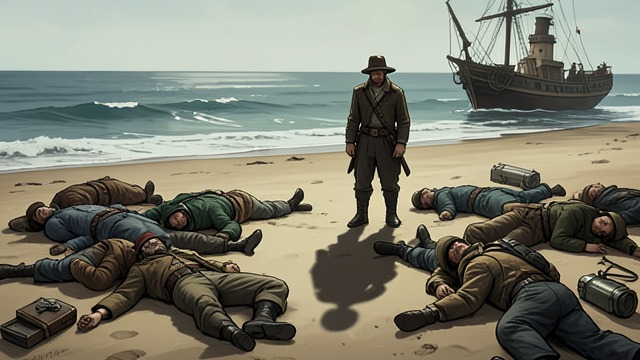
Unequal Punishment
Death for the Crew
The crew dies after Death wins the sailors, while Life-in-Death claims the Ancient Mariner. The outcomes divide communal catastrophe from individual endurance.
Punishment Continues
The Mariner must live among the consequences rather than die with his companions. The story makes survival the condition of an extended reckoning.
A Moral Change and Ongoing Penance
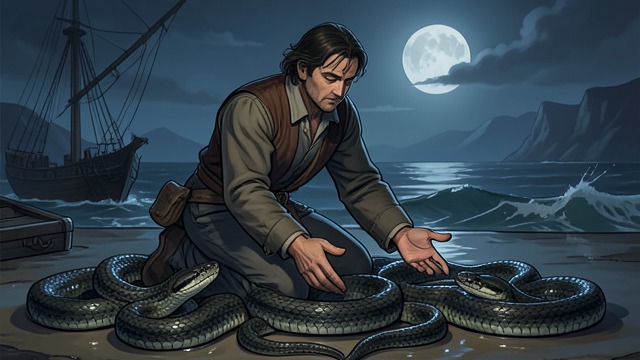
A Moral Change and Ongoing Penance
Compassion Opens a Way
The Ancient Mariner blesses the water-snakes and regains the ability to pray. His relation to living creatures changes through attention and affection.
Consequences Outlast the Turning Point
He still has to tell his tale when agony returns. Moral change permits renewal, but it does not erase the history that made the lesson necessary.
After the Albatross has followed the ship
When the favorable wind ceases
During the windless days
After the dice game
From the water-snakes blessing to the final lesson
