Crossbow
The Rime of the Ancient MarinerThe Crossbow is the weapon the Ancient Mariner uses to shoot the Albatross, making it the poem’s decisive instrument of violence and the sound by which he later recalls the dead. Its significance reaches beyond the moment of firing: the weapon’s report is echoed when the souls leave the crew, while the Mariner’s later recovery of prayer and his closing lesson about love stand in sharp contrast to the shot that began his ordeal.
Appearance and use
The Crossbow appears as the Mariner speaks to the Wedding-Guest. The Wedding-Guest responds to the Mariner’s strange appearance with a question about why he looks as he does; the Mariner then recounts the act that answers it, saying that he shot the Albatross with the Crossbow. In the narrative, the weapon is not introduced as a general feature of the voyage: it is named at the instant the bird is killed, binding a tangible instrument to the story’s central act of harm.
The moment gains force from its directness. After the warning about fiends that plague the Mariner, the question turns immediately to the Crossbow and the shooting. The weapon supplies the means of the act, but the poem does not give it a further mechanical description or explain how it was acquired. Its importance comes instead from what the Mariner chose to do with it and from the consequences that gather around that choice.
From the shot to the crew’s deaths
The Crossbow’s role does not end with the killing of the Albatross. Later, after the dead crew have fallen, the Mariner describes their souls flying from their bodies and passing him “Like the whizz of my CROSS-BOW!” The comparison makes the weapon’s sound a measure of death: the departing souls recall the speed and force associated with the shot, so that the earlier violence seems to return in the scene of collective loss.
The echo is especially stark because the two moments differ in scale. The Mariner’s shot is a single act directed at the Albatross; the later image gathers the souls of the dead crew as they pass him, each bound for bliss or woe. The poem does not say that the Crossbow directly causes each death. Rather, its remembered whizz connects the Mariner’s act to the deaths in his consciousness, making the weapon a recurring emblem of violence and its burden.
Set against prayer and love
The Crossbow’s violent association is set against later scenes in which prayer becomes possible again. Looking at the rotting deck and the dead men, the Mariner tries to pray, but cannot complete a prayer. After he sees the water-snakes and recognizes their beauty, love rises in his heart; he blesses them without intending to, and in that same moment he can pray. The Albatross then falls from his neck and sinks into the sea. Against this sequence, the Crossbow marks the earlier act that stands at the opposite pole from blessing: it was used to kill, while the Mariner’s recovery begins when he responds to living creatures with love.
The poem also places the weapon within an explicitly religious frame. A voice asks whether this is the man who, with his “cruel bow,” laid the bird low. The phrase turns the Crossbow from a practical object into an accusation, locating cruelty in the Mariner’s action rather than in the weapon alone. Later, the Mariner’s closing maxim links prayer with loving both people and animals. The Crossbow remains the material trace of the failure that this ethic answers.
Narrative significance
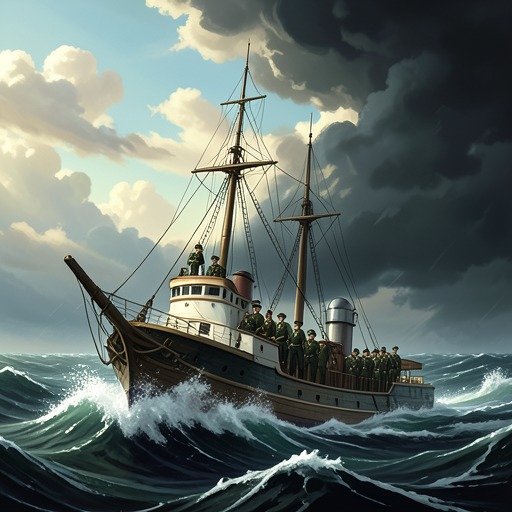
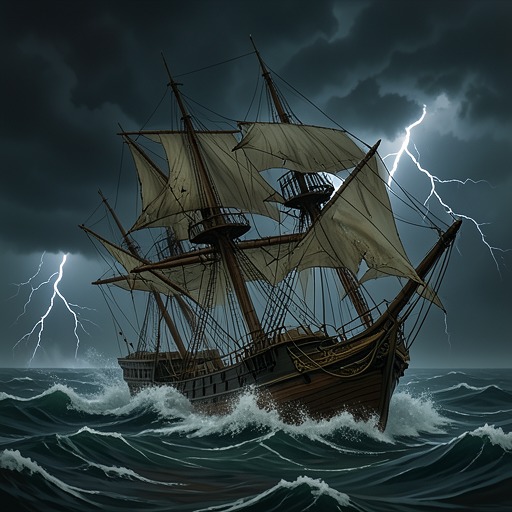
The poem’s surrounding episodes sharpen the contrast between human violence and the forces that govern the voyage. The ship first clears the harbour, then is driven by the tyrannous Storm-Blast; after the ice splits, a good south wind rises and the Albatross follows the ship. Later, even without a breeze, the helmsman steers and the ship moves on. These details place the Crossbow’s deliberate use within a world where weather, navigation, and supernatural events also shape the crew’s fate. The weapon’s central meaning is therefore not that it explains every danger, but that it makes the Mariner’s own act unmistakable amid those larger forces.
As a remembered object, the Crossbow binds the tale’s beginning of guilt to its later images of death and penance. Its shot has an audible afterlife in the souls’ flight, while the story’s final teaching turns away from violence toward love for living creatures. The weapon is thus both a concrete instrument in the narrated event and a compact symbol of the act the Mariner must continue to remember and explain.