Death and Life-in-Death Cast Dice for the Crew
The Rime of the Ancient MarinerDeath and Life-in-Death Cast Dice for the Crew is the turning point at which the Ancient Mariner’s voyage becomes a sentence of unequal survival. A strange vessel passes between the setting Sun and the ship; Death and Life-in-Death cast dice, and Life-in-Death wins the Ancient Mariner while the crew dies. The scene converts an uncanny encounter into a consequence that will govern the rest of the voyage: he must live among the dead, bearing the knowledge of their deaths and the crew’s blame.
The Strange Vessel and Its Arrival
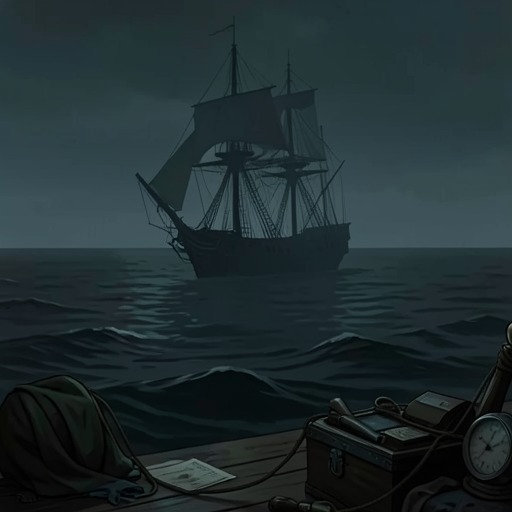
The game begins as the Sun rests near the western wave and a strange shape suddenly drives between it and the ship. Its position against the light makes the sighting a clear interruption of the voyage’s ordinary horizon. The poem’s questions about the apparition give way to the identification of the figures aboard it: the woman is Life-in-Death, and Death is her companion. The approaching shape is described as a naked hulk, placing the supernatural players aboard a vessel rather than presenting them as abstractions detached from the sea.
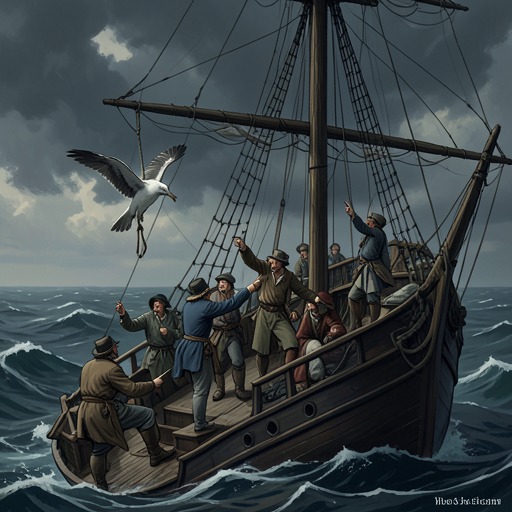
The encounter follows a sequence of mounting reversals. Earlier, the ship had left harbour with its crew aboard; the Storm-Blast then drove it into danger, and a south wind later arose as the Albatross followed. Against that history of changing conditions, the sudden vessel introduces a new kind of power. Wind and seamanship have shaped the ship’s movement, but the dice game makes the crew’s fate depend on a contest between supernatural figures.
The Cast and the Wager
Death and Life-in-Death cast dice alongside the ship. The poem does not explain a rule, stake, or strategy for the game beyond its decisive result. Life-in-Death announces that she has won, and her exultant declaration is followed by three whistles. The spare sequence—arrival, casting, victory—makes the result feel less like a negotiation than a verdict delivered through play.
The outcome distinguishes the Ancient Mariner from his companions. Life-in-Death wins him, while the crew’s fate is shown in the deaths that follow. The encounter therefore assigns two different conditions rather than simply bringing death to everyone aboard: the crew will die, but the Ancient Mariner will remain to witness what happens and carry the consequences. The poem frames this division as the result of the game, without supplying a further explanation for why he is the one left alive.
The Crew’s Death and the Mariner’s Survival
After the game, the crew die one by one. Four times fifty men fall, and the narration emphasizes that the Ancient Mariner hears neither sigh nor groan. Each man turns his face toward him, and the look carries a curse; their souls then leave their bodies and pass him on their way to bliss or woe. The crew’s deaths are thus presented both as a repeated physical event and as a moral encounter between the dead men and the survivor.
Their silent deaths sharpen the Mariner’s isolation. He is not merely separated from the crew by circumstance: their final looks make him the focus of their reproach, and he remains to endure the voyage after their souls have departed. The poem does not show the game’s result as an immediate release from danger. Instead, it leaves the Ancient Mariner alive in the company of the dead, with the crew’s gaze and the unexplained division of fates defining his position.
Consequences and Narrative Significance
The dice game is a decisive value shift from shared peril aboard a working ship to radically unequal survival. The earlier voyage has included harbour departure, violent weather, and the return of a favourable wind; now the crew cannot be saved by the ship’s motion or by ordinary seamanship. When the dead later rise and work the ship, the helmsman steers and the vessel moves on despite there being no breeze. That later movement does not undo the deaths. It extends the supernatural aftermath of the game, as the ship continues with its dead crew while the Ancient Mariner remains awake to the consequences.
The event also establishes the poem’s recurring connection between survival and suffering. Life-in-Death’s victory does not spare the Ancient Mariner in any simple sense: his continued life separates him from the crew and leaves him to bear the memory of their deaths. Later, the sound of approaching oars and the Pilot’s cheer marks the approach of rescue, but rescue arrives only after the voyage has been shaped by this supernatural choice. The game’s significance lies in that contrast: the others die and pass on, while the Ancient Mariner survives to tell what happened.