Life-in-Death
The Rime of the Ancient MarinerLife-in-Death is the woman aboard the naked, spectral vessel who wins a game of dice against Death and claims the Ancient Mariner. Her victory determines the form of his punishment: he survives while the rest of the crew are dead, left alone on the sea and unable to escape the continuing curse.
Identity and Appearance
The poem first frames the woman through questions asked by the Wedding-Guest: whether she is the vessel’s entire crew, whether she is Death, and whether Death is her companion. The answers distinguish her from Death. She is called Life-in-Death, a supernatural figure associated not with dying outright but with a condition in which life continues under the shadow of death.
Her appearance combines signs of vitality with an unsettling pallor. Her lips are red, her looks are free, and her hair is yellow as gold; her skin, by contrast, is described as white as leprosy. The poem makes this contrast central to her identity: her visible life does not promise health or safety, but accompanies the cold, deathlike existence she brings upon her chosen victim.
The Spectral Vessel and Dice Game
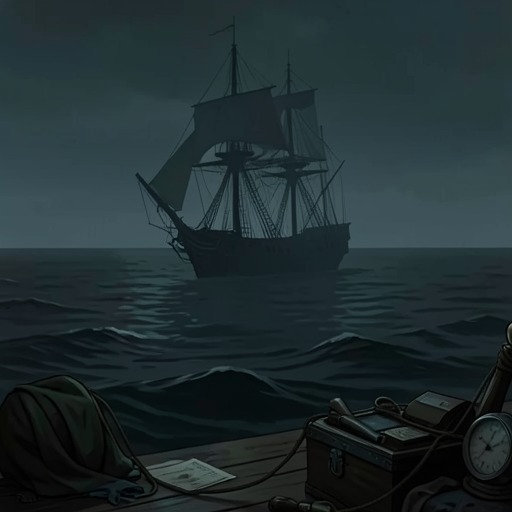
Life-in-Death appears as the naked hulk comes alongside the becalmed ship. The Mariner’s ship has already been trapped amid an oppressive sea and sky, and the arrival of the other vessel turns that helplessness into a supernatural contest. Life-in-Death and Death cast dice, making the crew’s fate appear to be decided by a game rather than by any action the sailors can resist.
Life-in-Death announces that the game is over and that she has won, then whistles three times. The announcement establishes her decisive role in what follows: Death and Life-in-Death are not interchangeable figures, and the outcome gives Life-in-Death a distinct claim. The sun’s rim dips and the stars rush out as the day ends, carrying the scene from the visible contest into the night in which the Mariner’s sentence becomes apparent.
Claim on the Ancient Mariner
The Mariner is the one Life-in-Death wins. The poem does not describe her choosing him by a stated motive; it presents the dice game and her declaration as the cause of his fate. After the crew have died, the Mariner remains alive among their bodies. He insists to the Wedding-Guest that his own body did not fall, and the repeated declaration that he is alone on a wide sea makes the consequence of her victory unmistakable.
His punishment is not a simple reprieve from death. He cannot die, despite the curse that he sees for seven days and seven nights, while the dead sailors remain fixed in his sight. The continuing life Life-in-Death assigns him is thus bound to isolation and suffering. The poem connects her victory to the defining reversal of the episode: the crew have lost their lives, but the Mariner’s survival offers no ordinary rescue or relief.
Narrative and Thematic Significance
Life-in-Death gives the poem a supernatural figure for survival stripped of comfort or companionship. Her name joins the conditions that the dice game separates and then recombines: Death claims the crew, while Life-in-Death claims the Mariner. That division explains why his continued existence becomes its own sentence rather than a fortunate escape.
The woman’s arrival also marks a change in the poem’s scale of threat. The earlier ice and stillness have confined the sailors within a harsh natural world; the spectral vessel introduces an explicit power capable of determining who dies and who must continue living. Life-in-Death remains defined by this single, consequential action and by the condition imposed through it: the Ancient Mariner survives, but alone beneath the curse.