The Albatross Leads the Ship Through the Ice
The Rime of the Ancient MarinerThe Albatross Leads the Ship Through the Ice is the turning point in which a vessel trapped among polar ice receives help from an Albatross and finds a way forward. The bird’s appearance changes the icebound voyage from fearful confinement into a passage guided by a living creature; the rescue also gives the Albatross’s later killing its weight as a repudiation of aid and fellowship.
The ship enters the ice
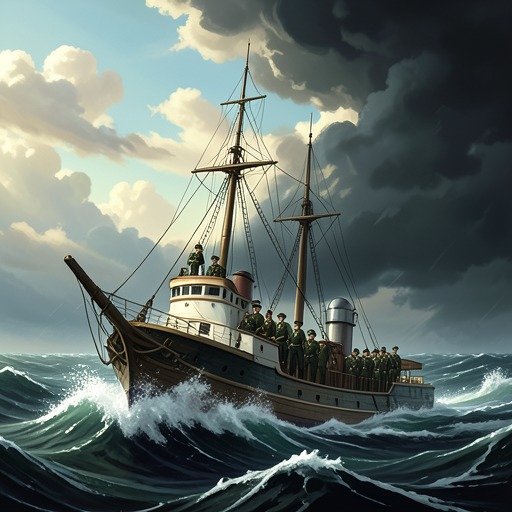
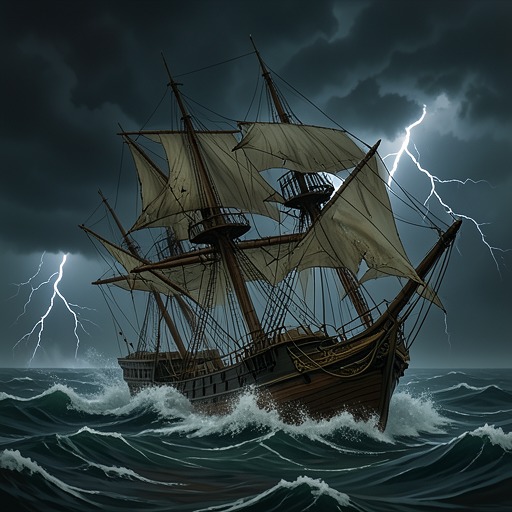
The episode follows the departure from harbour, when the ship is cheered and passes below the kirk and hill. A tyrannical Storm-Blast drives it southward with overwhelming force. Mist and snow arrive, the cold intensifies, and mast-high ice floats past until ice surrounds the vessel on every side. It cracks, growls, roars, and howls; the crew can discern neither human nor animal shapes beyond it. This is not merely a difficult stretch of navigation: the ice closes off the world around the ship and makes its movement seem at the mercy of forces larger than the crew.
The Albatross and the opening passage
An Albatross crosses through the fog. The mariners welcome it in God’s name, as though it were a Christian soul, and the bird accepts food it had not eaten before, flying around the ship. Its arrival coincides with a decisive change in the ice: the frozen barrier splits with a thunderous sound, and the helmsman steers the vessel through. A good south wind then springs up behind the ship, and the Albatross follows. The sequence joins natural assistance to practical seamanship: the bird accompanies the ship, while the helmsman takes advantage of the opened route.
Relief, dependence, and reversal
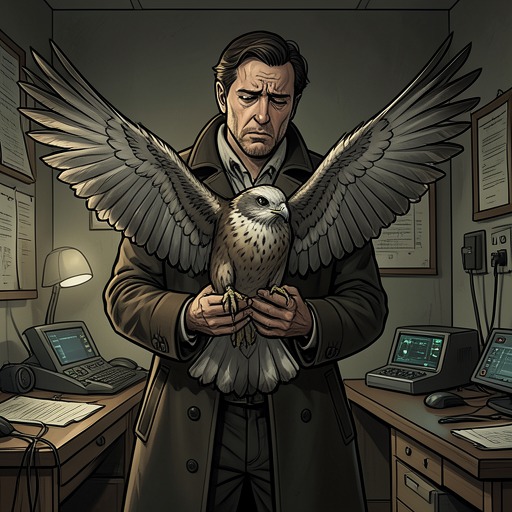
The rescue establishes a bond between the crew and the bird through welcome, food, and companionship. The ship’s subsequent progress is therefore not represented as a triumph of human command alone. The Albatross remains alongside the mariners, following after the ice has split and the wind has returned. In the poem’s later account, the Wedding-Guest responds to the Ancient Mariner’s haunted appearance by asking whether fiends plague him; the Mariner answers that his crossbow killed the bird. That recollection turns the earlier scene of welcome and aid into the background for a deliberate reversal: the creature received as a companion becomes the victim of the Mariner’s violence.
Narrative and religious significance
The episode’s movement from enclosing ice to an opened channel gives the Albatross’s appearance an immediate, concrete consequence. The bird is associated with relief, while the poem’s religious language frames its welcome as more than a practical exchange of food. Later events deepen that association: the Mariner looks toward Heaven and tries to pray, and the poem eventually states that good prayer belongs to one who loves human beings, birds, and beasts. In this light, the passage through the ice anticipates the poem’s moral concern with the treatment of living creatures. The Albatross’s aid is first experienced as grace; the killing that follows makes the Mariner’s failure to honour that relation the source of his continuing burden.