The Ancient Mariner’s isolation
The Rime of the Ancient MarinerThe Ancient Mariner’s isolation is both a physical condition and a spiritual ordeal: alone among the dead at sea, the Mariner cannot pray and feels that no saint pities him; later, he describes a loneliness so complete that God himself scarcely seems present. The poem sets this extremity against the beauty of living creatures and the shared devotion of a congregation, making isolation a measure of what the Mariner has lost—and of what he learns to cherish.
From departure to estrangement
The poem begins not with solitude but with a ship leaving harbor among companions. The ship is cheered as the harbor clears, and the crew sails past the church and hill. The Mariner’s later aloneness therefore emerges from a world of human company and recognizable places; it is not his starting condition, but a radical separation from the communal life represented by the shore.
That separation is prepared by the voyage’s exposure to forces larger than the crew. A tyrannical Storm-blast drives the ship southward, and the men enter mist, snow, and mast-high ice. Ice surrounds them, blocking their view of human and animal shapes; it cracks, growls, roars, and howls around the vessel. The scene makes the crew small within a hostile, enclosing landscape. When the ice splits and the helmsman steers through, a south wind rises and the Albatross follows, briefly restoring movement and companionship with a living creature. The contrast matters: the Mariner’s later solitude follows a voyage in which contact with others, with land, and even with the natural world has repeatedly been threatened or recovered.
The becalmed sea and solitary suffering
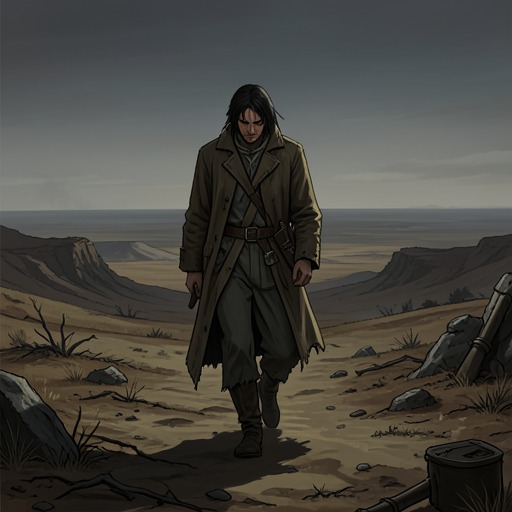
The isolation becomes absolute after the ship is left in the vast sea. The Mariner describes himself as alone, with no saint taking pity on his soul in agony. Around him lie the dead crew, whose beauty makes their deaths more terrible rather than less; on the rotting deck their bodies remain as the visible company of a community that can no longer answer him. His solitude is thus not simply the absence of people. It is the presence of dead companions who intensify the distance between the living speaker and everyone else.
The setting strips away ordinary forms of orientation and comfort. Under a hot, copper-colored sky, the bloody Sun stands above the mast; the Moon moves across the sky and does not remain in one place. The Mariner watches this celestial movement through seven days and seven nights, yet cannot die. The immense sea and unpausing sky offer motion and scale without companionship or relief. Against that vastness, the poem’s repeated insistence on being alone gives isolation a bodily as well as spiritual dimension: the Mariner remains alive, but life has become a condition he must endure without human help.
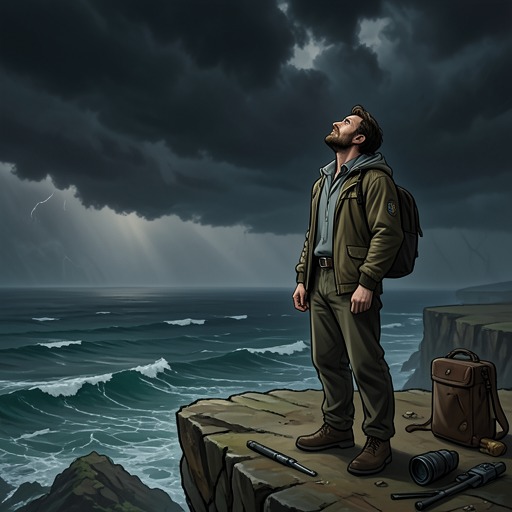
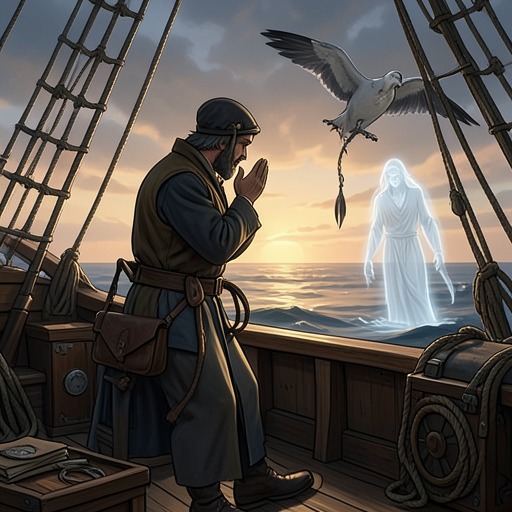
His separation reaches inward when he tries to pray. Looking toward Heaven, he attempts prayer, but before one can escape his lips, a wicked whisper intervenes. The failure is more than silence: the Mariner cannot turn toward the sacred as a source of consolation. The poem connects his isolation at sea with an interruption in his relationship to God, leaving him cut off not only from the dead men around him but also from the form of address that might bridge solitude.
Living beauty and the return of prayer
A change begins when the Mariner sees the water-snakes. They coil and swim, and each track flashes like golden fire. He recognizes their beauty and calls them happy living things; love rises in his heart, and he blesses them without intending to. The significance lies in the change of attention: where the dead crew could offer only silent company, the living creatures awaken a responsive regard. The Mariner does not first regain connection through another human voice; his capacity for love returns through the natural life moving around him.
At that same moment, he can pray again. The Albatross falls from his neck and sinks into the sea. The poem places this release alongside the return of prayer, but the Mariner’s inward movement is specific: a spontaneous blessing of living beings precedes his recovered ability to address Heaven. Isolation is not instantly erased, nor does the scene bring the dead crew back to human companionship. Instead, it marks the beginning of a changed relation to life and the sacred, after which the Mariner can no longer be understood only as a solitary sufferer.
From the wide sea to the shared kirk
The poem returns to the language of solitude near its close, when the Mariner tells the Wedding-Guest that his soul has been alone on a wide sea, so lonely that God himself scarcely seemed to be there. This retrospective account enlarges the meaning of his ordeal: isolation was not merely the fact of being stranded among the dead, but a felt absence of divine presence. The Wedding-Guest hears the testimony directly, so the Mariner’s loneliness becomes something narrated and witnessed rather than left wholly unshared.
The closing contrast is communal and religious. The Mariner says that walking together to the kirk is sweeter to him than the marriage feast, as old men, babes, loving friends, youths, and maidens bend to their Father in prayer. Against the image of one soul alone on an open sea, the congregation gathers many ages and relationships into a shared act. The ending does not claim that the Mariner has escaped his continuing solitude; instead, it shows what that solitude has taught him to prize. Fellowship, ordinary presence, and collective prayer appear precious because they stand opposite the isolation through which he has passed.