The Dead Crew Rise and Work the Ship
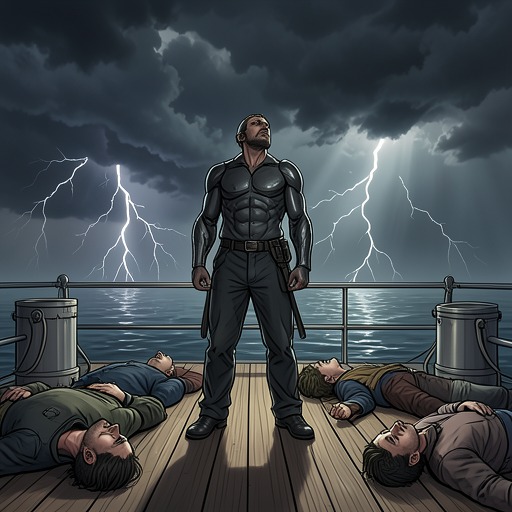
The Rime of the Ancient MarinerThe Dead Crew Rise and Work the Ship is the supernatural episode in which the dead sailors’ bodies resume their duties aboard the moving vessel. They rise without speech or the movement of their eyes, then work the ropes like lifeless tools while the helmsman steers. The Ancient Mariner clarifies that the sailors’ departed souls have not returned: blessed spirits have taken possession of their corpses. The scene makes the ship’s progress possible without wind, but presents that progress as eerie labor performed through bodies emptied of ordinary life.
From Stillness to Motion
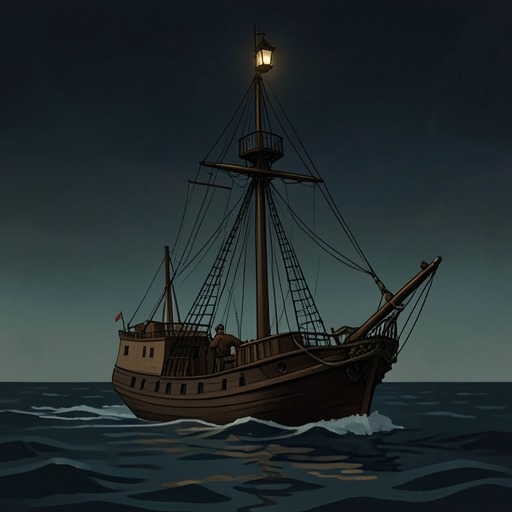
The crew’s rising follows a decisive change in the ship’s movement. Although the loud wind does not reach the vessel, it moves on beneath lightning and moonlight. The contrast is central to the episode: the ship is advancing, yet no natural breeze accounts for its passage. Against that uncanny movement, the dead sailors groan, stir, and rise. Their collective motion is described as strange even in a dream, marking the return of activity as something beyond the ordinary order of sailing.
The helmsman steers while the ship continues forward, and the other mariners take up the ropes in the way they had been accustomed to work them. Their actions preserve the recognizable organization of a working ship: one sailor guides its course, and the rest perform their familiar labor. But the sailors’ bodies raise their limbs like lifeless tools. The ordinary gestures of seamanship remain, while the living agency that should animate those gestures has disappeared. The Ancient Mariner sums up the sight by identifying the company as a ghastly crew.
Bodies at Work, Spirits at a Distance
The scene initially makes the reanimated sailors resemble the men who had died: the same bodies are upright again and carrying out shipboard tasks. The Ancient Mariner then distinguishes the physical return from a spiritual return. Their souls, which had fled in pain, have not come back to their corpses; instead, a troop of blessed spirits has entered them. The distinction explains how the sailors can act without being restored to life as themselves. Their bodies serve as instruments through which other powers work.
That explanation also sharpens the episode’s separation between appearance and identity. To the Wedding-Guest, the sight of the dead rising prompts fear, and the Ancient Mariner answers him with a reassurance to be calm. But the reassurance does not make the sight ordinary: it identifies a supernatural cause for the crew’s work rather than undoing the horror of bodies moving without speech or moving eyes. The sailors’ familiar duties therefore become newly strange. Their motions reproduce the routine of a voyage, while their lifeless appearance and the spirits within them expose how completely that routine has been transformed.
The Ship’s Unnatural Passage
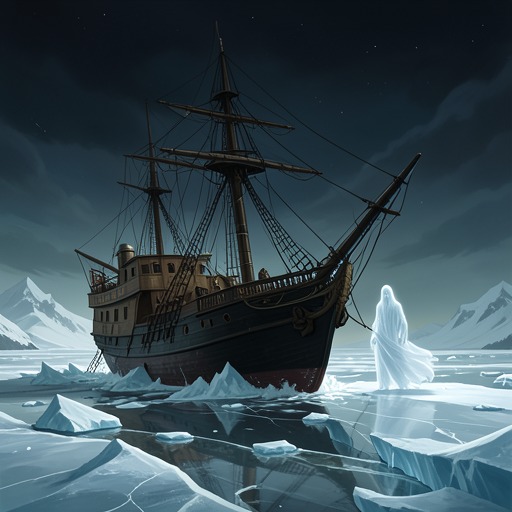
The dead crew’s labor belongs to a wider supernatural movement of the vessel. Far beneath its keel, nine fathoms down, a spirit slides out from the Land of Mist and Snow and makes the ship go. The ship thus moves without a breeze not simply because the reanimated sailors handle its ropes, but because an unseen spirit drives it onward. The dead men’s work is part of a passage in which familiar maritime actions coexist with forces that ordinary sailing cannot explain.
This combination preserves concrete details of navigation even as it alters their meaning. The helmsman steers; the mariners work the ropes; the vessel moves. Those recognizable tasks provide the visible structure of the voyage, but neither wind nor living sailors account for its progress. The crew’s silent labor makes the supernatural passage visible in human form, while the spirit beneath the keel supplies the force behind the ship’s motion. The scene binds the uncanny to the practical business of sailing rather than replacing seamanship with an abstract marvel.
Consequences and Narrative Significance
The episode reverses the normal relation between life, labor, and motion. A ship at sea depends on wind and on living hands; here, the loud wind never reaches it, yet it moves, and dead bodies perform the work of its mariners. The sailors’ rise is not a reprieve for the dead, because the Ancient Mariner explicitly denies that their souls have returned. Instead, their bodies are made to serve a voyage controlled by spirits, leaving the living witness confronted with a crew that can act but cannot speak or look as living men do.
The event also changes how the ship’s onward movement is understood. Its passage from the Land of Mist and Snow is not a return to ordinary travel: a spirit drives the vessel, and a troop of blessed spirits works through the corpses on deck. The helmsman’s steering and the crew’s familiar handling of ropes give this otherworldly journey the shape of a recognizable voyage, but the windless motion and lifeless labor keep that shape uncanny. The dead crew’s work is therefore both functional and disturbing: it carries the ship forward while making its apparent return to activity a reminder that the sailors themselves have not returned to life.