The Game of Death and Life-in-Death
The Rime of the Ancient MarinerThe Game of Death and Life-in-Death is the decisive encounter in which a spectral ship’s two uncanny figures wager for the lives of the crew. As the Sun sinks, their vessel comes between it and the Ancient Mariner’s ship; the game ends with Life-in-Death claiming the Ancient Mariner, while the crew dies around him. The scene turns the voyage’s danger into a divided fate: death for the sailors, and a living sentence of isolation for their companion.
Approach of the Spectral Ship
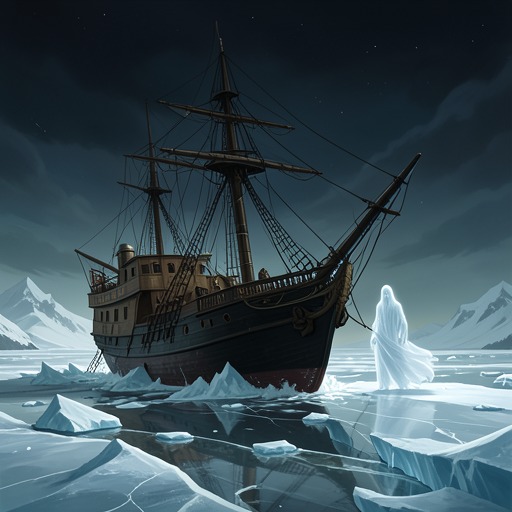
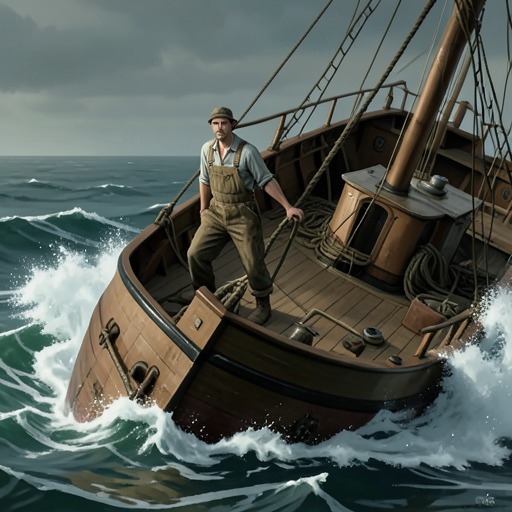
The game follows a voyage already marked by peril. The ship had left harbour under sail, then the tyrannical Storm-Blast drove it onward into danger. Later, ice split and the helmsman steered the vessel through; a south wind rose behind it, and the Albatross followed. That earlier movement and apparent aid sharpen the later reversal: when the spectral shape appears, the ship’s fate is no longer secured by wind, seamanship, or a favorable companion.
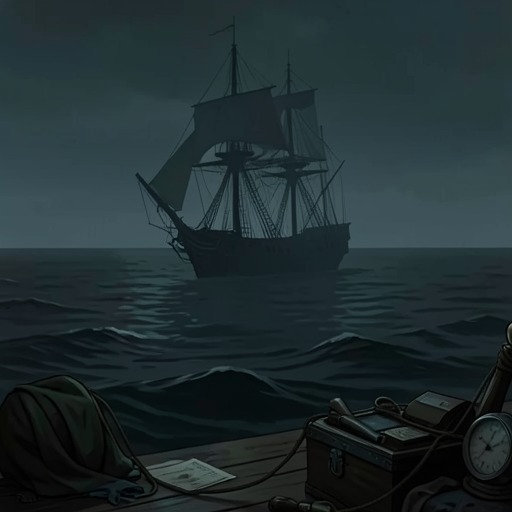
The encounter begins near sunset. The broad bright Sun rests almost upon the western wave when the strange shape suddenly drives between it and the ship. The interruption is both literal and ominous: the vessel blocks the light, and the poem’s questions about what the mariners see register an encounter whose meaning is not yet clear. Only as the strange craft draws alongside does the scene disclose the two figures associated with the game.
The Two Players and Their Wager
The Ancient Mariner identifies the woman aboard as Life-in-Death, whose pallor and golden hair distinguish her from the other figure. Her companion is Death. The naked hulk comes alongside, and the pair cast dice: their supernatural contest is presented not as a battle of strength but as a wager that will determine who claims the sailors.
Life-in-Death declares that she has won, then whistles three times. The Sun’s rim dips and the stars appear as the outcome becomes visible in the mariners’ fate. The game therefore makes the two figures’ presence consequential at once: Death and Life-in-Death do not merely haunt the ship; their cast of the dice decides how the people aboard will meet what follows.
The Crew’s Death and the Mariner’s Fate
Under the star-dogged Moon, the sailors turn their faces one by one, each in a final response, and four times fifty living men fall dead. Their souls leave their bodies and pass the Ancient Mariner. The sequence is starkly ordered: the crew’s deaths arrive individually, but together they extinguish the ship’s human company, while the Ancient Mariner remains alive to witness each departure.
The outcome separates his fate from theirs. The dead sailors are gone; the Ancient Mariner is left behind, and the poem explicitly connects the souls passing him with the earlier shot from his Crossbow. The image makes the remembered act recur as a measure of his present isolation, without changing the distinct outcomes assigned by the dice: death for the crew, Life-in-Death’s victory over the Ancient Mariner.
Consequences in the Voyage
The game’s result casts a long shadow over what follows. The Ancient Mariner is left on a ship whose dead crew will later rise and work the vessel, although he has no ordinary human company. Even after the helmsman steers and the ship moves on, no breeze blows; motion does not restore the earlier security of a wind-driven voyage. The later sound of oars and the Pilot’s cheer signal the approach of other people, but rescue lies beyond the game itself and does not undo the division it has established.
As an episode, the wager is the poem’s sharpest conversion of peril into personal fate. A strange shape interrupts the sunset, the players’ cast settles the outcome, and the crew’s collective presence gives way to the Ancient Mariner’s solitary survival. The supernatural decision is also a structural turning point: after the game, the voyage is no longer a shared passage toward home but the Ancient Mariner’s ordeal among the dead and the consequences of what he has done.