The Mariner Is Compelled to Tell His Tale
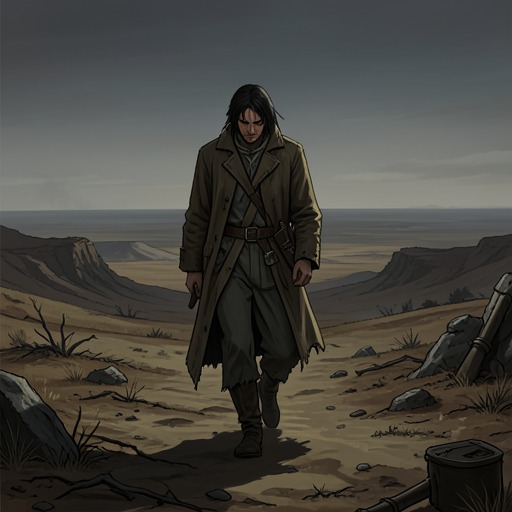
The Rime of the Ancient MarinerThe Mariner Is Compelled to Tell His Tale is the mechanism that makes the Ancient Mariner’s suffering continue after he reaches his own country. When the Hermit asks what manner of man has come before him, agony wrenches the Mariner’s body and forces him to begin his story; the pain then leaves him, but returns at uncertain hours. He must tell the tale until its telling releases his burning heart, and he can recognize the particular listener to whom it must be given. Narration is therefore neither a freely chosen recollection nor a single account safely completed: it is a recurring compulsion that determines whom the Ancient Mariner meets and what he must do.
The Return and the Plea for Absolution
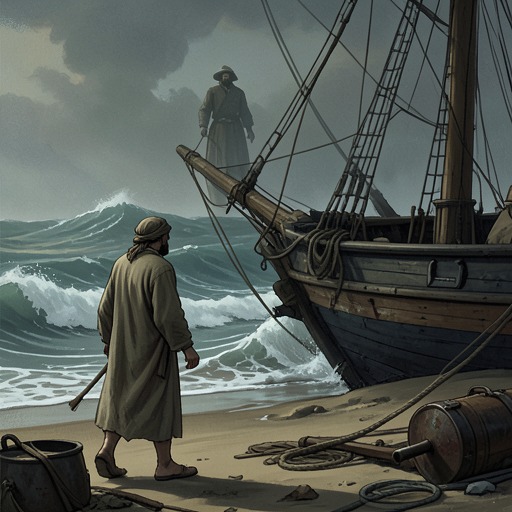
The compulsion takes hold at the end of a homeward passage marked by uncanny motion and approaching rescue. The Ancient Mariner finds himself in his own country on firm land. The Hermit steps out of the boat, scarcely able to stand, and the Mariner immediately begs him to shrieve him. The Hermit crosses his brow and presses him to say what kind of man he is. The question precedes the bodily seizure: the encounter calls for an answer, but the Mariner’s account begins not through calm explanation but through forced narration.
That arrival follows the ship’s approach through circumstances in which ordinary seamanship and supernatural suggestion stand side by side. The helmsman had steered while the ship moved on despite the absence of a breeze; later, hearing the dash of oars and the Pilot’s cheer, the Mariner’s head was turned away by force. Back on land, the Hermit emerges from the boat, while the Mariner’s account associates the rowing with the Devil. The rescue brings him into the presence of a religious questioner, but it does not itself settle his condition: instead, the encounter precipitates the agony that makes him speak.
Pain as the Trigger and Temporary Release
The Mariner describes the onset as a wrenching of his whole frame, accompanied by woeful agony. That pain forces him to begin the tale, and, once the narration has begun, it leaves him free. The sequence gives storytelling a bodily consequence: speech is not simply a report about an earlier ordeal but an action compelled by suffering, with temporary relief following its performance.
The relief, however, is conditional rather than final. The agony returns at an uncertain hour, and the Mariner says that his heart burns until the ghastly tale has been told. The cycle binds distress to narration: pain demands an audience and an account; telling quiets the immediate torment; and the return of pain makes the apparent release incomplete. The poem thus presents his storytelling as continuing penance, not as a memory he can choose to put aside once he has reached home.
The Listener He Must Find
The compulsion also shapes the Mariner’s movements among other people. He passes from land to land and possesses a strange power of speech, but the account does not portray him as telling indiscriminately to everyone he encounters. The moment he sees a man’s face, he knows that this is the person who must hear him. Recognition precedes the telling: the listener is identified in the encounter, and the Mariner then teaches him the tale.
This pattern makes the Mariner’s power at once a means of communication and a form of isolation. He can speak with unusual force, yet the decisive question is not merely whether anyone is available to listen. His suffering directs him toward a particular hearer, turning each recognition into the start of another compelled account. Storytelling joins strangers for the duration of an encounter while marking the Ancient Mariner as a figure condemned to keep travelling and telling.
Repetition, Witness, and the Poem’s Frame
The poem gives this compulsion a structural role by placing the Ancient Mariner’s account inside a meeting with the Wedding-Guest. The Mariner’s repeated need to teach his tale explains how the embedded narrative can be delivered to a new hearer, while the recurring agony explains why the telling cannot end with the first rescue or the first audience. The story’s movement from sea voyage to homecoming therefore does not close the Mariner’s experience: its consequences continue in the act of narrating it.
The effect is a hard contrast between a tale that can be told and suffering that cannot be permanently discharged by telling. The Mariner gains temporary freedom when the words begin, but he remains subject to the next return of agony and must recognize the next person meant to hear him. His account makes a witness of each chosen listener, even as its repeated demand prevents the teller from settling into ordinary life. The compulsion is both the form his penance takes and the means by which the poem carries that penance from one encounter to another.