The Mariner Shoots the Albatross
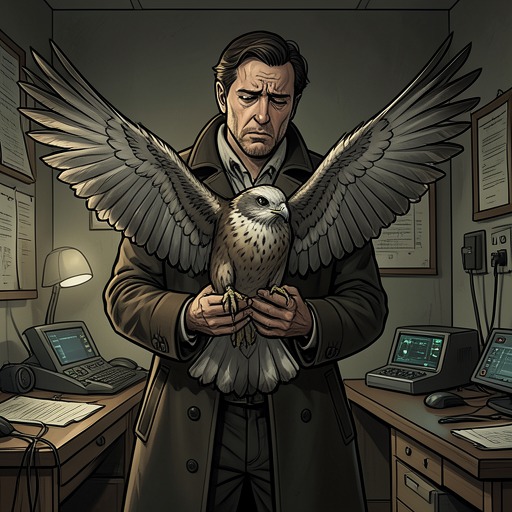
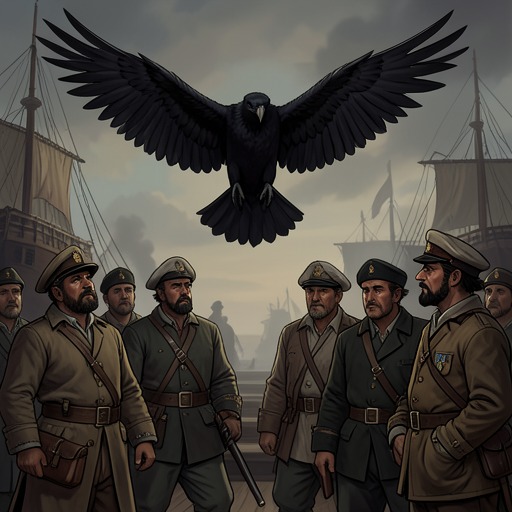
The Rime of the Ancient MarinerThe Mariner’s shooting of the Albatross is the decisive act of violence at the center of his voyage: after the bird has followed the ship out of the ice and a south wind has begun to carry it onward, he kills it with his crossbow. The deed turns companionship into guilt and becomes the point from which the poem’s punishments, blocked prayer, and eventual recovery of reverence for living things unfold.
Causes and Circumstances
The ship has first been driven into the polar ice by a powerful storm. When the ice splits, the helmsman steers the vessel through; a good south wind then rises behind it, and the Albatross follows. The bird’s presence belongs to the ship’s passage out of danger, making the Mariner’s violence a reversal of the relief that has just arrived.
The shooting is framed by an interruption from the Wedding-Guest, who hears the Mariner’s tale and asks why he looks as he does, invoking rescue from the fiends that plague him. The Mariner answers not with an explanation of motive but with the bare action: he shoots the Albatross with his crossbow. The abruptness leaves the act without a stated practical cause; its force lies in the contrast between the bird’s companionship and the Mariner’s unaccounted-for violence.
The Act and Its Immediate Reversal
The poem places the shooting at the close of its first part, just before the second part begins. Before the shot, the ship has escaped the ice and the wind has returned; afterward, the Albatross is no longer a living follower but the object around which the Mariner’s punishment gathers. This structural hinge changes the voyage from escape into a trial of responsibility.
The later narrative makes the cost of the act visible through the Mariner’s altered relation to prayer. Looking at the dead men on the deck, he tries to pray, but an evil whisper rises before a prayer can escape him. The episode links the violence against the bird to a wider spiritual desolation, though the poem does not reduce the dead crew’s fate to a simple explanation of the shooting.
Consequences and Moral Reversal
The Mariner’s recovery does not come through an immediate declaration of regret. He watches water-snakes coil and swim, their tracks flashing like golden fire, and recognizes their beauty as something no tongue can adequately express. Love wells up in him; he blesses them without intending to. At that same moment he can pray again, and the Albatross falls from his neck and sinks.
This later release gives the earlier shot its moral shape without erasing it. The change begins when the Mariner responds to living creatures with spontaneous affection rather than treating them as disposable. The bird’s death remains the initiating wrong, while the blessing marks a turn toward reverence; the poem makes restored prayer and the falling burden consequences of that changed relation to life.
Narrative and Thematic Significance
The shooting is narrated retrospectively by the Mariner to the Wedding-Guest, so its significance is disclosed across the story rather than settled at the instant of action. The contrast between the south wind that carries the ship onward and the crossbow that kills its companion compresses the poem’s central reversal: deliverance is followed by a choice that brings suffering.
The event also establishes the pattern through which the Mariner’s tale understands moral change. Prayer is first obstructed amid the dead, then becomes possible again only after an unforced blessing of other living beings. The episode’s importance therefore extends beyond the killing itself: it sets in motion the burden the Mariner must bear and provides the contrast by which his later capacity for love and prayer can be measured.