The Reanimation of the Dead Crew
The Rime of the Ancient MarinerThe Reanimation of the Dead Crew turns a ship’s familiar labor into a spectacle of the uncanny. The dead sailors rise and take up their former tasks, yet their movement does not restore them to ordinary life: they do not speak or move their eyes, and their limbs work like lifeless tools. As the ship advances without a breeze, the poem reveals that a spirit beneath the keel is driving it. The scene makes supernatural power visible through the routine motions of steering and handling ropes, and leaves the Ancient Mariner and the Wedding-Guest with a ship that can travel but no living crew.
From Stillness to Motion
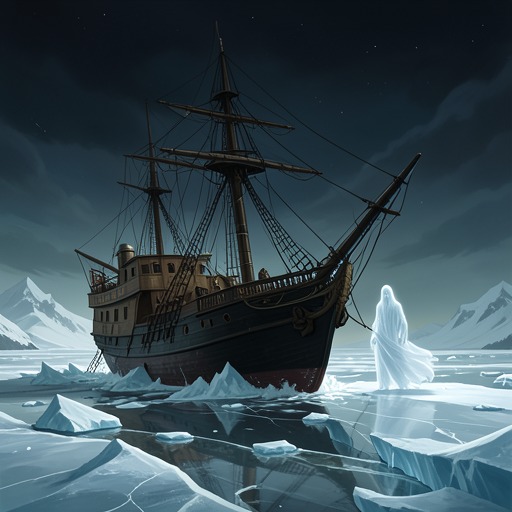
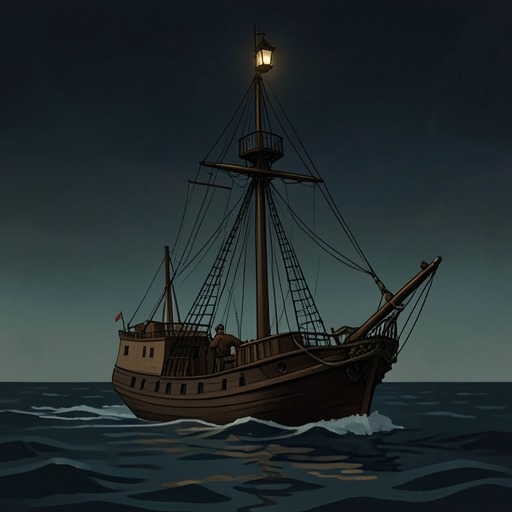
The reanimation follows the ship’s earlier departure from harbour and its passage into danger. After the ship is cheered and clears the harbour, a tyrannical storm-blast drives it onward; later, the ice splits and the helmsman steers through, and a good south wind rises behind the ship. These details establish a physical voyage shaped by harbour, ice, wind, helm, and sail before the dead crew’s labor and the spirit’s power transform its conditions.
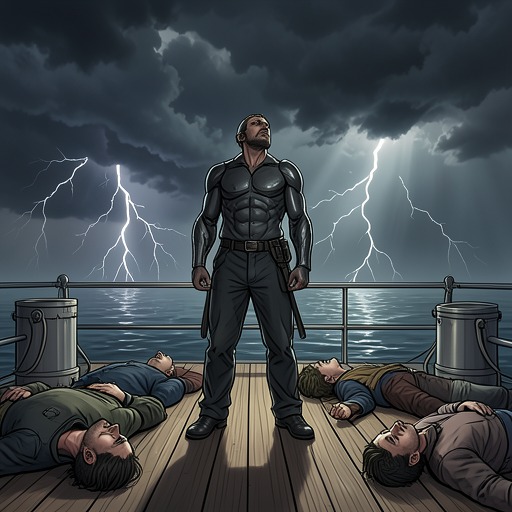
In the reanimation scene, the contrast is stark: the wind never reaches the ship, yet it moves on. Lightning falls nearby, and beneath it and the Moon the dead men groan, stir, and rise. The movement comes in stages, from sound and stirring to the sight of the dead upright again. Their rising is described as strange even in a dream, so the poem marks the scene as an assault on ordinary expectation rather than a return to familiar life.
The Dead Resume Their Work
The sailors do not return to speech or recognizable fellowship. They neither speak nor move their eyes. Instead, they raise their limbs and resume the work they used to do with the ropes. The helmsman steers while the ship moves onward, but the men at the ropes appear as instruments rather than conscious workers. The Ancient Mariner’s description of the crew as ghastly gives their coordinated labor its human cost: the ship’s practical routines continue, while the people performing them seem emptied of life.
The scene distinguishes the reanimated sailors from the souls who had left their bodies in pain. The Ancient Mariner tells the Wedding-Guest that it was not those same souls returning to their corpses, but a troop of blessed spirits. This clarification makes the rising more than a simple reversal of death. The bodies are again active, but the poem does not say that the dead men themselves have been restored to life; instead, another spiritual force animates their familiar movements.
A Spirit Beneath the Keel
The ship’s unexplained progress receives a specific supernatural cause. It moves slowly and smoothly onward, and nine fathoms beneath the keel, a spirit slides from the Land of Mist and Snow. The poem identifies this spirit as the force that makes the ship go. With that disclosure, the windless movement is no longer merely an uncanny observation: propulsion has passed from the weather and the living crew to an unseen power beneath the hull.
This arrangement keeps the ship’s material working world in view. A helmsman still steers; sailors still handle ropes; the keel still cuts through water. Yet those recognizable elements no longer account for the voyage by themselves. The spirit supplies motion where wind is absent, while the dead sailors supply the gestures of labor without the signs of conscious life. The supernatural does not replace the ship’s mechanisms so much as seize and redirect them.
The Voyage Continues, the Crew Does Not Return
The dead crew’s work carries the ship onward, but it does not resolve the Ancient Mariner’s condition or undo the horror of the deaths. The sailors’ silent return is a temporary, uncanny form of service, not a reunion with the living. Their bodies can steer and haul; they cannot speak to the Ancient Mariner or resume a human relationship with him. The episode therefore separates forward motion from recovery: the vessel progresses, while its crew remains ghastly and the voyage remains under supernatural governance.
The scene also prepares the transition from the spirit-powered passage toward the ship’s eventual encounter with rescuers. As the voyage continues, the Ancient Mariner hears the dash of oars and the Pilot’s cheer. That sound belongs to an approaching human rescue, in sharp contrast with the earlier shipboard noises of groaning and lifeless labor. The reanimation is thus one stage in a larger passage from wind-driven navigation, through supernatural motion, toward the return of other living people and the end of the ship’s isolated course.