The Ship Sinks as the Rescuers Approach
The Rime of the Ancient MarinerThe Ship Sinks as the Rescuers Approach is the abrupt shipwreck that interrupts the Ancient Mariner’s return home: just as the rescue boat comes alongside, a dreadful underwater rumble reaches the ship and splits the bay. The vessel goes down, while the Ancient Mariner, stunned and unable to act, finds himself afloat in the Pilot’s boat. The scene makes rescue inseparable from destruction: the ship is lost, but its passenger is carried onward to the reckoning that awaits him.
The Ship’s Unnatural Voyage
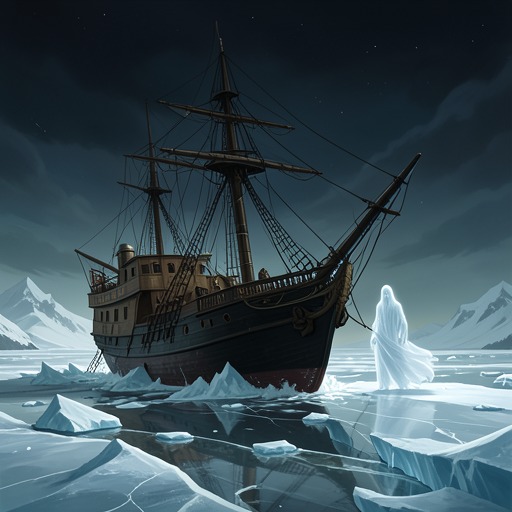
The sinking follows a voyage whose practical details have repeatedly been unsettled by forces beyond ordinary seamanship. At the outset, the ship leaves its harbour amid the familiar work and motion of departure: it is cheered, clears the harbour, and drops below the kirk and hill. Later, a tyrannous Storm-Blast drives it onward, and a south wind rises behind it as the Albatross follows. These earlier changes in wind and course give the final loss a longer maritime context: the ship has crossed from a recognisable voyage into a journey in which weather, movement, and safety cannot be taken for granted.
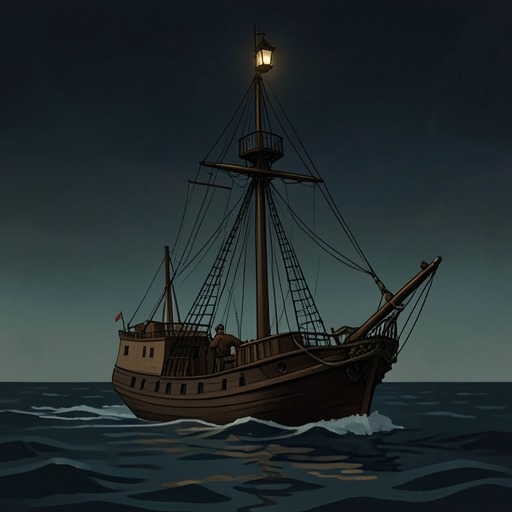
Even before the rescue boat arrives, the ship’s motion has become uncanny. The helmsman steers and the ship moves on, yet no breeze blows; the mariners work the ropes despite the absence of wind. The vessel therefore remains in motion without the ordinary visible means of propulsion. That contrast prepares the scene’s sudden reversal: the ship can continue across the water under strange conditions, but its continued movement offers no protection when the force beneath the surface reaches it.
The Rescue Boat Draws Near
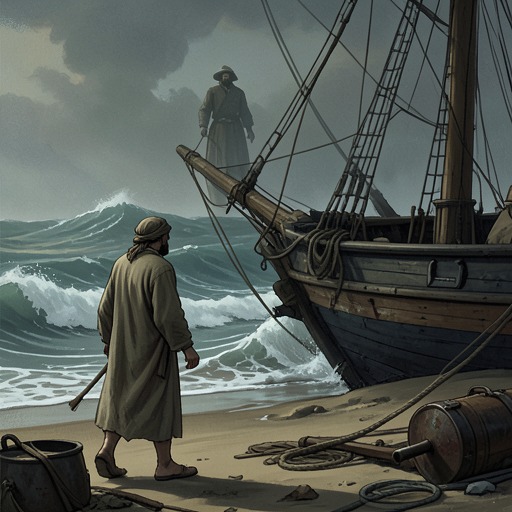
The approach of the rescuers is heard before it becomes a completed rescue. The Ancient Mariner hears the dash of oars and the Pilot’s cheer; the sound turns his attention toward the people coming to meet him. The skiff-boat nears the ship, and voices aboard it register that the lights they expected to see are not where they should be. Their words establish that the rescuers are approaching an unexpected scene, rather than simply carrying out a routine landing.
The Pilot’s boat comes closer, and the Ancient Mariner neither speaks nor stirs. His stillness makes the approach a moment of suspense: help is now within reach, but he does not greet it or explain what has happened. The poem places the boat immediately beneath the ship before another sound begins. The rescue craft is close enough to receive him, yet the ship still stands between the Ancient Mariner and safety.
The Ship Goes Down
A rumble starts beneath the water and grows louder and more dreadful. It then reaches the ship and splits the bay; the ship sinks like lead. The sequence is swift and sharply staged: an approaching boat and a silent passenger give way to a sound from below, then to the destruction of the vessel. The sinking is not described as a gradual breakup or as a collision with another craft. Instead, the sound travels under the water, reaches the ship, and is followed by its plunge.
The Ancient Mariner is stunned by the sound, which smites both sky and ocean. The image of his body floating like that of someone drowned for seven days gives the moment the appearance of death without confirming that he has died. The poem holds the outcome in suspension: the ship is gone, and the Ancient Mariner lies afloat, but his fate is not resolved by the sinking itself.
Rescue and Consequence
That suspension lasts only briefly. As swiftly as in a dream, the Ancient Mariner finds himself within the Pilot’s boat. The rescue therefore follows the shipwreck almost instantaneously in the telling, though the transition is presented as bewildering rather than as a fully described act of transfer. The vessel sinks; its passenger survives in the nearby rescue craft.
This reversal defines the event’s place in the return. The rescuers do not arrive in time to save the ship, but their boat becomes the Ancient Mariner’s passage out of the water. The ship’s disappearance closes one stage of his voyage without ending his ordeal: he remains alive to continue beyond the wreck, while the rescue boat brings him into the scene of judgment and confession that follows. The result is both deliverance and loss, with the ship’s destruction marking how little ordinary rescue can control the supernatural course of the Ancient Mariner’s return.