The albatross around the neck
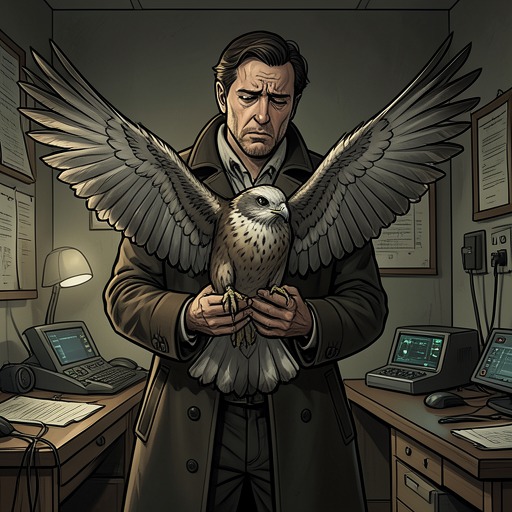
The Rime of the Ancient MarinerThe albatross around the neck gives physical form to the Ancient Mariner’s guilt and estrangement. Hung there by his shipmates in place of a cross after he shoots the bird, the dead albatross makes his act visible and burdens his body; when it falls away after he blesses the water-snakes, the change marks renewed prayer and a turn toward love for living things, not the erasure of what he has done.
From companion to burden
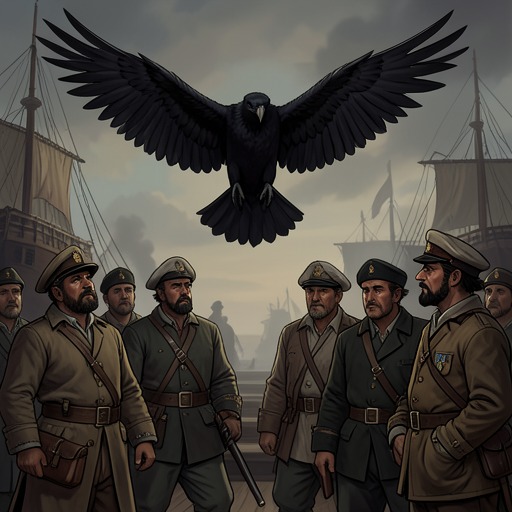
At the voyage’s outset, the ship clears the harbour, and a powerful storm drives it southward into mist, snow, and towering ice. When a good south wind rises behind the vessel, the albatross follows, becoming part of the crew’s passage through the frozen conditions. The bird’s presence therefore precedes the crime as a companion in a hazardous voyage, not as a burden or omen imposed on the Ancient Mariner.
The change begins when the Wedding-Guest notices the Ancient Mariner’s fixed appearance and asks why he looks so. The mariner answers that he shot the albatross with his crossbow. His confession places the weapon and the killing at the image’s origin: the burden is not simply something that happens to him, but a consequence associated with an act he has committed. The sharp contrast between the crossbow used to kill and the cross later invoked in the punishment makes the transformation especially pointed.
A bodily sign of guilt
The crew respond to the killing by hanging the albatross around the Ancient Mariner’s neck in place of the cross. The substitution turns an inward moral consequence into a visible object carried on the body. The cross suggests a sacred sign; the dead bird takes its place as a sign of the killing and its weight. The poem does not treat the burden as a mere figure of speech: the mariner bears the bird physically, while its presence makes his guilt legible to others.
That punishment also belongs to the wider movement from shared voyage to isolation. The ship has crossed ice and sea with a crew, but the mariner’s relation to the living world has been altered by his violence. Later, he describes himself as alone on the wide sea, and the moon continues moving above him while he remains subject to the curse. In that setting, the albatross around his neck concentrates the poem’s contrast between the immense world around him and the personal burden he cannot simply set aside.
Release after the blessing
The image changes when the Ancient Mariner sees the water-snakes and recognizes their beauty as living creatures. His spontaneous love for them makes prayer possible again. At that moment the albatross falls from his neck and sinks into the sea like lead. The sequence links the bird’s removal not to a denial of the shooting, but to a change in the mariner: appreciation of other life returns, and the inability to pray gives way to prayer.
The manner of the fall matters. The albatross does not vanish or rise into the air; it drops heavily into the sea. The image therefore conveys release without making the earlier act inconsequential. The bodily token is gone, but the mariner’s experience remains part of the story he must tell, and the fall marks a turn in his condition rather than a simple escape from all consequences.
Meaning and afterlife of the image
The image gathers several stages of the poem into one material sign: the bird first follows the ship, then is shot, then is hung at the mariner’s neck, and finally sinks after his renewed capacity to pray. Its meaning changes with those events. As a companion, the albatross belongs to the voyage; as a corpse at the neck, it embodies the cost of the killing; in its fall, it marks the beginning of a different relation to living things.
The poem thus gives guilt a weight and location without reducing its moral movement to punishment alone. The albatross makes the Ancient Mariner’s crime visible, while its eventual removal is tied to reverence for life rather than to force or forgetfulness. The burden’s departure is real, but it does not cancel the deed: the mariner continues to carry its memory in the tale he recounts.