
The Prisoner’s Inner Opponent
The Royal GameThe attempt to divide himself into opposing chess players gradually turns Dr B’s survival strategy against him.
increasing Bearing strength in each event
 decreasing
Bearing strength in each eventdecreasingA Logical Impossibility
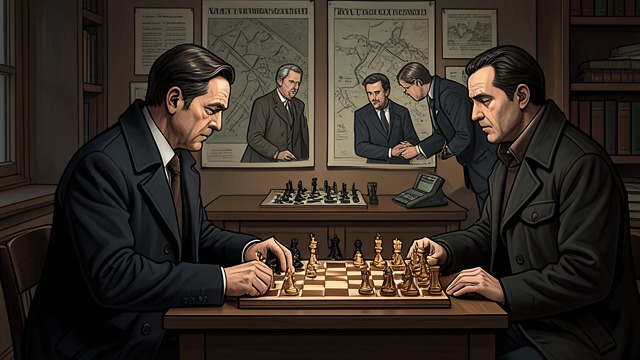
The Problem of Playing Alone
Two minds in one
Dr B understands that chess depends on opponents who conceal their intentions from each other. Playing both sides requires one mind to know and somehow forget its own plans.
Necessity over reason
He attempts the impossible because repeating known games no longer protects him from the prison’s emptiness. The imagined division offers activity, but removes the boundary that had kept the earlier exercise safe.
The Selves Compete
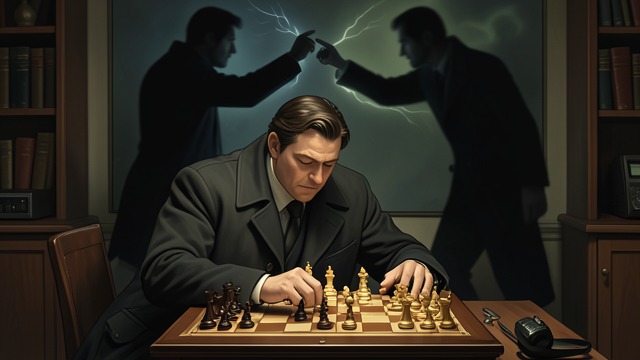
Internal Rivalry
Ambition turns inward
Dr B’s white and black selves each strive to defeat the other. He experiences triumph and frustration as if they belonged to separate players, even though both arise within one mind.
No natural stopping point
Each imagined victory prompts a demand for revenge. Without another person or a real board to impose limits, the contest accelerates into a cycle he cannot regulate.
Collapse at the Cell Door
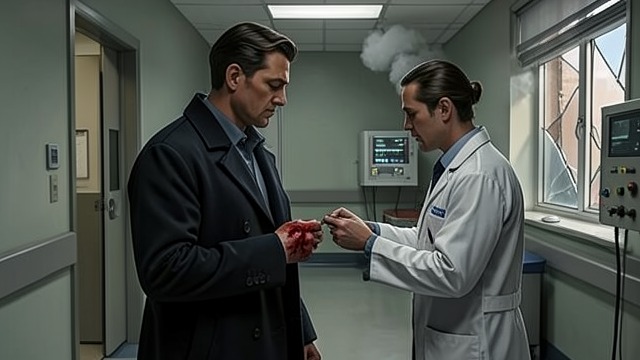
The Game Breaks Open
A violent episode
Dr B wakes from a period of extreme mental overexertion and attacks the warder, speaking as if the chess contest were still underway. In the corridor he smashes a window and badly cuts his hand.
Escape through treatment
He is taken to hospital, where a doctor recognizes his condition and eventually helps secure his release. The episode marks the bodily and institutional limit of his inward struggle.
After Dr B has memorized the almanac’s games
During the final period of Dr B’s confinement
One morning near the end of Dr B’s imprisonment
