
The Passengers as Spectators
The Royal GameThe passengers’ shifting involvement turns Dr B’s private crisis into a public spectacle they cannot fully understand.
increasing Bearing strength in each event
 decreasing
Bearing strength in each eventdecreasingAmateur Enthusiasm
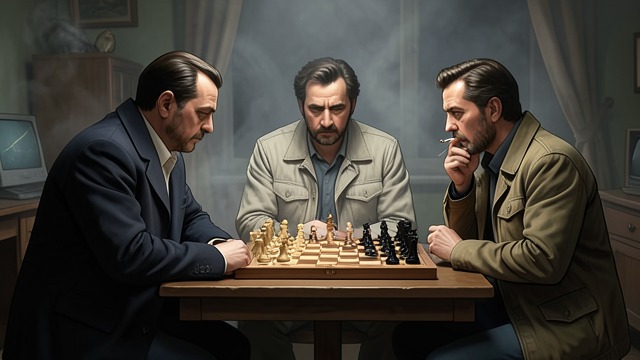
A Shared Pastime
A small circle forms
The narrator and his wife set up a board in the smoking room, hoping to find another chess enthusiast aboard. McConnor joins and makes the casual game unusually competitive.
Companionship with tension
The group’s shared interest creates a temporary community among strangers. Yet McConnor’s insistence on rematches foreshadows how quickly play can acquire emotional stakes.
Collective Excitement
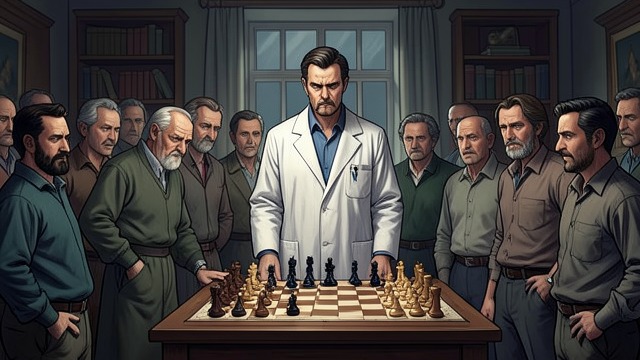
The Crowd Takes Sides
Hope replaces amusement
After Dr B intervenes, the passengers begin to believe they may resist Mirko Czentovic. Their attention shifts from the board’s details to the prospect of humiliating the champion.
A hero is projected
They make Dr B the center of their hopes before understanding his history. Their excitement is generous in part, but it also treats his ability as entertainment.
Uneasy Aftermath
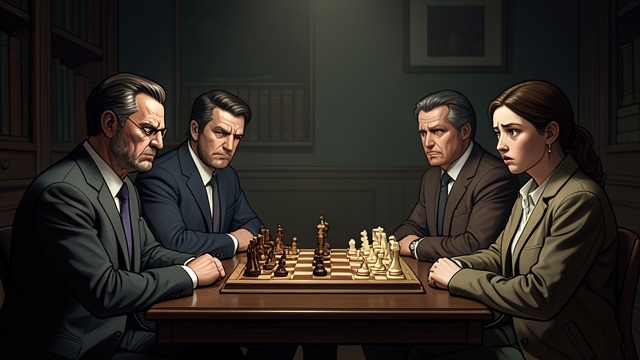
A Crowd Left Behind
Confusion among the spectators
Most passengers interpret Dr B’s abrupt apology as a collapse in performance. McConnor calls him a fool, while Mirko Czentovic praises his talent in a magnanimous tone.
The narrator’s knowledge
Only the narrator understands why Dr B must stop. The gap between public interpretation and private history leaves the group’s excitement unsettled and incomplete.
Before the first paid match
During the drawn group match
Immediately after Dr B leaves the second game
