
The Final Match as a Test
The Royal GameDr B approaches the shipboard game not as a championship challenge but as an attempt to measure the boundary between ability and illness.
increasing Bearing strength in each event
 decreasing
Bearing strength in each eventdecreasingA Conditional Agreement
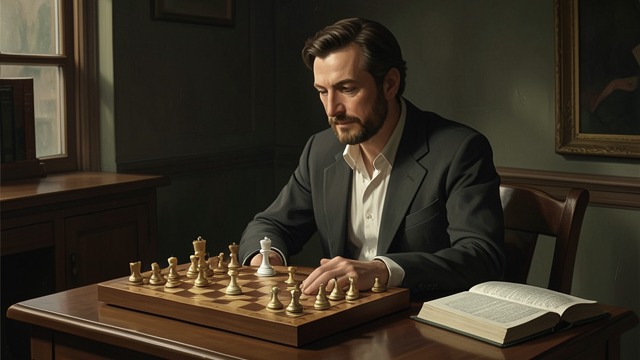
A Test, Not a Comeback
Doubt about the past
Dr B wonders whether his thousands of imagined games were genuine chess or a form of fevered delusion. He wants to know whether he had remained on the safe side of madness.
A strict limit
He agrees to play only once and asks the narrator to explain this condition to the others. The planned match is meant to close an old account, not establish a new career.
The First Game’s End
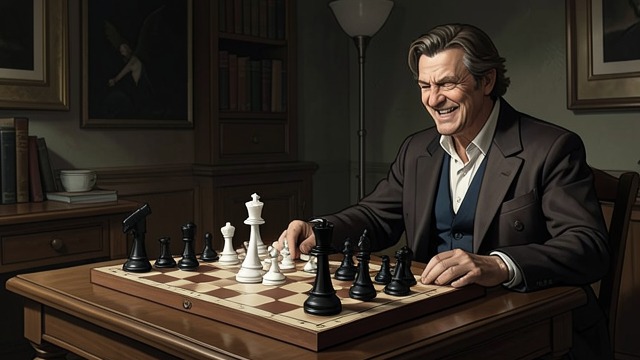
A Test Becomes a Victory
Controlled concentration
Dr B plays quickly and comfortably, while Mirko Czentovic’s deliberation stretches the match. The difference in pace makes Dr B appear to have anticipated the champion’s choices.
An unexpected result
Mirko Czentovic gives up rather than allow the game to reach its likely conclusion. Dr B’s test has produced a striking victory, making it harder for him to treat the encounter as a single harmless experiment.
The Test Ends Early
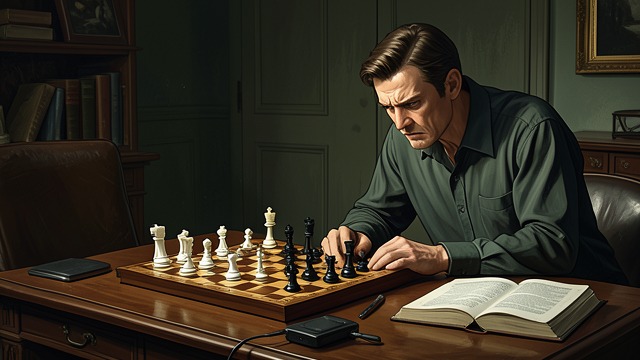
The Boundary Reasserted
Signs of recurrence
The second game’s slow tempo fuels Dr B’s agitation, and his attention shifts away from the actual position. When he declares an impossible check, the narrator sees that the danger has become immediate.
Choosing to stop
Dr B accepts the narrator’s reminder and ends the match himself. The test does not provide a clean answer about his former madness, but it establishes that continued play is too risky.
The evening before the match
The afternoon of the first direct match
Near the end of the second direct match
