
Three Modes of Isolation
The Royal GameThe story contrasts Mirko Czentovic’s chosen solitude, Dr B’s forced confinement, and the crowd’s inability to reach the stranger.
increasing Bearing strength in each event
 decreasing
Bearing strength in each eventdecreasingThe Champion’s Retreat
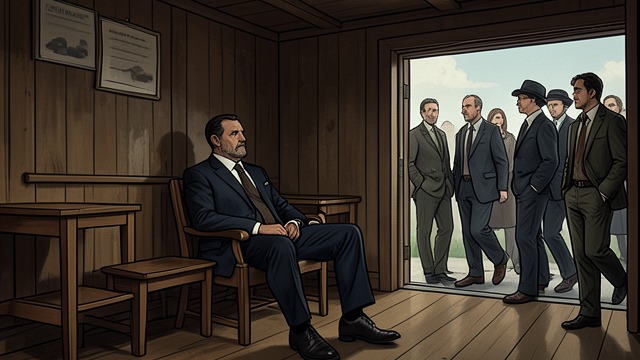
Solitude by Choice
A guarded routine
Mirko Czentovic spends much of his time in his cabin and avoids conversations with educated passengers. His withdrawal protects him from scrutiny and preserves his control over encounters.
Social distance as power
Because he chooses when to appear, his isolation reinforces his professional status. The narrator’s difficulty approaching him contrasts with Dr B’s later experience of solitude imposed by force.
The Prisoner’s Isolation
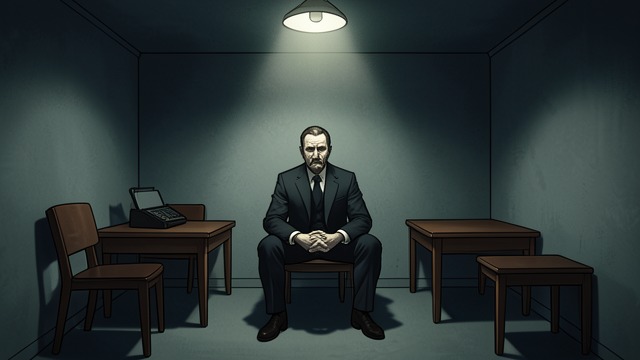
Solitude as Punishment
No choice or distraction
Dr B is denied control over his schedule, possessions, and social contact. The closed room turns the same conditions that might look like privacy into an instrument of coercion.
A mind without witnesses
With no conversation to interrupt his thoughts, Dr B cannot check his fears against another person’s perspective. His isolation becomes a direct force in his psychological collapse.
The Crowd Cannot Follow
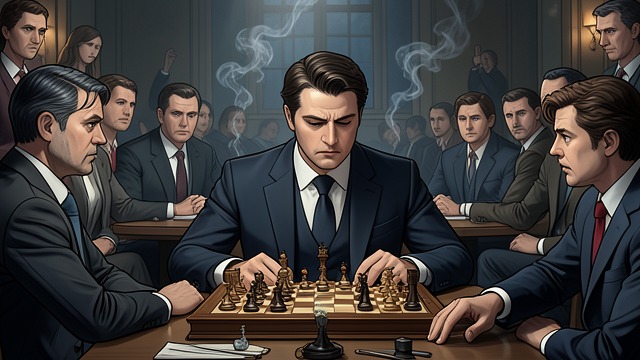
Alone Among Observers
A public room
Dr B sits in a crowded smoking room surrounded by passengers, yet his attention has moved into an imagined game. The physical presence of others does not guarantee shared understanding.
One person reaches him
The narrator’s intervention briefly bridges that distance. Dr B’s recovery depends on a relationship that recognizes his history rather than merely watching his play.
During the first days of the voyage
During Dr B’s months at Hotel Metropole
During Dr B’s final breakdown aboard ship
