
McConnor’s Competitive Pride
The Royal GameMcConnor’s need to answer defeat turns a casual pastime into an expensive public contest.
increasing Bearing strength in each event
 decreasing
Bearing strength in each eventdecreasingThe Rematch Habit
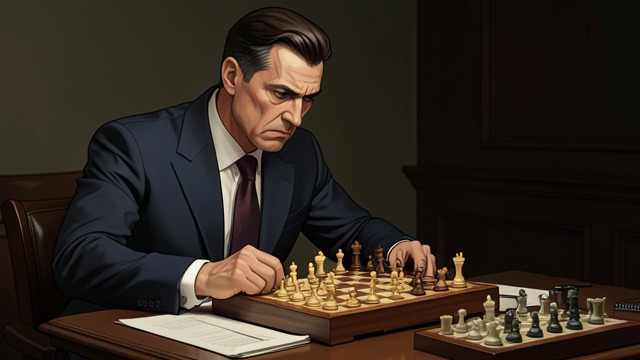
Winning as Self-Respect
Defeat becomes personal
McConnor treats even informal chess losses as insults to his standing. He blames mishaps and repeatedly demands another game rather than accept an ordinary defeat.
A forceful temperament
His confidence comes from a life in which persistence and success have rewarded him. The same forcefulness that serves him in business makes him a difficult companion at the chessboard.
Paying the Champion
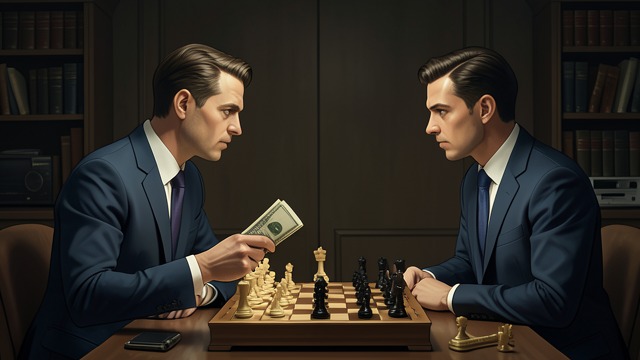
A Costly Challenge
A fee and a promise
After learning Mirko Czentovic is aboard, McConnor insists on playing him. He accepts the champion’s fee of 250 dollars and arranges a group match.
Pride over prudence
The payment does not trouble McConnor as much as the prospect of losing. The contest becomes a test of his self-image, while the narrator sees how readily the champion’s businesslike terms can exploit that need.
The Demand for Another Game
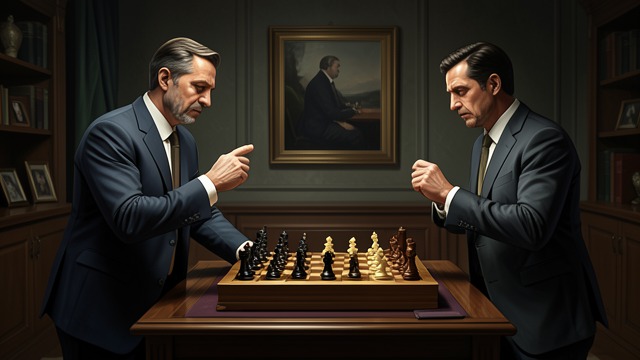
Defeat Fuels Escalation
Refusing to stop
The group loses quickly, but McConnor calls for a rematch. His anger at Mirko Czentovic’s contemptuous manner intensifies his determination.
A new purpose
When Dr B secures a draw, McConnor redirects his ambition toward a direct contest between the stranger and the champion. His competitive drive helps create the story’s central confrontation, but he does not recognize its psychological cost.
During the first days of the voyage
Three days after the narrator’s chessboard appears in the smoking room
Immediately after the first group match ends
