
Chess as a World of Its Own
The Royal GameThe narrative explores chess as both an artful intellectual universe and a dangerously self-contained obsession.
increasing Bearing strength in each event
 decreasing
Bearing strength in each eventdecreasingA Game Between Disciplines
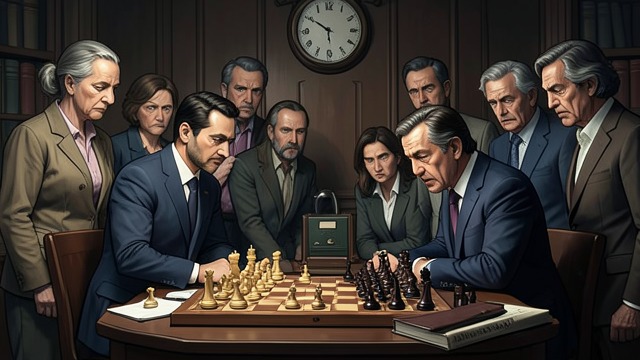
The Royal Game
Beyond pastime
The narrator considers whether chess is a game, a science, or an art. Its fixed board allows immense variation, making it a compact field for imagination and calculation.
Distinct forms of mastery
The game rewards a specific combination of vision, patience, and technique. Mirko Czentovic’s singular ability makes the narrator wonder how a whole mind can become so narrowly specialized.
Mind Made Visible
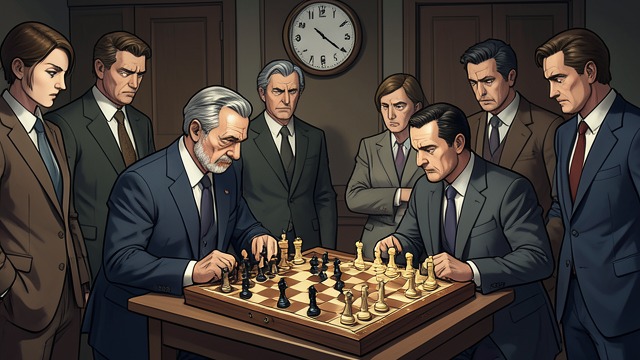
Thought on Sixty-Four Squares
Calculation in public
Dr B reads a dangerous chess position several moves ahead and guides the amateurs through a defense. The board gives visible form to thought that the spectators cannot themselves follow.
A contest of unlike minds
Mirko Czentovic’s physical stillness contrasts with Dr B’s rapid perception. The match makes intellectual difference legible not through explanation alone but through the players’ behavior and choices.
The Limits of Play
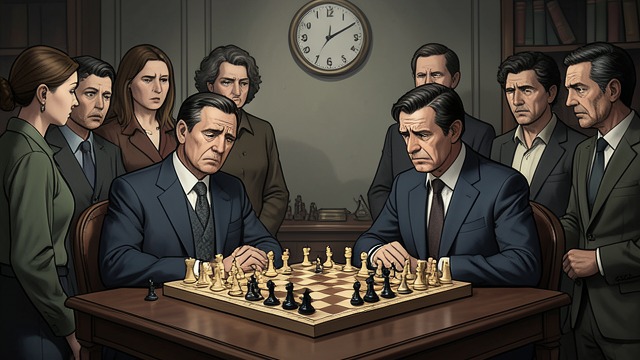
When the Game Becomes Dangerous
A boundary crossed
Dr B’s false check exposes that his mind has slipped from the shared board into a different imagined game. The mistake marks a limit to what intelligence and concentration can safely sustain.
A game refused
He ends the match and says he will not play again. Chess remains an extraordinary form of thought, but his experience makes clear that its power can become destructive when it has no external boundary.
During the narrator’s early reflections at sea
During the group match’s endgame
At the end of Dr B’s second game
