Germany
The Royal GameGermany is a source of political power that reaches across the border into Dr B’s Austrian life, first through the National Socialists’ surveillance network and then through the Gestapo’s interrogation of him. In his account, Germany is not merely a setting beyond Austria: it is the origin of an organized effort to monitor institutions and extract information about property and political connections.
Cross-border surveillance
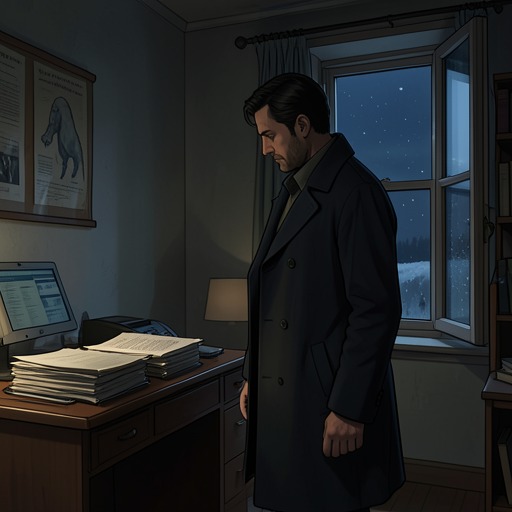
Dr B explains that his legal practice, inherited from his father, discreetly advised monasteries and managed their assets, as well as funds belonging to members of the imperial family. After Hitler took power in Germany and began targeting Church and monastic property, transactions intended to move portable assets beyond confiscation passed through the practice. Its inconspicuous office and careful handling of correspondence had helped conceal this work, but they could not protect it from political surveillance. The National Socialists had established networks among the aggrieved and resentful in neighboring countries, placing informers in ministries and businesses. Dr B’s firm had also acquired one: a clerk hired on a priest’s recommendation to provide the appearance of an ordinary business. The clerk handled routine messages and telephone calls, but was excluded from confidential correspondence and discussions. Dr B typed important letters himself, kept essential files at home, and moved sensitive conversations to a priory or his uncle’s consulting room. Despite those precautions, the clerk’s work changed. Dr B later recalled that, in the months before his arrest, the clerk became unusually eager and offered to take correspondence to the post. He suspected that the clerk had been tasked by Munich or Berlin with watching the firm. The account does not establish exactly what the informer discovered; that uncertainty becomes consequential once Dr B is detained.
Germany and the pursuit of information
Dr B says that the National Socialists wanted evidence that monasteries had transferred assets fraudulently, as well as information about the imperial family and people who had supported the monarchy. They also believed that some of the money handled by Dr B remained hidden beyond their reach. His work as a legal adviser and administrator was thus reinterpreted by the regime as a route to financial and political intelligence. This investigation placed Dr B among detainees whom the authorities hoped to pressure for money or important material, rather than among those sent to concentration camps. He describes prominent prisoners being held at the Hotel Metropole, which served as Gestapo headquarters, and says that he too was given a room there. The apparent distinction of an individual hotel room was, in his account, not humane treatment but a means of applying a different kind of interrogation pressure.
Interrogation and uncertainty
After fourteen days of isolation, Dr B was summoned for questioning. The interrogators asked about bonds bought for particular monasteries, the banks with which he had corresponded, and letters from abroad. He could not tell what the authorities already knew: whether his uncle had received the documents sent by Dr B’s housekeeper, what the clerk had disclosed, or whether intercepted correspondence or information extracted from others had filled gaps in the Gestapo’s files. That information imbalance made both admission and denial dangerous. An answer that revealed something new might expose another person to severe consequences; denying too much could incriminate Dr B himself. When questioning ended, the uncertainty followed him back to his room. He repeatedly reviewed his answers and tried to anticipate what the interrogators might ask next, turning the unanswered questions of the investigation into a continuing internal interrogation.
Narrative significance
Germany’s role in Dr B’s recollection is defined by the movement of political power across borders: surveillance enters an unremarkable office, and the work of protecting entrusted assets becomes grounds for detention and questioning. The unknown extent of the informer’s disclosures links the firm’s earlier precautions to the later interrogation, without resolving what the authorities had actually learned. The episode also sets official questioning against the pressure created by uncertainty. Dr B cannot measure the evidence held by the Gestapo or know what has been said by others, so even a carefully considered answer carries risks beyond himself. Germany’s presence in the story is therefore conveyed not only through its agents and institutions, but through the limits they impose on what Dr B can safely know or say.