Gestapo
The Royal GameThe Gestapo is the instrument of National Socialist surveillance and coercion in Dr B’s account of his arrest and imprisonment. It first penetrates a discreet legal practice through an informant, then seeks evidence about funds associated with monasteries and the imperial family. Its most consequential method in the episode is not open physical violence but isolation: by withholding contact, information, and ordinary means of occupation, it turns uncertainty into an interrogation that continues inside the prisoner’s mind.
Political Reach and Surveillance
Dr B’s family practice managed assets for monasteries and members of the imperial family, relationships inherited across generations and maintained through discretion. After Hitler came to power in Germany and began targeting church and monastic property, the office handled cross-border negotiations intended to keep portable assets from confiscation. Its work also brought it knowledge of secret political dealings involving the Roman Curia and the Austrian imperial house. Though the firm had no plaque on its door and outwardly avoided monarchist circles, it served as a channel for important messages carried by secret couriers.
The Gestapo’s reach is shown not only in the arrest that follows, but in the network of observation already planted inside ordinary institutions. National Socialists had established cells in ministries and businesses and placed spies and listeners even in the cabinets of Dollfuss and Schuschnigg. In Dr B’s office, their informant was a poorly regarded clerk, hired on a priest’s recommendation to make the practice look like a normal business. He handled the telephone and routine filing, but was excluded from the real work: he could not open the post, Dr B typed important letters without copies, essential files went home with him, and sensitive conversations took place elsewhere.
Those precautions limited what the clerk could learn, but could not prevent suspicion from becoming surveillance. Dr B later recalled that the clerk’s slack work had turned into unusual eagerness and that he repeatedly volunteered to post correspondence. He also considered whether a courier might have used the forbidden title “His Majesty” instead of the agreed cover name “Baron Fern,” or whether the clerk had opened letters. By the time Dr B recognized the change, the Gestapo had assigned the clerk to watch the firm. The episode makes information control central to the organization’s power: the office can conceal its files and conversations, but cannot know what its compromised employee has noticed or reported.
Arrest and the Search for Evidence
Dr B was arrested by the SS on the evening Schuschnigg announced his resignation, a day before Hitler entered Vienna. He had heard Schuschnigg’s farewell speech on the radio and burned the most important papers. Just before the officers broke down his door, he also sent indispensable documents concerning assets the monasteries and two archdukes had deposited abroad to his uncle, carried in a laundry basket by his trusted housekeeper. These actions preserved some material from immediate seizure, but did not end the Gestapo’s interest in what he knew.
Dr B distinguishes his treatment from the fate of those sent to concentration camps. The Gestapo placed him among a smaller group from whom it hoped to extract money or politically useful information. His own importance lay in his position as administrator and confidant: the authorities wanted incriminating material against the monasteries, which they sought to accuse of moving assets fraudulently, and against the imperial family and its supporters. They also suspected that funds handled by the firm remained beyond their reach. The investigation thus recast a private fiduciary practice as a source of evidence and a route to assets the regime wanted to seize.
For this group, the Gestapo used the Hotel Metropole, which also served as its headquarters. Dr B notes that Chancellor Schuschnigg and Baron Rothschild were likewise held there, rather than being sent to a camp, because the authorities sought money or information from them. A private room in a hotel could look like preferential treatment; in his account, it was instead the setting for a carefully designed interrogation method. The apparent comfort of an individual room concealed the purpose of isolating each prisoner from other people and from the ordinary world.
Isolation as Interrogation
The room Dr B describes had a door, bed, armchair, washbasin, and barred window, but its furnishings offered no meaningful company or occupation. The door stayed locked, the window faced a firewall, and there were no books, newspapers, paper, or pencil. His watch, penknife, and cigarettes had also been taken away. The warder was forbidden to answer questions or speak. The Gestapo’s method depended on this controlled absence: rather than relying on conspicuous bodily force, it sought to create pressure from the prisoner’s separation and deprivation of ordinary sensory and social contact.
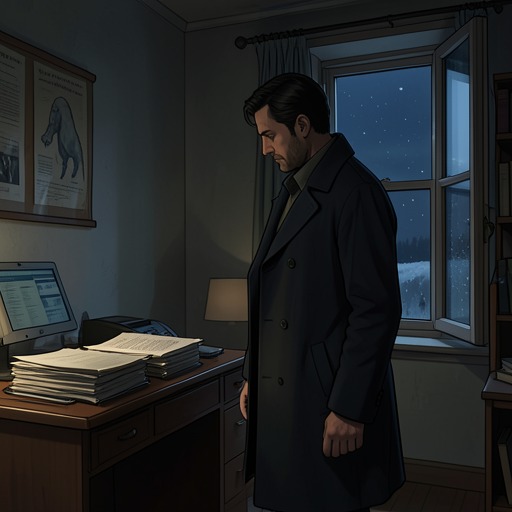
For fourteen days, Dr B lived without a reliable sense of time or news of events beyond the room. Its small inventory—table, door, bed, washbasin, armchair, window, and wall—became the whole field of his attention. He repeatedly studied the same zigzag pattern in the wallpaper until its lines were fixed in his memory. The account’s contrast between an apparently ordinary hotel room and an enforced, sealed-off existence gives the room its institutional meaning: its function was not hospitality but the elimination of distraction and connection.
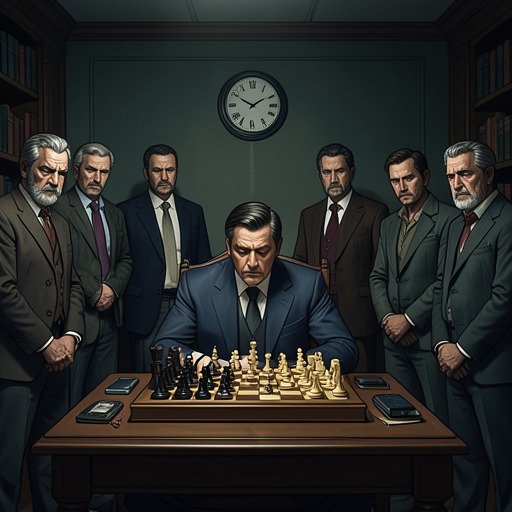
The isolation prepared the ground for questioning, but did not end when an interrogation ended. Dr B was summoned at an uncertain hour, led through corridors, made to wait, and then questioned by uniformed officials around a table. Files lay before them, but he could not see what they contained; he could not know what the officials wrote down or how much the Gestapo already knew. Questions mixed the direct with the misleading, and the information asymmetry made every answer risky. If he disclosed something new, he might endanger another person; if he denied too much, he could expose himself to suspicion.
The uncertainty followed him back to his room. He replayed his answers word by word and tried to anticipate what he should say at the next interrogation, while knowing he could never discover what the officials had recorded or learned from intercepted letters, the clerk, or others connected with the office. In this way, the Gestapo’s questioning acquired an afterlife: the prisoner continued its work through self-examination, without needing an interrogator in the room. Dr B describes that mental review as more relentless than an interview that at least ended after an hour.
Method and Narrative Significance
The Gestapo’s method in Dr B’s account joins administrative procedure to psychological pressure. Its agents pursue documents, correspondence, financial transactions, and names, while the prisoner is denied access to the files that would show the boundaries of their knowledge. The resulting uncertainty distorts the choice between disclosure and denial: either answer might expose someone else or increase danger to Dr B himself. Rather than presenting interrogation as a straightforward exchange of questions and answers, the account shows how secrecy and incomplete information make the prisoner responsible for guessing at an unseen case.
The room’s sameness and the interviews’ opacity also explain why isolation functions as more than a setting. With no book, paper, newspaper, or conversation to interrupt reflection, Dr B’s thoughts circle back over each answer and begin to reproduce the pressure of questioning. The Gestapo’s design aims to make that internal repetition exhaust resistance and induce disclosure. In this episode, the organization’s power is therefore represented both through its ability to penetrate a hidden network and through a method that makes confinement continue as self-surveillance after the formal interrogation has stopped.