The Gestapo’s isolation-interrogation regime
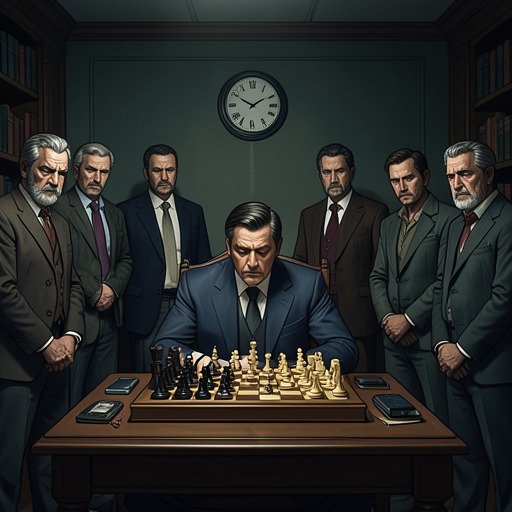
The Royal GameThe Gestapo’s isolation-interrogation regime turns apparent privilege into a means of pressure: Dr B is held alone in a private hotel room, not subjected to the same conditions as prisoners sent to concentration camps, but deprived of nearly every stimulus that might interrupt thought. The method seeks information about assets and political connections by making uncertainty, repetition, and isolation work upon the prisoner between formal interrogations. Dr B’s account presents the room not as a refuge from violence but as an instrument of interrogation whose most persistent question is the one he comes to ask himself.
Political Purpose and Custody
Dr B’s detention follows from the discreet legal practice he had run with his father and then alone. The firm advised and managed the assets of large monasteries and members of the imperial family, maintaining longstanding connections with the court and clergy. After Hitler took power in Germany and began seizing Church and monastic property, the practice also handled negotiations intended to move portable assets beyond confiscation. Its inconspicuous office and careful division of work concealed its real business, but a clerk whom Dr B had hired to give the firm the appearance of an ordinary legal practice became an informer. Important letters were typed without copies, sensitive files were taken home, and secret discussions were moved elsewhere; nevertheless, the clerk’s surveillance eventually contributed to Dr B’s arrest. The Gestapo wanted information that could implicate monasteries in moving assets fraudulently, as well as evidence against the imperial family and its supporters. It also believed that a substantial share of the funds handled by Dr B remained beyond its reach. His custody therefore served an investigative and financial purpose: he belonged to a small category of detainees from whom the authorities sought money or significant information, rather than to the group sent to concentration camps. The account identifies other prominent prisoners who were housed at the Hotel Metropole, then Gestapo headquarters, and makes clear that Dr B’s own assignment to a private room belonged to the same practice.
The Room as an Instrument
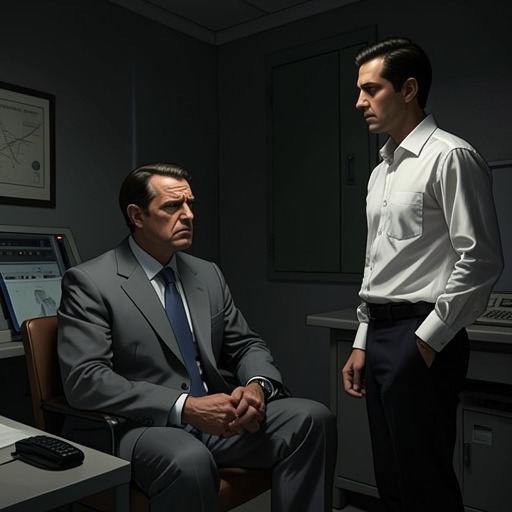
The arrangement could look humane from the outside. Dr B had a room of his own, with a door, bed, armchair, washbasin, and barred window. In practice, the locked door and the window facing a firewall cut him off from the world beyond it. He had no book, newspaper, paper, or pencil; even his watch and penknife were taken, and he was denied cigarettes. The warder who brought food was not permitted to answer questions or speak. The room’s few ordinary objects remained in place, but nothing in it offered meaningful contact, change, or diversion. This deprivation dismantled the cues by which Dr B might have organized experience. Without a watch, he could not track time; without a view beyond the wall, he had no changing scene to attend to; without conversation or reading, there was no exchange of information or ideas. He describes the resulting solitude as a void in which thought itself began to repeat and turn back on itself. Walking up and down, he found that even thinking required some point of support: in the room’s unchanging conditions, attention returned to the same questions and movements rather than progressing toward a conclusion. The regime lasted fourteen days before the interrogations began. Dr B could not tell whether it was day or night when summoned, and the journey through corridors offered no explanation of what awaited him. At the questioning table, uniformed officials worked through files whose contents he could not see. Questions ranged from the real to the deceptive, while the interrogators’ notes remained hidden from him. Thus even the formal interview withheld the information he needed to judge his situation: he could not tell what the Gestapo already knew, what the informer had disclosed, or what might still be obtained from other people connected with the practice.
Interrogation Extended into Solitude
The uncertainty made each answer consequential. If Dr B acknowledged something the officials did not already know, he feared that he might expose another person to danger; if he denied too much, he risked making himself more vulnerable. The questions concerned which bonds he had bought for particular monasteries, the banks with which he had corresponded, people he knew, and letters that might have arrived from abroad. The information imbalance was central to the pressure: the interrogators could consult records and keep their knowledge concealed, while Dr B had to answer without knowing how much evidence they possessed. The interview did not end the process. Back in the same room, Dr B reviewed his answers word by word, tried to anticipate the next round, and speculated about what the officials had recorded. The officials’ questioning lasted for a limited time; his own reconstruction continued in solitude and could not be checked against the hidden files. In this way, the method shifted interrogation into the hours between interviews. The prisoner was left to conduct an unending examination of his own statements, trying to correct or prepare them without access to the facts that might make such preparation reliable. The account stresses that this was not simply a less physically harsh alternative to camp imprisonment. In a camp, Dr B observes, other people and the visible environment would still provide something to notice. In the hotel room, the sameness of the table, bed, washbasin, and wallpaper gave his attention no external point of release. The private room that marked him out for special treatment instead concentrated pressure by removing variation, contact, and distraction. Its outward comforts concealed a method designed to make the detainee’s own thoughts increasingly difficult to escape.
Mental Effects and Narrative Significance
Over four months, the repeated conditions began to affect Dr B’s ability to concentrate and retain thoughts. He tried to occupy himself by reciting material learned by heart, including a national anthem, childhood rhymes, Homer, and passages from civil law. He also attempted mental arithmetic, but found it increasingly difficult to hold numbers in mind. His account keeps the distinction between the measurable duration and the lived experience: four months can be named quickly, yet the unchanging routine made that duration difficult to understand or communicate. He reports signs of mental confusion, and later describes how recalling the cell became difficult even after his release. The regime’s method is exposed through the contrast between its administrative appearance and its psychological operation. Dr B is not presented as receiving a room because the Gestapo intends to treat him kindly; the separation is itself the means by which the authorities seek to loosen his resistance and obtain information. The interviews, the concealed files, the silent warder, and the repetitive room form one connected system: control of information and contact sustains uncertainty, and uncertainty follows the prisoner back into solitude. The account therefore makes isolation not a background condition of detention but an active technique whose effects continue beyond the moments of direct questioning.