Vienna
The Royal GameVienna is both the discreet center of Dr B’s inherited legal work and the place where that work becomes grounds for his arrest. His recollection links the city’s concealed networks of trust—serving monasteries and members of the imperial family—to the Nazi authorities’ effort to extract information, then locates his detention and interrogations in the Gestapo’s Hotel Metropole.
The Practice and Its Viennese Connections
Dr B describes a legal practice first run with his father and later by himself. It avoided cases likely to attract press attention and generally refused new clients. Its work had narrowed to advising and managing the assets of larger monasteries, whose connections to the family reached back two generations. An uncle had been the Kaiser’s personal physician, while another relative was abbot of Seitenstetten; the family also managed funds belonging to members of the imperial family. In Vienna, this inherited trust depended less on a visible professional profile than on discretion and dependability. The practice’s quiet role acquired political significance when Hitler came to power in Germany and began seizing Church and monastic property. Negotiations conducted across the border aimed to rescue portable assets from confiscation, and Dr B’s office handled transactions connected to that effort. He says that he and his father consequently knew of secret political dealings involving both the Curia and the imperial house. The office kept no plaque on its door and appeared to avoid monarchist circles; this unobtrusiveness helped shield the work from inquiry. Dr B says that imperial couriers carried important messages through the unremarkable fourth-floor office without any Austrian ministry suspecting their purpose.
Infiltration and Arrest
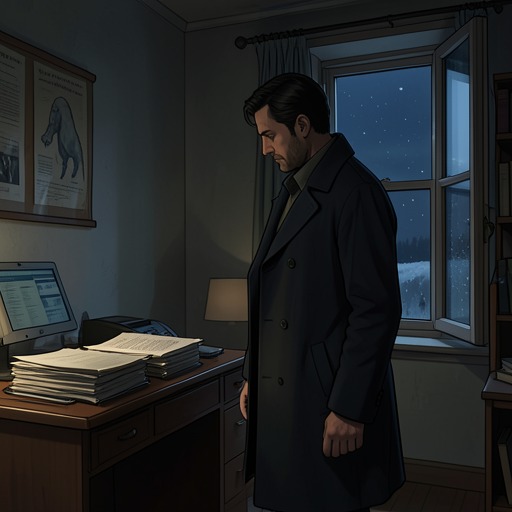
That protection failed because the National Socialists had established informers in institutions and businesses throughout neighboring countries. Dr B’s office had hired a clerk on a priest’s recommendation, ostensibly to make the practice look like an ordinary business. The clerk handled the telephone, filed harmless documents, and was not permitted to open the post. Dr B typed important letters himself without making copies, took essential files home, and moved confidential discussions to a priory or his uncle’s consulting room. He later surmised that the clerk, having noticed the mistrust around him, may have drawn attention to the office; the clerk’s formerly lax work had also turned conspicuously eager in the last months, including offers to carry correspondence to the post. Dr B connects his arrest to the transition of power in Austria. On the evening Chancellor Schuschnigg announced his resignation, and a day before Hitler entered Vienna, the SS arrested him. After hearing Schuschnigg’s farewell speech on the radio, Dr B burned the most important papers. Just before his door was broken down, he sent indispensable documents concerning assets that monasteries and two archdukes had deposited abroad to his uncle, carried in a laundry basket by his trusted housekeeper. The hurried destruction and transfer of records show how the office’s routine safeguards became an immediate effort to keep entrusted property and information beyond the reach of the new authorities.
Detention at the Hotel Metropole
Dr B distinguishes his fate from that of people sent to concentration camps. The Gestapo placed him in a small category of detainees from whom it hoped to obtain money or important information. His own standing was modest, he says, but officials recognized that his firm had acted as administrator and confidant to political opponents. They sought evidence that monasteries had moved assets fraudulently, information about the imperial family, and access to funds believed to remain beyond their reach. Rather than send such detainees to camps, the authorities held them for what Dr B calls special treatment. He compares his accommodation to the rooms assigned at the Hotel Metropole to the Chancellor and Baron Rothschild, whose relatives were expected to yield substantial sums. The hotel was also the Gestapo headquarters. A private, heated room could look like preferential treatment, but Dr B explains that its purpose was not humane comfort: the detainees were kept alone and cut off from the outside world so that isolation itself would create pressure. Vienna’s hotel setting thus concealed a form of custody designed around the extraction of secrets rather than a visible prison barracks.
Interrogation and the Burden of Uncertainty
The interrogations made Dr B’s professional knowledge dangerous in both directions. He could not tell what the Gestapo already knew about the office, whether his uncle had received the documents, how much the clerk had disclosed, or what correspondence had been intercepted. Investigators questioned him about bonds bought for particular monasteries, banks with which he had corresponded, named acquaintances, and letters from Switzerland or Steenookerzeel. Because he could not distinguish information already in their possession from information they still wanted, each answer carried a risk: confirming something new could endanger another person, while denying too much could incriminate him. The pressure continued after each session, when he returned to the same room and mentally reviewed every answer, trying to anticipate how it might be interpreted and what he should say next time. The account emphasizes how the lack of information about the investigators’ knowledge turned ordinary professional records and transactions into sources of peril. In Dr B’s recollection, Vienna is therefore not merely the home of the practice or the location of his arrest. It is the setting in which confidential legal stewardship is reclassified as evidence to be seized, and in which an apparently private hotel room becomes an instrument for pursuing the secrets of the people who had trusted him.