
The Patient and His Mother’s Estrangement
The Screwtape LettersThis flow follows the emotional distance between mother and son as ordinary habits, pride, and neglect accumulate.
increasing Bearing strength in each event
 decreasing
Bearing strength in each eventdecreasingA Familiar Household

Long-Standing Irritation
Habit
The mother and son have lived together long enough to know the expressions and tones that annoy each other. Their familiarity can make old resentments feel inevitable.
Opportunity
The demons exploit the ease of interpreting familiar gestures as deliberate provocations. Neither person readily notices how their own behavior affects the other.
Prayer Without Practical Care

Concern at a Distance
Abstraction
The patient may pray for his mother’s soul while focusing on the traits that frustrate him. He can overlook her rheumatism and immediate needs.
Emotional Split
The imagined mother in prayer drifts away from the real woman in the household. Spiritual concern becomes detached from the practical tenderness that might repair their bond.
Innocence Claimed by Both

Two Interpretations
Double Standard
The patient expects his own speech to be taken at face value while treating his mother’s tone as hostile evidence. She can be encouraged to judge him in the same way.
Separation
Both leave quarrels feeling nearly innocent. Their certainty protects them from acknowledging the harm their ordinary words and tones cause.
Neglect and Jealousy

A Growing Distance
Displacement
The patient’s social life takes time away from work and his mother. Her jealousy and alarm deepen as he becomes more evasive or rude.
Consequence
The relationship’s strain is part of the cost of his worldly drift. His choices affect a person close to him, not merely an abstract religious standing.
A Bond Left Unresolved
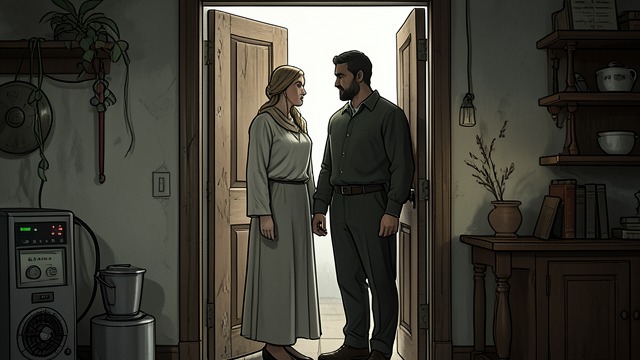
No Final Reconciliation
Limitation
The letters do not narrate a decisive reconciliation between mother and son. Their daily tensions remain part of the imperfect life the patient leaves behind.
Significance
The unresolved bond emphasizes that spiritual growth unfolds amid real relationships and incomplete repairs. The patient’s final fate does not make every earthly conflict disappear from the narrative.
Before the patient’s conversion
During the patient’s early religious practice
During repeated domestic quarrels
After the patient begins spending time with new acquaintances
By the patient’s death
