Noise, Music, and Silence
The Screwtape LettersNoise, Music, and Silence is the opposition through which Screwtape describes Hell’s effort to shut out Heaven and its order of life. Infernal Noise is not merely sound: he calls it a defense against scruple, despair, and desire, and imagines extending its dominion over the universe. Yet the music and silence he detests belong to a reality his own account cannot explain away, making the contrast an indirect measure of the limits of his worldview.
The infernal kingdom of Noise
Screwtape presents Noise as Hell’s universal occupation. Since the moment Our Father Below entered Hell, he claims, not a square inch of infernal space or a moment of infernal time has been yielded to music or silence. Instead, all is filled with Noise, which he celebrates as the audible expression of what is exultant, ruthless, and virile. Its function is defensive: it keeps at bay what he calls silly qualms, despairing scruples, and impossible desires.
That defense has an expansive ambition. Screwtape says that Hell intends to make the whole universe noisy and has already made considerable progress on Earth; the melodies and silences of Heaven, he predicts, will eventually be shouted down. His admission that Hell is not yet loud enough, followed by the mention of research, makes the ambition sound both organized and unfinished. Noise is at once a present condition of Hell and a project of further conquest.
Music, silence, and divine pleasure
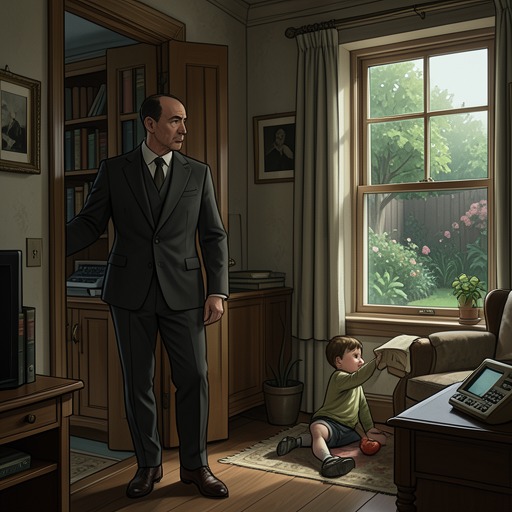
The contrast becomes personal when Screwtape describes the house and garden of the Christian woman whom the patient has come to know. He imagines that the family, visitors, gardener, dog, and cat all carry a quality he cannot tolerate, while insisting that the family’s apparent mutual love must conceal some private advantage. His certainty that affection must mask exploitation sits uneasily beside his inability to discover how the family supposedly profits from one another.
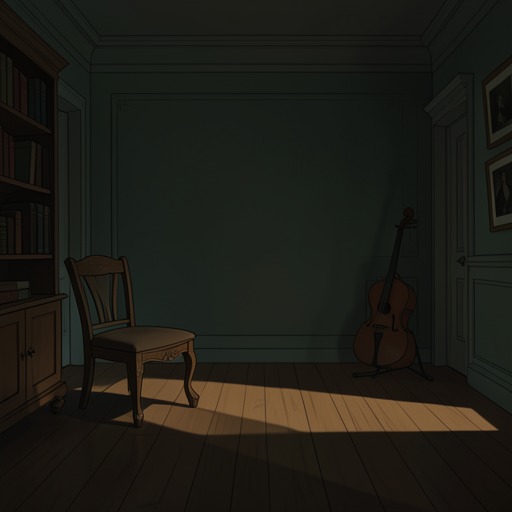
Against this suspicion, the passage invokes a description of Heaven as a region where there is only life and therefore everything that is not music is silence. For Screwtape, both music and silence are hateful: they represent a kind of existence not governed by the clamour with which Hell protects itself. The phrase links sound and quiet not as opposites in a contest for space, but as aspects of a living reality in which silence is not emptiness or defeat.
Screwtape’s outburst follows his complaint that the Enemy has filled the world with ordinary pleasures, including sleeping, washing, eating, drinking, making love, playing, praying, and working. He concedes that nothing is naturally on Hell’s side and that these pleasures must be twisted before they can be useful to tempters. His hatred of heavenly music and silence therefore belongs to a broader resentment: creation contains forms of pleasure and life that do not inherently serve infernal purposes.
A contest of opposed worlds
The motif draws force from the larger philosophical opposition in Screwtape’s letters. He describes Hell as a system in which one self’s gain must be another’s loss, and treats existence as competition and the stronger self’s absorption of the weaker. By contrast, his account of the Enemy’s purpose describes distinct beings united without being swallowed up: humans are to become sons rather than food, and divine fullness gives rather than consumes. Noise’s ceaseless occupation of space and time fits the infernal drive to dominate; music and silence suggest a mode of existence that does not reduce relation to rivalry.
Screwtape’s own explanations must be read with caution. The preface warns that he is a liar and that not everything he says should be accepted, even from his own perspective. His descriptions of Hell’s Noise are therefore the claims of a hostile speaker, not a neutral account. Still, the letters’ contrast between infernal self-absorption and divine giving undercuts his insistence that love is impossible: he repeatedly treats the Enemy’s love as a deception precisely because he cannot identify what the Enemy gains from it.
The final reversal
At the patient’s death, the sound-and-silence opposition acquires a final spiritual consequence. The patient recognizes the beings he had not known he could see and discovers that the central music present in his pure experiences has at last become intelligible. Screwtape says that the patient recognizes his companions almost before his corpse has become still, while Wormwood remains outside. The music he had previously failed to recover becomes part of his recognition and welcome.
The patient also sees the Enemy, whose presence appears to him not as the blinding, suffocating fire Wormwood experiences but as cool light and clarity. The contrast exposes the failure of infernal perception: what overwhelms the demon is life-giving to the human being he tried to tempt. In the ending, Hell’s Noise has not drowned out the reality it opposes. The patient’s recognition of music, company, and divine presence confirms that the infernal campaign cannot make its own account of existence final.