The patient’s death and entry into Heaven
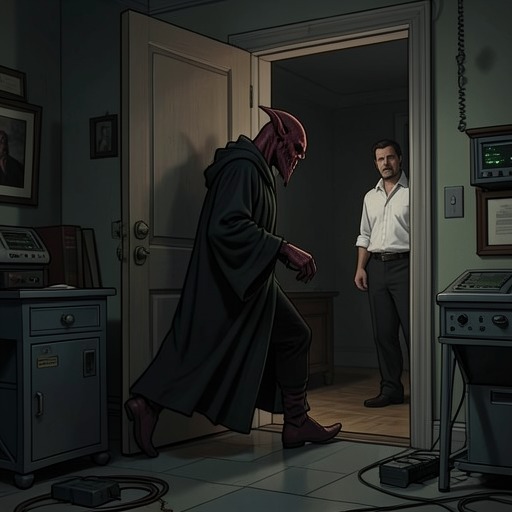
The Screwtape LettersThe patient’s death and entry into Heaven are the decisive reversal of the infernal campaign: the bombing ends the patient’s earthly life, but not in the capture Screwtape has sought. In his last letter, Screwtape describes death as sudden liberation, followed by recognition of the spiritual company the patient had not understood and of God Himself. The account is filtered through a furious, self-incriminating demon: even as Screwtape tries to explain away divine love, the patient’s passage exposes the limits of a worldview built on possession.
The Death in the Bombing
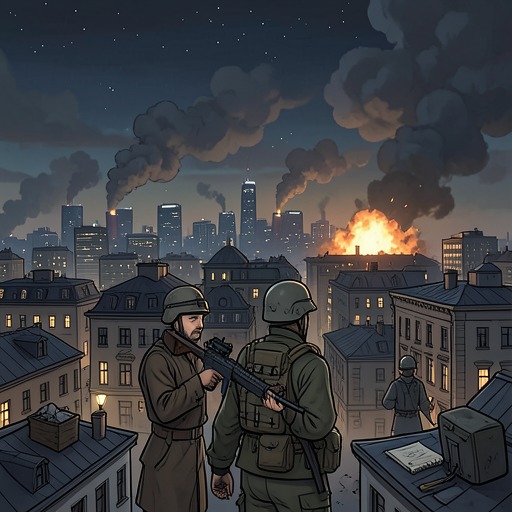
The patient’s death comes amid the bombing’s immediate bodily terrors. Screwtape recalls the scream of bombs, collapsing houses, the taste and smell of high explosive, exhaustion, fear, and pain. In one moment the patient seems surrounded by a world of destruction; in the next, that world is gone. The passage offers no gradual decline, medical sentence, nursing home, or operating theatre: Screwtape stresses the abruptness of the change, from mortal suffering to release.
That abruptness reverses what the demons would have made of the patient’s earthly vulnerability. Screwtape’s image of a narrowing passage turns the horrors into a sequence that seems to worsen until the patient expects to be crushed, then suddenly finds himself beyond them. The logic of the experience becomes intelligible only at its end: suffering has not delivered him into infernal possession. The bombing remains devastating, but it cannot dictate the final meaning of his death.
Recognition and Release
Screwtape imagines the patient’s first recognition as a sudden clearing of the eyes. The patient sees the part the demons had played in his life and understands that their hold has ended. Screwtape likens the release to the removal of a scab, the shedding of a clinging garment, and a cleansing more complete than ordinary bodily relief. These images make salvation a loosening of what had adhered to the patient, rather than an absorption of him into another will.
The patient also sees the heavenly beings who had been present in his life without his knowing it. He had sometimes supposed himself alone and had only dimly sensed companionship; now that presence becomes recognizable. The recollection of friends about him from infancy and of a central music within his pure experiences gains an explanation in retrospect. Recognition makes him welcome among these beings almost before his corpse has become still, while Screwtape alone remains outside.
The movement from doubt to recognition is not presented as the patient solving an argument. Screwtape says that the patient had even doubted the beings’ existence, yet on seeing them he knows them as familiar: his response is recognition rather than a request for their identities. The scene thus changes the significance of earlier solitude without claiming that the patient understood its source while alive. What had seemed obscure becomes legible at the threshold of death.
The Presence of God
The final recognition is of God. Screwtape contrasts his own response to Heaven with the patient’s: what is blinding and suffocating to the demon is cool light and clarity to the human being, and God appears in human form. The patient’s prostration and knowledge of his sins might look, to an infernal observer, like the paralysis Screwtape experiences in Heaven’s presence. Screwtape insists that this analogy fails. The patient can encounter pain without being barred by it, and would not exchange those pains for earthly pleasure.
That contrast gives the ending its particular force. The patient’s awareness of sin does not become a weapon by which Screwtape can reclaim him. His former attractions—including pleasures of sense, heart, intellect, and even virtue—lose their power beside the presence he had believed lost. Screwtape reaches for the image of a beloved thought dead and then found alive at the door: the patient’s joy has a personal object, and the demon’s calculations cannot measure it.
Infernal Hunger and the Meaning of the Ending
The final letter turns the patient’s deliverance into a defeat for Screwtape and Wormwood. Screwtape says that a soul has slipped through Wormwood’s fingers and that the loss reverberates through the Kingdom of Noise. His anger is inseparable from appetite: elsewhere in the same closing outburst, he declares that he expects Wormwood himself, or part of him, to be given over as food. The threat makes the infernal idea of love—desire understood as possession—visible in the very moment Screwtape claims affection.
The ending answers that appetite with a different account of the person. Screwtape elsewhere explains the demonic aim as the absorption of one will into another, while God’s purpose is for creatures to be united with Him and still remain distinct. The patient’s entry into Heaven enacts that contrast: he is welcomed into company, not erased by it. Screwtape’s language of feeding and capture cannot account for a freedom that survives death and enters relationship without becoming a demon’s property.
The narrator’s framing also calls for caution. The book warns that Screwtape is a liar and that his claims should not be accepted as wholly true, even from his own perspective. His account of the patient’s final recognition is therefore not a neutral report of Heaven; it is an enemy’s description, shaped by envy, humiliation, and ignorance. Yet the ending’s central reversal emerges through his failure to explain what he sees. He can recognize the patient’s release and the demons’ defeat, while still treating love as an impossible disguise. The patient’s death and entry into Heaven bring the campaign to its close and leave that infernal misunderstanding exposed.