the patient's first air raid
The Screwtape LettersThe patient's first air raid becomes a test not of whether the patient feels fear, but of what he does while afraid: although he thinks himself a coward, he fulfills his duty and perhaps exceeds it. In Screwtape’s account, the patient’s conduct is a major setback for Wormwood, while the raid’s aftermath offers a subtler opportunity to turn fatigue and expectation into resentment and surrender.
The Patient’s Conduct Under Attack
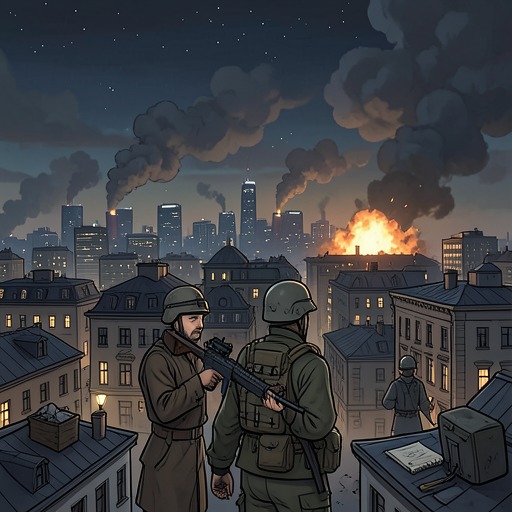
Screwtape learns from the Infernal Police, rather than Wormwood’s inadequate report, that the patient has behaved as badly for Hell as possible during the raid. The patient is very frightened and takes that fear as evidence of cowardice; because he feels no pride in himself, his sense of his own conduct remains sharply different from its actual measure. He has nevertheless done everything duty demanded, perhaps a little more. The contrast between self-judgment and action is decisive: fear has not prevented him from acting dutifully.
Wormwood’s only gains are small lapses: the patient loses his temper with a dog that trips him, smokes excessively, and forgets a prayer. Screwtape sets these against the patient’s conduct as a whole, refusing to treat them as a counterweight to the duty he has performed. His rebuke makes the infernal standard explicit: Hell is concerned with results, not with a tempter’s difficulties, intentions, or claim to fair consideration. Wormwood must bring back food or become food himself.
Fatigue as a Second Opportunity
The raid does not end the struggle over the patient; it changes its terrain. Screwtape identifies Wormwood’s expectation of good results from fatigue as the one constructive point in his letter, but warns that fatigue does not work in a single, predictable way. It can produce anger, malice, and impatience, especially when a tired person faces demands he did not expect. Since people readily come to regard what they expect as something owed to them, disappointment can be recast as injury.
Moderate fatigue, Screwtape argues, can make a person more peevish than absolute exhaustion. Yet exhaustion may bring a different danger: once people have accepted what cannot be changed, despaired of relief, and stopped thinking even half an hour ahead, weariness can become humbled and gentle. That quiet may bring gentleness of mind and even something like vision. Fatigue, then, is not inherently a path to corruption; its effects depend partly on the demands placed on the tired person and partly on the way a tempter shapes his expectations.
False Hope and the Threshold of Relief
To make fatigue work for Hell, Wormwood must keep the patient expecting that the air raid will not happen again and imagining how much he will enjoy his bed the following night. These comforting predictions are dangerous precisely because they make the strain seem temporary. The patient is to be led to believe that he can endure it only for a reasonable period, with that period set shorter than the trial is likely to last.
Screwtape’s strategy depends on the timing of surrender. People often feel that a strain could not have been endured any longer just as it is ending, or as they think it is ending. Wormwood is therefore to make the patient yield when relief is almost in sight. The first raid’s aftermath becomes a contest over whether the patient can meet what comes without making endurance conditional on a promised end. Screwtape’s account turns the episode into a study of spiritual pressure: fear does not cancel duty, while fatigue becomes most exploitable when false hope makes perseverance seem to have an agreed limit.