
Marie Bashkirtseff’s Pursuit of Recognition
The Second SexThis flow traces Marie Bashkirtseff’s early delight in being seen, the growth of an imagined romantic self, and her recognition that social limits obstruct independent achievement.
increasing Bearing strength in each event
 decreasing
Bearing strength in each eventdecreasingThe First Audience
Learning to Be Seen
A performance at home
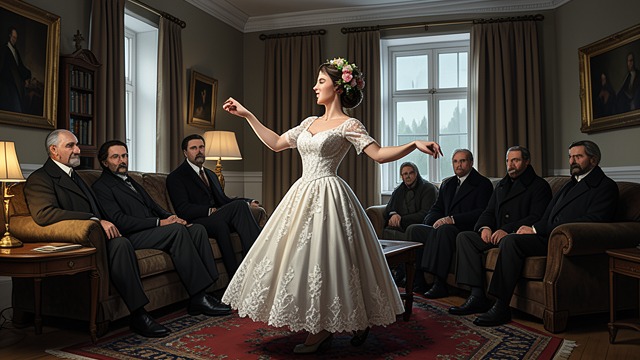
Marie Bashkirtseff recalled dressing in her mother’s lace, putting flowers in her hair, and dancing in the living room while the household watched. She imagined herself as a famous dancer, already turning attention into a source of pleasure and identity.
The scene was more than childish play. It showed how early she learned to experience herself through an admiring audience and how the gaze of others could make her feel real and exceptional.
A lasting pattern
The desire to be admired would persist as she grew older. Her diary later preserved not only her ambitions but also her careful attention to the image of herself she hoped others would see.
The Mirror as Heroine

A Self Made into an Image
Narcissistic delight
In her diary, Marie Bashkirtseff repeatedly described her own beauty, hands, face, and grace. She could call herself her own heroine, imagining how an audience might respond to her appearance and presence.
The mirror and the imagined spectator offered a substitute for a public life she could not yet shape. Self-admiration brought her a sense of power, but it also tied her identity to being seen and approved.
Image and ambition
Her wish to sing onstage expressed both a real longing for artistic achievement and a desire to command attention. The two motives were intertwined: recognition promised to confirm her value, while her image became an imagined route toward recognition.
The Distant Duke

A Love Kept Imaginary
A sovereign beloved
Marie Bashkirtseff became absorbed in an imagined romance with a socially prestigious duke whom she had never spoken to. She pictured him admiring and choosing her, turning distant attention into a private theater of conquest and self-exaltation.
The man’s distance made him useful to the fantasy. Because a real relationship could not test the image, she could imagine herself both humbling herself before a superior and becoming magnificent through his admiration.
A protected desire
The fantasy allowed her to experience intense feeling without risking an ordinary encounter. Its safety also exposed the constraints around her: romantic recognition seemed more available than an independent public career.
A Woman’s Narrow Chances
Recognition Without a Career
A lucid complaint
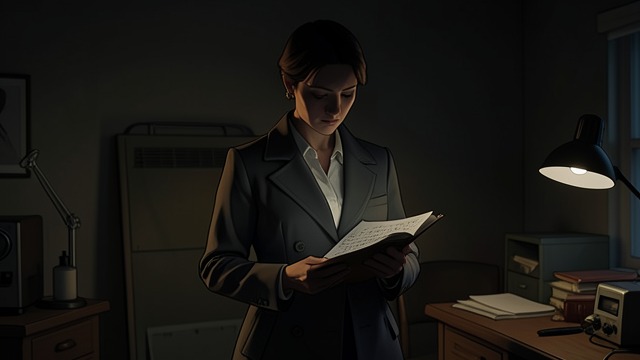
Marie Bashkirtseff recorded her belief that she could become “someone,” yet asked what a woman could do in skirts. She contrasted men’s many possible careers with marriage as the one recognized future for women.
Her complaint showed that she understood the mismatch between her ambition and the social routes open to her. The obstacle was not simply a lack of talent; she saw that women were denied the opportunities through which talent could become publicly consequential.
The need for a witness
She still imagined a man’s love as a source of status and confirmation. That reliance did not cancel her ambition, but it revealed how a woman could be pushed to seek recognition through a powerful man when independent achievement was difficult to secure.
Ambition Without Resolution
The Unfinished Project
Competing routes
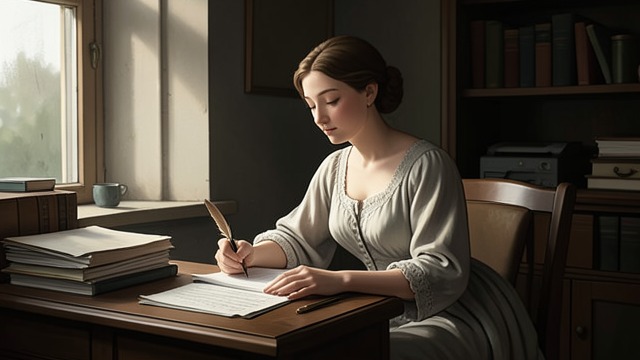
Marie Bashkirtseff’s writing records an effort to imagine a future in which her intelligence, appearance, and artistic promise would all be recognized. She wanted distinction, but she lived in a society that offered women fewer ways to build a public life through their own work.
Her self-fashioning therefore remained divided between creating something and becoming an admired image. The diary captures the urgency of her ambition without turning it into a simple story of emancipation or defeat.
A preserved inner life
The available account does not resolve her efforts into a completed career. Instead, the diary itself becomes a record of the conflict: a woman trying to make herself visible while confronting the limits placed on women’s public achievement.
Early childhood
Childhood through early adolescence
Adolescence
Around age eighteen
Later adolescence and young adulthood
