
Property, Law, and Patriarchal Authority
The Second SexThis thread traces the historical conflict through which women’s social position is tied to descent, inheritance, marriage, and legal control, while showing the uneven openings that challenge those structures.
increasing Bearing strength in each event
 decreasing
Bearing strength in each eventdecreasingFrom Nomadic Hordes to Farming
Production and Male Authority
The Early Struggle for Survival
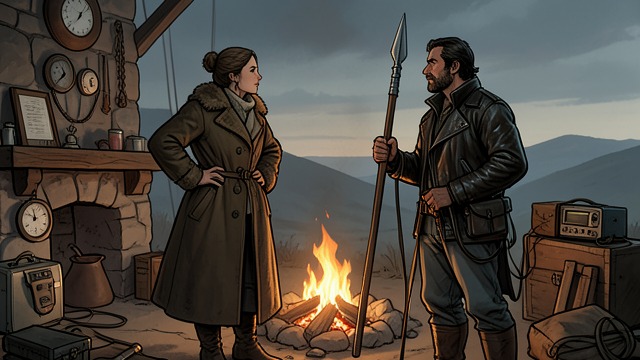
De Beauvoir argues that women’s reproductive burdens could restrict their ability to join the labor that helped sustain early human groups. Men’s hunting, tool use, and risk-taking, in her account, came to be associated with projects that went beyond immediate biological repetition.
From Life to Project
The resulting hierarchy did not arise from anatomy alone. As humans began to value action that altered the world and opened a future, male activity was elevated over the work of maintaining life. Women’s contribution was thereby assigned a lower status even though both sexes remained necessary to collective survival.
The conflict takes shape as a difference between the social meanings attached to production and reproduction. What a society prizes as creative action becomes a basis for authority; what it treats as repetition becomes women’s assigned sphere.
Land, Lineage, and Descent

The Land and the Line
Maternal Prestige
With settled agriculture, land and descendants acquire new importance. In communities that understand lineage through the mother, women can hold religious and social prestige because motherhood appears closely linked to the fertility of fields and the continuity of the group.
Prestige Without Sovereignty
That symbolic importance does not necessarily mean women govern as an independent group. De Beauvoir argues that men still control political authority and that women often function as the means by which relations between male groups are organized.
The conflict is between being revered as a source of life and possessing power over one’s own life. Maternal prestige can coexist with male guardianship, leaving women central to the community yet unable to determine the terms of their social position.
Inheritance Becomes Control

Property and the Wife
The Heir’s Claim
As private property and inheritance become central, men seek to ensure that property passes to descendants recognized as their own. This strengthens controls over women’s sexuality, marriage, and legal status.
Woman as Property
A woman excluded from inheritance is also denied the independence that ownership could provide. Her father first controls her; marriage transfers authority to her husband, while chastity and fidelity protect the inheritance line. De Beauvoir traces how this logic shapes unequal rights across societies and legal traditions.
The conflict is not simply personal jealousy but a structure linking family authority to property. Women’s bodies and lives become part of the system through which male wealth is preserved and transmitted.
Legal Freedom Without Power

Rights and Their Limits
Changing Legal Relations
De Beauvoir describes Roman women gaining increasing legal and economic capacities as the family’s authority shifts toward the state. They could inherit, manage property in some circumstances, and sometimes divorce, while legal restraints continued to treat them as inferior.
Freedom Without a Project
These gains did not automatically provide political power or meaningful work. A woman might possess formal rights yet lack an independent field in which to use them; freedom detached from economic and social opportunity remained largely negative.
The conflict is between emancipation on paper and effective agency. The Roman example shows that removing one form of guardianship does not by itself create a life in which women can act as independent subjects.
The Revolution and Its Reversal
Rights Reclaimed and Restricted
Revolutionary Opening
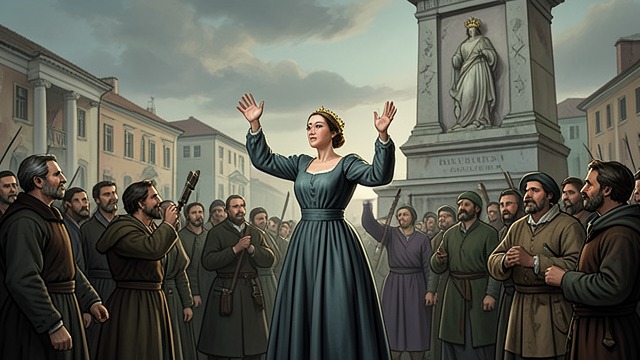
Women took part in revolutionary activity and demanded political equality, including through the Declaration of the Rights of Woman and of the Female Citizen. Some legal changes affected inheritance and divorce, but women’s political organizing was soon restricted.
The Household Reasserted
The subsequent legal order under the Napoleonic Code restored strong marital authority and confined women’s rights within the family. De Beauvoir presents this reversal as evidence that a revolution led by men could adopt universal language without granting women equal power.
The conflict shifts from public declarations to the terms of daily life. Abstract rights prove fragile when women lack collective power and when marriage continues to place them under male authority.
The chapter’s account of early human groups and the rise of tools
The discussion of settled agricultural communities and lineage
The chapter’s account of patriarchal inheritance and marriage
The discussion of late Roman legal changes and social life
From 1791 through the enactment of the Napoleonic Code
