
Work, Reproduction, and Liberation
The Second SexThis thread follows the conflict between women’s entry into productive work and the continuing burdens of reproduction and domestic labor, from industrial change to the unfinished modern transition.
increasing Bearing strength in each event
 decreasing
Bearing strength in each eventdecreasingTools Change the Balance
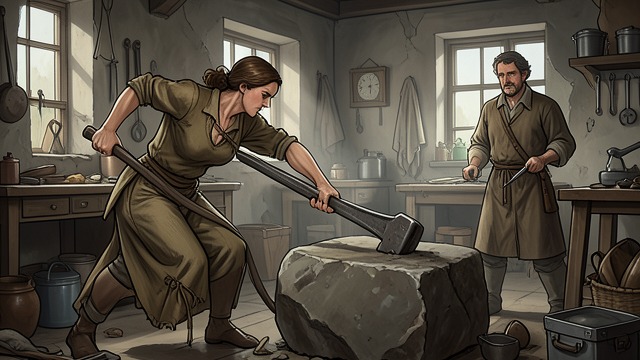
Technology and Capacity
Physical Difference in Context
De Beauvoir accepts that some forms of early labor favored greater physical strength. But the significance of that difference changes with technology: tools and machines can reduce the degree to which muscular force determines a worker’s capacity.
Work Becomes Possible
As production changes, women can undertake work previously treated as beyond their reach. The material basis of exclusion therefore shifts; what looked like natural incapacity may depend on the tools, tasks, and social organization of a particular period.
The conflict is between women’s potential participation in production and the institutions that continue to reserve economic authority for men. Technical change can unsettle hierarchy, but it does not itself remove social resistance or domestic obligations.
The Household Becomes Secondary
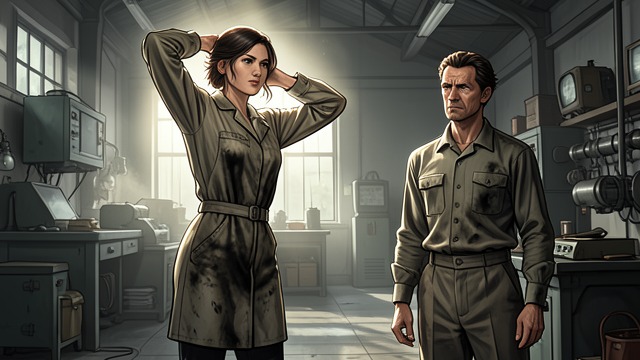
Entry into Industrial Labor
Work and Exploitation
The Industrial Revolution draws women into large-scale production, creating a material basis for economic independence. Yet women workers are frequently paid less, face harsh conditions, and are used by employers as cheaper and more docile labor.
Unequal Solidarity
Men workers may see women as competitors rather than allies, especially when low wages undercut their own. Women’s organizing and union participation develop slowly, leaving many exposed to exploitation even as paid work gives them a new role in the world.
The conflict is double: work can help women win dignity and economic autonomy, while capitalist and patriarchal arrangements use their labor without granting equality. Entry into production is a beginning, not a completed liberation.
Reproduction Enters the Struggle
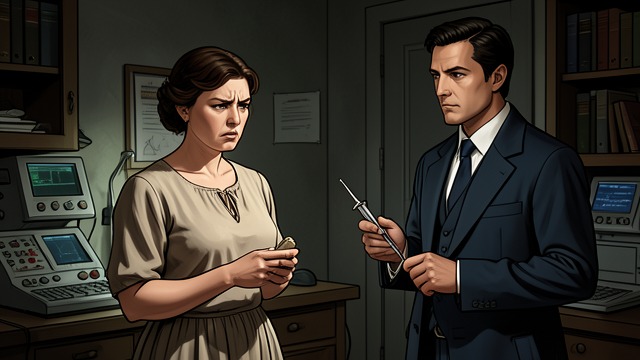
Control of Fertility
Unregulated Childbearing
For much of history, women’s fertility was not under their control, and repeated pregnancies could consume the time and strength needed for work. Birth control practices gradually spread, while abortion remained legally restricted and dangerous.
Competing Claims
The ability to limit pregnancy changes the conditions under which women can participate in economic life. Yet when contraception is prohibited and abortion criminalized, women bear the physical and social costs of policies made without their consent.
The conflict concerns who controls reproduction and whether motherhood is a freely assumed responsibility or an imposed condition. De Beauvoir treats reproductive autonomy as essential to women’s ability to shape their own working lives.
The Double Working Day

Paid Work and Domestic Labor
The Unfinished Equality
Women increasingly work outside the home, yet their salaries, opportunities, and prospects often remain inferior to men’s. Paid employment does not erase the expectation that they will perform housework and care for children.
A Burden Without Full Reward
The working woman must reconcile professional demands with domestic responsibilities, while institutions and customs provide little support. Even success in a profession may not bring equal authority, and marriage remains widely presented as the more honorable or secure career.
The conflict is between formal access to work and the continuing social arrangement that makes women responsible for both production and household maintenance. Economic participation offers a path toward independence, but the unequal distribution of labor keeps that path steep and exhausting.
A Transition Without Completion
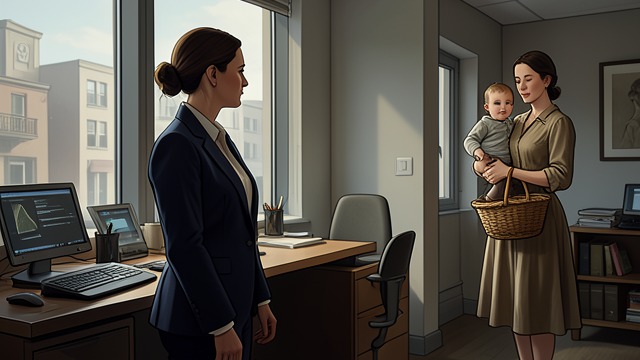
Freedom Still in Transition
New Possibilities
Women now enter factories, offices, universities, and professions; birth control and legal change have also begun to loosen older restraints. The historical movement makes it possible for more women to imagine a life not wholly determined by marriage or maternity.
The Persistent Contradiction
Yet abstract rights do not ensure concrete equality. Childcare and domestic work remain women’s responsibility, economic privilege still favors men, and social custom continues to present male support and marriage as routes to security.
The conflict is therefore unresolved: women are invited into a world whose institutions and values remain largely masculine. De Beauvoir describes a transition in which turning back is neither possible nor desirable, but genuine independence still requires material change and shared responsibility.
The comparison of early tools with modern machinery
The nineteenth-century expansion of factory work
From the spread of birth control to the legal conflicts of the nineteenth and twentieth centuries
The discussion of modern women’s work and household responsibilities
The historical survey’s account of the present transition
