“Woman will find the unknown!”
The Second Sex“Woman will find the unknown!” is the culminating promise Simone de Beauvoir draws from Arthur Rimbaud’s 1871 letter to Paul Demeny. It answers arguments that women lack creative genius by locating the historical absence of women’s work in the conditions that prevented them from making it. The unknown is not a special feminine essence waiting to be revealed; it is the range of thought and experience that can emerge when women live and create for themselves.
Rimbaud’s prophecy and its source
De Beauvoir cites Rimbaud’s words in a discussion of women’s creative potential. The source is his letter to Paul Demeny, dated May 15, 1871. In the passage she invokes, the promise that women will discover the unknown follows the breaking of women’s “infinite servitude”: once women live for and by themselves, they too will be poets. The future tense matters. The prophecy does not describe an achievement already secured; it names a possibility held back by women’s subjection.
The barrier is historical, not innate
The phrase occurs within a rejection of claims that women lack a natural creative “instinct” or an eternal feminine essence. De Beauvoir also challenges the argument that women’s historical record proves their incapacity. A past in which women were denied the possibility of producing a major work cannot establish an enduring truth about their abilities. She compares that reasoning with reproaches directed at groups whose conditions have excluded them from cultural achievement: the absence of recognized artists reflects an absence of opportunity, not proof of an inherent inability.
Freedom, work, and the possibility of creation
The prophecy is grounded in de Beauvoir’s broader account of freedom. Every person is an autonomous subject whose existence is realized through projects and movement toward an open future. Women, however, are made to assume the position of the Other and are pressed into immanence, where their projects are subordinated to another’s authority. Under those conditions, their possibilities are not simply overlooked: they are stifled and lost to humanity as a whole.
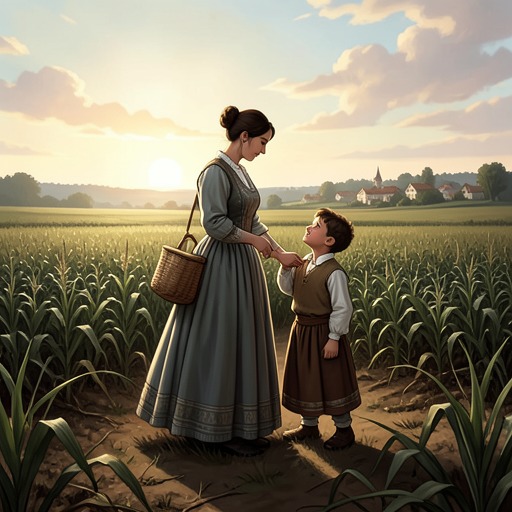
Her examples give this argument its material force. Childbearing and breastfeeding, she argues, are natural functions rather than projects that by themselves provide a woman with a chosen purpose; domestic labor, organized as repetitive work, can confine her to the same tasks day after day. The burden is visible in the life of a French peasant woman, whose work may stretch from tending animals and fields to cooking, washing, mending, pregnancy, and child care, leaving little time for rest. It also appears in the housewife’s recurring labor: dishes, dust, and clothing have to be dealt with again, without a lasting sense of conquest. These accounts contrast repetitive, constrained time with the open future made possible by self-directed projects.
Economic and social arrangements also shape the choice between work and dependence. Women are encouraged to seek security through marriage, while unequal training and divided professional commitments can reinforce their inferior position at work. Even as the period increasingly requires women to work, the promise of a fortunate marriage can remain a powerful temptation away from independence. De Beauvoir’s point is not that work automatically frees every woman, but that freedom and the conditions for creating must be made possible rather than presumed.
An open future for women’s work
Rimbaud’s prophecy does not predict what women’s ideas or art will be. De Beauvoir leaves that question open: women may discover unfamiliar and unexpected worlds, but it would be reckless to define in advance how their particularities will matter. Their ideas need not be wholly separate from men’s; women will also free themselves by taking up shared human possibilities. The decisive demand is that they be allowed to take their chances and produce work on their own terms.
The phrase therefore turns a claim about poetic ability into a claim about historical justice. Women cannot be expected to demonstrate a freedom and creative power that have been systematically denied them. When women no longer have to struggle merely to be recognized as human beings, creation can become possible; what they discover will belong not only to them but to humanity. The unknown remains genuinely open: its content cannot be settled before women have the freedom to find it.