Collective liberation of women
The Second SexCollective liberation of women names the social and economic transformation necessary for women to exercise freedom as concrete action rather than possess it only as an abstract right. The argument connects women’s subordination to the organization of production and reproduction, but insists that economic change alone cannot resolve the distinct conditions of women’s lives. Its decisive claim is that liberation must be collective: individual efforts to make an assigned, restricted life feel like freedom cannot substitute for changing the conditions that restrict it.
Freedom, Situation, and Collective Change
The book’s existentialist framework treats each person as an autonomous subject who realizes freedom through projects that reach beyond the given present and toward other freedoms. Women, however, encounter themselves in a world where men position them as the Other, seeking to fix them as objects and confine their transcendence to immanence. The resulting conflict is not a deficiency in women’s capacity for freedom, but a situation that limits their ability to act on it. Liberation therefore means more than declaring formal equality: it must open real possibilities for women to shape their lives and futures.
Where women’s freedom remains abstract and empty, the book identifies revolt against the limits of the situation as the available route forward. Resignation evades rather than resolves the problem. Yet individual revolt is not the endpoint: liberation can only be collective, and it depends above all on transforming the economic conditions of women’s lives. The argument thus links personal freedom to shared material change without reducing women’s subordination to a simple class conflict.
Production, Reproduction, and Economic Dependence
The historical account shows how women’s economic position is bound up with changes in technology, property, and the division of labor. When agricultural work was limited to tools suited to women’s strength, domestic labor could also include productive activities and give women an important economic role. The spread of heavier tools and large-scale cultivation changed that balance. As private property developed, men’s control of land and labor extended to women, and inheritance shifted toward transmission from father to son. Domestic work then lost standing beside men’s productive work, helping establish the patriarchal family and women’s economic subordination.
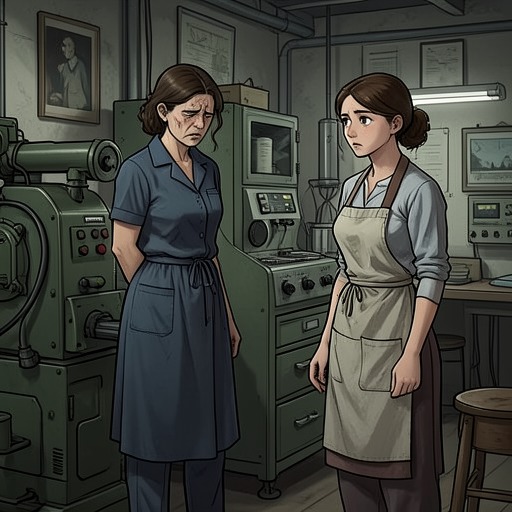
The proposed route to equality includes women’s participation in production on a large social scale and release from being bound to domestic work. Modern machinery can reduce the importance of muscular differences: operating many machines requires only part of the resources once treated as exclusively masculine. But the book does not equate employment with full emancipation. Women cannot be considered workers alone, because reproduction matters in both social life and their personal lives. The tension between productive work and reproductive responsibility remains central to the problem of collective liberation.
Nor can gestation simply be treated as a job assigned by society. The book argues that pregnancy and maternity involve women’s time, energy, and essential values, and that erotic life cannot be administered like inert material without losing its spontaneity. It also rejects the idea that abolishing the family by itself would guarantee freedom: women may remain oppressed even when attached directly to the state. A just social order would therefore have to address women’s situation without suppressing individual liberty or reducing reproductive life to a production requirement.
The Reproductive and Domestic Burden
The unequal organization of reproduction has historically restricted women’s ability to participate in shaping the world. Unlike the seasonal rhythms attributed to female animals, women’s potential for pregnancy between puberty and menopause is not naturally limited in the same way. Some societies have imposed restrictions on early marriage, and the book mentions communities where women are assured a two-year interval between births; more generally, however, women’s fertility has gone largely unregulated. Contraceptive methods existed in antiquity but were often kept as the knowledge of prostitutes and doctors; after a long absence from the historical record, they reappeared in the eighteenth century. For many women, life consequently became a succession of pregnancies.
The account connects this reproductive burden to the assignment of women to domestic labor. Giving birth and nursing are described as natural functions rather than projects through which a person can claim an independent purpose. Housework, the labor compatible with motherhood under the existing arrangement, repeats itself without producing a new future. This contrast between cyclical maintenance and open-ended projects makes time itself part of the inequality: a woman may be occupied from day to day yet denied the opportunity to direct her efforts toward a future she has chosen.
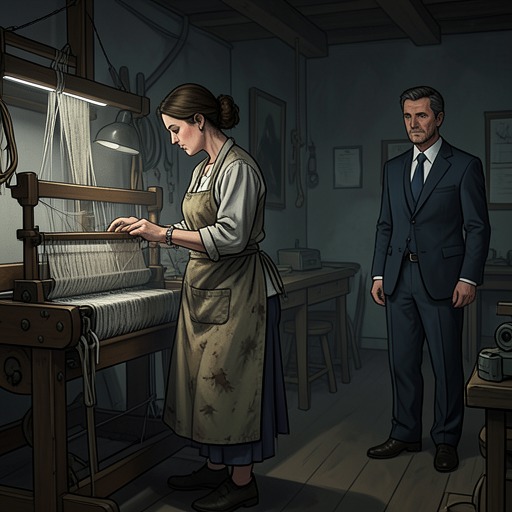
The daily schedule of a peasant woman makes that structure concrete. She may rise at dawn to feed the animals and prepare the men’s first meal, care for children, work in fields or gardens, draw water, cook, return to field labor, and spend the evening mending, cleaning, or husking corn. Pregnancy and child care are added to these tasks, while time to protect her health or enjoy leisure is scarce. Her labor can make her a major participant in the household economy, yet the work exhausts her and leaves her without the social recreation available to men. The example shows why access to work alone is insufficient when domestic and reproductive labor remain unequally assigned.
Formal Rights and Material Conditions
Legal and political rights are necessary, but the book warns that abstract rights do not ensure a concrete hold on the world. It describes a transitional society in which patriarchal institutions remain powerful: women still lack the vote in Switzerland, while a French law of 1942 preserves the husband’s prerogatives in a diminished form. The distance between formal recognition and lived equality is visible in the unequal burdens of marriage. Birth control is neither universal nor consistently practiced, abortion remains officially prohibited, and women may risk their health through unregulated methods or face repeated pregnancies. Housekeeping and child care also remain almost exclusively women’s responsibilities.
These conditions make it harder for women to reconcile family life with employment, particularly where men consider domestic chores beneath them. The issue is not simply whether a woman may enter public work, but whether social arrangements permit her to sustain that work without carrying an unequal second burden at home. Collective liberation therefore requires the transformation of the material conditions surrounding employment, family responsibility, and reproductive autonomy, rather than treating formal access to work as a complete solution.
The Limits of Individual Escape
The book also examines the social expectations that can draw women away from economic independence. Girls are often raised for marriage rather than encouraged to develop their abilities; as a result, they may receive less specialized training than their brothers and become less securely committed to a profession. That disadvantage can then intensify the desire to find a husband, tightening a cycle in which limited preparation makes dependence appear attractive. Marriage promises a route to security or social advancement, but the possibility is presented as a lottery in which very few can win.
Work can offer a woman a way to emancipate herself from marriage, yet it may remain a thankless obligation if it does not bring social dignity, freedom of behavior, or economic autonomy. The desire to reconcile a profession with family life is thus set against both material inequality and the ideal of an easier, more privileged life secured through a man. The temptation to choose dependence is not evidence that the constraints have disappeared; it is one of the ways those constraints continue to operate.
The same distinction clarifies the book’s criticism of attempts at individual salvation. Women may try to turn an enclosed life into a source of glory and to experience restricted conditions as sovereign freedom. The text associates this compensatory effort with narcissism, romantic devotion, and mysticism. Such experiences can be meaningful, but they do not change the shared conditions that confine women. Collective liberation is the alternative to making a private refuge out of an imposed limitation: it seeks to change the situation itself so that women’s freedom can take material form in projects and futures of their own.