Industrial Revolution
The Second SexThe Industrial Revolution marks a decisive change in the economic history of women: industrial production draws them beyond the household and makes their labor necessary on a scale that older social arrangements had not required. In Simone de Beauvoir’s account, machinery can diminish the practical importance of differences in physical strength, opening a path from domestic confinement toward productive work and economic autonomy. Yet employment is not emancipation by itself. Women enter industry under unequal conditions, while unpaid household labor and child care remain largely theirs; the transformation creates new possibilities without abolishing the structures that restrict them.
Background: Labor, property, and women’s subordination
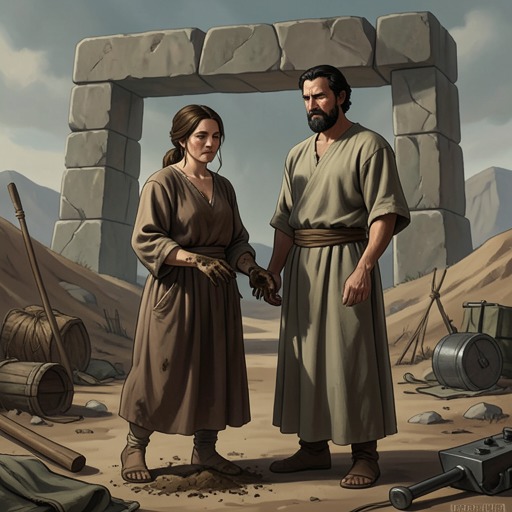
De Beauvoir places industrialization against a longer historical shift in the organization of work. In the account of historical materialism she discusses, early agricultural tools allowed women to contribute substantially to production at home, alongside men’s hunting and fishing. The introduction of metal tools and the plow expanded cultivation and intensified labor. As men turned to other men’s labor, reduced them to slavery, and became owners of land and property, women too came to be treated as part of the patrimony. The shift from maternal to paternal inheritance helped establish the patriarchal family and diminished the economic importance of domestic work relative to men’s productive activity.
That account links women’s social oppression to economic dependence: in the property-owning household, a husband could claim authority while enjoying sexual freedoms unavailable to his wife. De Beauvoir describes women’s infidelity, where customs made it possible, as one defense against domestic subjection, but not a route to equality. She presents women’s entry into production on a large social scale as essential to emancipation, while also criticizing any explanation that treats economic change alone as a complete account of women’s condition.
Industrialization opens the factory door
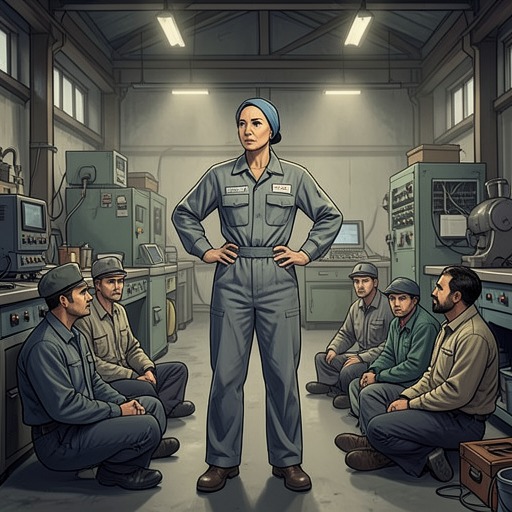
The immediate change comes from the conjunction of technology and labor demand. Machines cancel out the physical-force difference between women and men in many kinds of work, while rapid industrial expansion creates a need for more labor than male workers alone can supply. Women’s collaboration becomes necessary to production. De Beauvoir calls this the great nineteenth-century revolution in women’s situation: not simply a change in arguments about women, but a material transformation that brings them into the labor force.
The possibility of equality depends, in this account, on the demands of particular work rather than on abstract claims about women’s capacities. When the minimum strength required by a machine does not exceed women’s capacities, women can become men’s equals at work; modern machinery can place enormous energy under the control of a switch. Industrial labor therefore unsettles the assumption that physical difference dictates a fixed social destiny. But the effect is conditional: technology can remove one practical obstacle, while the organization and rewards of work remain shaped by unequal power.
Work as a difficult and unequal conquest
Industrial employment offered an alternative to poorly paid work done at home, but women entered factories from a position of severe economic disadvantage. In early nineteenth-century France, more than 200,000 women workers reportedly earned less than fifty centimes a day. As factories took over activities such as lace making and millinery, women’s work outside them increasingly meant needlework, laundering, and housework—labor described as exhausting and paid at famine wages. Factory employment expanded in cotton, wool, and silk, particularly in spinning and weaving, but employers often preferred women because they could obtain more work for less pay.
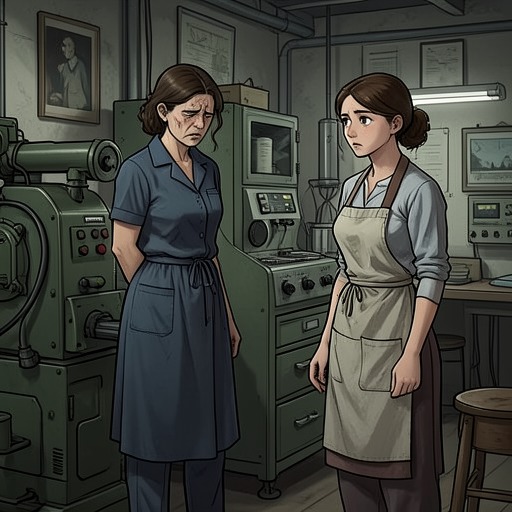
The same employment that helped women gain a measure of human dignity exposed them to harsh conditions. In Lyon, women in trimmings workshops had to work in a kind of harness, using both hands and feet. In 1831, silk workers could work from three in the morning until eleven at night—seventeen hours—in unhealthy workshops without sunlight. De Beauvoir records that many young women developed consumption before completing their apprenticeships. These circumstances show the double character of industrialization in her account: it opens a route out of economic dependence, yet the labor market exploits women’s vulnerability and does not distribute the benefits of production equally.
The scale of women’s employment grew beyond the first factory expansion. In France, 900,000 women worked at home in 1900, making clothing, leather goods, wreaths, purses, beadwork, and souvenirs, though that number later fell. By 1906, 42 percent of French women of working age were employed in farming, industry, commerce, banking, insurance, offices, and the professions. The labor crisis and world war of 1914–18 spread the movement more widely, drawing lower- and middle-class women as well as working-class women into employment and professional life. These figures register a historical shift in women’s participation, not proof that work had already brought social equality.
Emancipation, reproduction, and the work that remains
For De Beauvoir, women’s productive work cannot be considered separately from reproduction. Across history, women’s fertility was generally not regulated, and repeated pregnancies could make life an uninterrupted sequence of births. The burdens of maternity vary with social arrangements: numerous imposed pregnancies and the absence of help with feeding and raising children make them overwhelming; reproductive choice, support during pregnancy, and child care can make those burdens lighter and more compatible with paid work. Industrial employment changes women’s access to production, but does not automatically change who bears the costs of reproduction and care.
The same imbalance persists in the present conditions she describes. Birth control is neither universal nor rigorously practiced, abortion is officially forbidden, and women may risk their health through unregulated abortions or face repeated pregnancies. Housekeeping and child care remain almost exclusively women’s responsibility; in France, a man may regard participation in chores traditionally assigned to women as demeaning. The result is that women have greater difficulty reconciling family and working life, and their existence becomes more burdensome where society expects them to sustain both.
The contrast is especially clear in the life of peasant women, who form the majority of French women engaged in productive labor in the account. Their work includes tending the garden and animals, cleaning the cowshed, spreading manure, sowing, plowing, harvesting, and sometimes loading wagons. They also prepare meals, manage the household, care for children, and shoulder pregnancy. A day may begin at dawn with feeding animals and serving the men’s first meal, continue through fieldwork and repeated household tasks, and end with mending, cleaning, or husking corn. Even during pregnancy, they may have no time to care for their health. Meanwhile, men can go to town or to the café on Sundays and fair days, meet friends, play cards, hunt, or fish, while women remain on the farm. Industrial transformation thus coexists with forms of work in which women’s productive contribution is joined to domestic labor rather than substituted for it.
Historical force and its limits
The nineteenth-century entry of women into industrial production also changes the political stakes of the debate. As women’s demands acquire an economic basis, opponents become more aggressive. The bourgeoisie, anxious to preserve the family as a guarantee of private property, insists more fiercely that women belong in the home just as their emancipation becomes a practical threat. Working-class men, too, seek to impede women’s liberation when women’s lower wages make them competitors in the labor market. Antifeminist arguments accordingly add biology, experimental psychology, and other claims to the older appeals to religion and philosophy; the offer of separate but equal status masks rather than removes discrimination.
Marx and Engels recognize the significance of women’s productive work and associate women’s liberation with that of the proletariat. Engels argues that emancipation requires women’s participation in large-scale production and that modern industry has made such participation possible. De Beauvoir values this account’s attention to material conditions but rejects the idea that industrial development or the abolition of the family can, by itself, resolve women’s oppression. Women cannot simply be assimilated to workers: reproductive life matters both to social organization and to individual experience, and attachment to the state does not guarantee freedom from male authority. Industrialization is therefore a necessary historical opening in her analysis, but equality also depends on changing the social arrangements that preserve economic resistance, domestic subordination, and the unequal burden of care.