Marie Bashkirtseff’s diary
The Second SexMarie Bashkirtseff’s diary serves as both confidante and stage: in it, a girl records her fascination with her image, her longing for an admiring audience, and the private self she believes others fail to recognize. The diary matters not only as a record of self-regard, but as a form through which an imagined identity can be rehearsed and preserved against the limits of ordinary life.
A private voice and an imagined audience
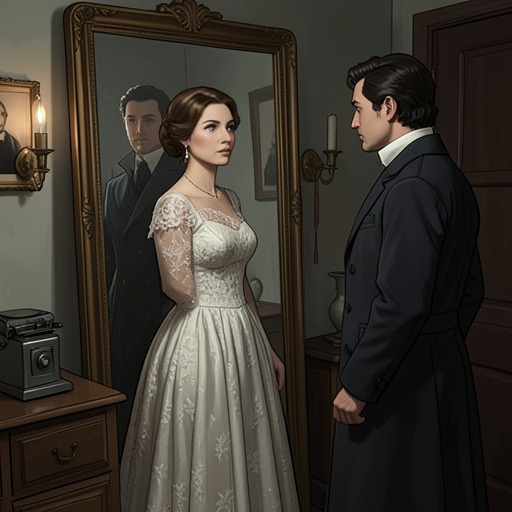
The book connects Bashkirtseff’s early need for admiration to her late weaning, at three and a half. At five, she recalled dressing in her mother’s lace, putting flowers in her hair, and dancing in the living room as if she were the celebrated dancer Petipa before an audience made up of the household. The scene joins private play to public performance: even within the home, the child imagines herself being watched and applauded.
From the age of five through adolescence, Bashkirtseff devoted her affection to her image, admiring her hands, face, and grace. Her declaration, “I am my own heroine,” distills the diary’s self-creating impulse. She imagined becoming an opera singer, not simply to perform, but to face a dazzled public with a proud gaze of her own. The desired audience and the cherished self are intertwined: admiration from others would confirm the worth she already assigns herself.
Desire, fantasy, and self-regard
At twelve, Bashkirtseff was in love with the Duke of H., although she had never spoken to him. In her fantasy, he would fall at her feet, dazzled by her splendor and convinced that she was the woman he deserved. The imagined romance does not displace self-admiration; it extends it, making the beloved’s adoration a reflection of the value she attributes to herself.
The diary records a tension between the extraordinary heroine Bashkirtseff imagines and the ordinary face recognized by parents and friends. In the account presented here, the girl’s private self is not simply a transparent truth concealed from others: it is also an imagined character, variously rehearsed as a dancer, a saint, or a singular wonder. The diary gives that character a place to speak, even as the gap between fantasy and social recognition remains.
The diary as confidante and secret record
The diary belongs to a wider practice of girls addressing notebooks as though they were people. Bashkirtseff’s is described as a famous example and a model of the genre. Its pages receive the whole self freely poured out, in the manner of a friend or confidante; the girl speaks to the notebook much as she once spoke to her dolls. What is written there can remain hidden from parents, friends, and teachers, and can be read in solitude.
The secrecy attached to such writing grows more intense around prepuberty. Some diarists mark their notebooks to be read only after death or burned when they die. In this setting, the diary is more than a storehouse of memories: it protects a private identity from immediate scrutiny while giving it a durable form. Bashkirtseff’s record, kept from childhood into adolescence, makes visible the inward life that the people around a girl may not know.
Isolation and the promise of the future
The diary’s confidential voice accompanies a growing conviction that the hidden self is misunderstood. The girl can become fiercely solitary, treating her inward identity as more real than the version recognized by others. That conviction feeds a sense of difference and superiority: she imagines herself exceptional and expects the future to avenge the mediocrity of the present.
Bashkirtseff’s diary thus holds together performance and withdrawal. The child who dances for an imagined household audience becomes the adolescent who cherishes a private heroine and dreams of a dazzled public. The notebook gives both impulses a common medium: it is where self-admiration becomes narrative, where the desire to be seen can coexist with the refusal to disclose the self to those nearby.