Master–Slave Dialectic
The Second SexThe Master–Slave Dialectic is an account of the struggle between self-conscious freedoms and the possibility of mutual recognition. It begins from the claim that a subject becomes fully itself through relations with other subjects, yet those relations can turn into contests for sovereignty: each consciousness tries to make itself essential by reducing the other to an object. The dialectic names both the instability of that domination and the alternative of reciprocal recognition. Its application to women exposes a further asymmetry: women are cast as the Other whose freedom is needed, but whose independent claim to subjecthood is denied.
Recognition and conflict
A subject cannot accomplish itself in isolation or through possession of passive nature. Nature may remain an external obstacle, or it may be assimilated and consumed, but neither relation supplies the recognition of another consciousness. Another person can draw the subject beyond its own immanence, confirming its freedom through a freedom distinct from its own. That confirmation is also a threat: the other consciousness has its own claim to sovereignty, and each side may try to secure itself by subordinating the other.
The resulting conflict is not resolved by declaring one side the essential subject and the other a permanent object. The possibility of overcoming it lies in each individual recognizing the other as both subject and object, in a reciprocal movement. Friendship and generosity make such recognition concrete, but it is not a settled achievement: it demands repeated effort, renunciation of possession, and an ongoing willingness to affirm freedoms beyond one’s own. The dialectic therefore describes neither a simple victory by the oppressed nor a harmonious end guaranteed by history. Its ethical possibility remains difficult and continually at risk.
Domination and reversal
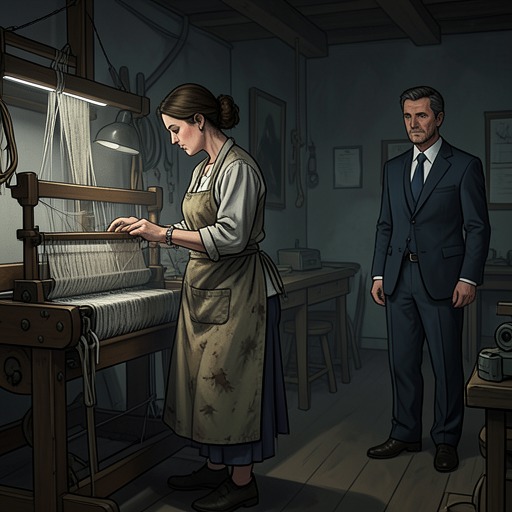
The master–slave relation illustrates why domination cannot provide secure self-sufficiency. The master seeks to establish himself as essential by reducing the other to servitude. Yet, through work and fear, the slave experiences himself as essential, while the master comes to appear inessential. The relation reverses the standing it was meant to establish: the master’s claim to independence depends on the person he subordinates, and the subordinated consciousness is not erased by its assigned position.
This reversal clarifies why possession is an inadequate answer to dependence. A person may hope to find a stable sense of being by possessing another, but possession seeks to quiet the struggle between freedoms rather than resolve it through recognition. The alternative requires giving up the fantasy of sovereignty over another person. Because that conversion is never complete once and for all, relations remain difficult enterprises whose success is not assured.
Woman as the unequal Other
The account applies this framework to a historical order in which men have held concrete powers and established women as the Other. Women are necessary to the whole formed by the two sexes, but that mutual dependence has not produced equal recognition. Instead, woman is made into an intermediary between nature and a man who is too similar to count as a safely possessable object. She is imagined as a consciousness that can be possessed in the flesh: close enough to promise fullness, yet supposedly docile enough not to demand reciprocal recognition.
This arrangement differs from the master–slave relation in which a prior division into castes and a direct historical subjugation can be identified. Women have always been present within the society whose authority subordinates them; the couple is presented as a fundamental unit whose members remain bound together. That closeness has not prevented domination. It has helped make women’s Otherness appear absolute and natural, rather than a changeable relation imposed and maintained by human institutions.
Creation stories reinforce the unequal position by making woman’s origin and purpose dependent on man. In the account of Genesis, Eve is formed from Adam and given to him; her spouse is represented as both her origin and her finality. This story makes woman appear as a being made for another, while allowing the man to treat his own presence as the norm and hers as a fortunate addition. The dialectical analysis challenges that apparent naturalness: a relation in which one side alone is recognized as essential is not reciprocity, even when the two sides are understood to need one another.
Why reciprocity has not become liberation
The framework distinguishes women’s situation from that of groups whose members could form a separate collective identity against their oppressors. Women are as numerous as men, but are dispersed among men through family, work, economic interests, and social ties. A woman may be aligned by class with bourgeois men rather than working women, or by race with white men rather than Black women. These divisions impede solidarity, while women’s shared position within the couple binds them to those who exercise power over them.
That dispersed situation also limits collective self-assertion. The discussion contrasts women’s history with movements that have spoken as a collective subject and describes women’s political gains as concessions rather than power seized through a unified opposition. The problem is not simply that women fail to recognize their common situation; they lack the concrete means and shared space needed to organize themselves as a force able to challenge male sovereignty. Dependence is thus reproduced through social arrangements, not explained away by a supposed inability to act.
Comparisons with other subordinated groups illuminate the mechanism without making their histories identical. Race, class, caste, and sex can each be used to naturalize an inferior position, and a ruling group may present the condition it imposed as proof of the subordinated group’s supposed nature. Yet the grounds and histories of these relations differ. The dialectic’s central demand is not to collapse those differences, but to question the claim that any imposed hierarchy expresses an immutable human essence.
Material conditions and freedom
The opposition between transcendence and immanence gives the dialectic its wider ethical stakes. A subject realizes freedom through projects that reach beyond the present; when a person is confined to repetition, that freedom is restricted. In the discussion of women’s historical circumstances, childbirth and nursing are described as natural functions rather than projects that, by themselves, confer a higher meaning on existence. When motherhood is combined with housework assigned almost exclusively to women, daily life can become repetitive labor that produces no new possibilities and holds women within immanence. Men’s culturally valued productive and dangerous activities, by contrast, are treated as projects through which they test their power and open a future.
The account also connects formal entry into work with the conditions that determine whether work enables freedom. Employers benefit when women accept lower wages, while male workers may initially see women’s cheaper labor as a threat rather than a basis for solidarity. Integration into unions is presented as one means by which women can defend their interests without being used to undermine workers as a whole. Likewise, the peasant woman’s productive labor does not necessarily free her: tending animals and fields, preparing meals, managing the household, and bearing and caring for children leave little time for health or leisure. The existence of work alone does not end subordination if its burdens and rewards remain unequally organized.
Economic dependence and the social prestige of marriage also shape women’s available choices. Girls may be raised for marriage rather than professional development, then enter work with less training and commitment than their brothers, a disadvantage that reinforces the wish to find a husband. The prospect of marriage as a route to security can function as a temptation as well as a benefit, because it encourages dependence on masculine support instead of economic autonomy. The dialectic’s relevance to liberation is therefore practical as well as philosophical: reciprocal recognition requires circumstances in which women can act as independent subjects, rather than being left formally free while their possibilities remain constrained.
Significance and limits
The dialectic does not treat women’s subordination as a simple extension of an abstract philosophical contest. It connects the struggle for recognition to historical power, collective organization, economic dependence, domestic labor, and the stories through which women’s dependence is represented as natural. These conditions explain why biological interdependence has not led automatically to equality and why emancipation cannot be achieved by symbolic claims alone.
Its ethical horizon is a relation in which each person’s freedom confirms rather than cancels the other’s. That horizon is demanding because it rejects both mastery and the wish to be securely possessed: neither side can become fully free by fixing the other in an inessential role. For women, the challenge is to escape the position of an Other defined by men and to enter relations as a subject among subjects. The book’s existentialist standard judges the available paths not by whether they are called happy, but by whether they permit individuals to expand their freedom and possibilities.