Patriarchy
The Second SexPatriarchy, as described in the book, is not a timeless arrangement that follows automatically from bodily difference. It is a social order in which men establish themselves as authoritative subjects, claim control over property and descent, and assign women dependent positions within the family. Its history runs through material changes in work and inheritance as well as laws, religious teachings, and myths that represent male supremacy as natural or divinely sanctioned. The account also stresses that formal rights and everyday power do not necessarily coincide: women’s concrete circumstances depend on their economic roles and the institutions governing family life.
Definition and Historical Method
The analysis begins by distinguishing biological difference from the social hierarchy built upon it. The division of the sexes is a biological given, but the way that division becomes a relation of dependence has a history. When two groups confront one another, each may assert its sovereignty; if one gains an advantage, it can preserve that advantage through oppression. Patriarchy names the order formed when men prevail and make their superiority appear to be a right rather than a contingent relation of power.
That account rejects both the idea that women have an immutable essence and the notion that denying sex-specific circumstances is itself liberation. The book argues that characteristics acquire their meaning in social situations, and that women cannot simply claim to stand outside the position assigned to them. Its method is therefore historical and material: it asks how women came to be treated as the Other, what institutions keep that status in place, and how the conditions of work, reproduction, and property shape possibilities for change.
The philosophical distinction between transcendence and immanence clarifies the stakes. Every person is an autonomous freedom capable of pursuing projects and reaching toward an open future. Patriarchal society, however, seeks to fix women as objects and confine them to immanence, while men’s projects are recognized as actions that shape the world. The result is a conflict between women’s claim to exist as subjects and a situation that treats them as inessential. Patriarchy is thus not only a distribution of legal authority; it is a way of organizing who may set ends and whose freedom is constrained by another’s authority.
Work, Property, and Descent
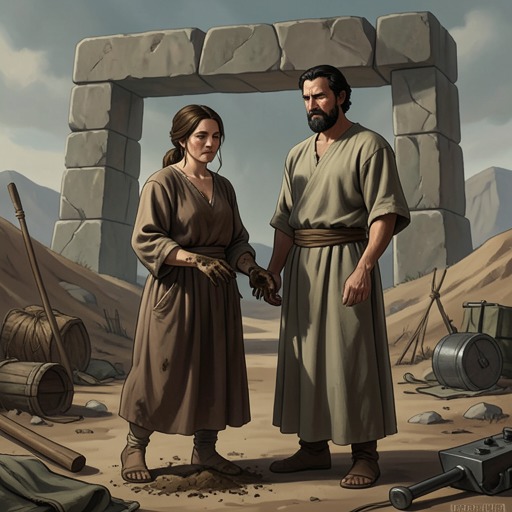
The account of patriarchy’s material foundations follows changing forms of production. In the Stone Age, when land belonged to the clan and tools were rudimentary, women’s work could contribute directly to economic life. While men hunted and fished, women’s domestic labor included productive activities such as pottery, weaving, and gardening. The household was not yet simply a sphere of work without economic consequence.
The balance changed as copper, tin, bronze, and iron tools and the plow expanded agriculture. More intensive labor was needed to clear and cultivate fields; men called on other men’s labor and reduced them to slavery. With private property, the man who became master of land and enslaved labor also became proprietor of the woman. Domestic work lost standing beside productive work as the latter was treated as the source of wealth and authority. This shift reorganized the division of labor and helped establish the patriarchal family founded on private property.
Property also altered the meaning of children and inheritance. The owner’s possessions extended his existence beyond his death, but only if they remained in the hands of people recognized as his own. He therefore sought to control both property and descent, refusing to share either with women. As a result, children were attached to the father’s family, while women were excluded from succession and became dependent first on their fathers and then on their husbands. The change from maternal to paternal descent did more than settle a rule of lineage: it elevated the father as the one who held and transmitted rights, while reducing the mother’s recognized position.
This is why the book treats the replacement of matrilineal descent with agnation as a decisive ideological as well as legal transformation. In Aeschylus’s Eumenides, Apollo declares that the mother is only the nurse of the child’s seed and that the father is the parent. The text presents such claims not as scientific discoveries but as acts of faith shaped by a desire for power. By claiming exclusive authority over posterity, men could portray themselves as the generative force and women as secondary servants.
Authority, Reciprocity, and Myth
The existence of a biological bond between men and women does not by itself undo their unequal social relation. Sexual desire and the desire for descendants make men dependent on women in certain respects, just as the master depends on the slave’s labor; but reciprocal need does not mean equal power. The master controls how his need is met, while the dependent party experiences that need through reliance, hope, or fear. In the book’s account, this unequal structure helps explain why women’s importance to men has not automatically produced their freedom.
Nor does the prestige of goddesses establish an earlier society in which women ruled as men’s equals. Myths and traditions preserve memories of female divinities and powerful mothers, but the book cautions against treating these images as proof of a historical golden age. A woman worshipped as Earth, Mother, or Goddess may be made sacred and formidable while remaining outside reciprocal human relations. Men still determine what authority she represents and what place she occupies. In that sense, the Mother Goddess can be an idol created by male consciousness rather than a sign that women possess political power in their own right.
The succession of gods makes that reassignment visible. A male god increasingly takes supremacy over the Mother Goddess, while female divinities remain important but subordinate. The book interprets this pattern as part of the broader triumph of patriarchy: woman may be cast as slave or idol, but she is not the one who chooses her position. The power attributed to her can be precarious because it is granted and defined by men, and can be withdrawn when their relation to nature and productive power changes.
Myths continue to serve that order even when they are not formal rules. They translate group imperatives into vivid, memorable images and carry them through religion, tradition, language, tales, songs, and film. A man’s personal experience of a woman can be turned into a supposedly timeless idea of femininity, whether he treats her as a threat or idealizes her as harmony and repose. The myth makes a particular arrangement appear eternal, and thereby disguises the interests that sustain it.
Law, Family, and Unequal Rights
Patriarchal authority becomes concrete through laws and family arrangements. In the Roman system described in the book, a woman could be subject to a male guardian and, under marriage with manus, pass into her husband’s authority. Several forms of such marriage placed her under the husband’s power over her person and property. Later, marriage without manus preserved control of her property in the hands of guardians, while the husband’s power over her person was shared with her father. The family court could offer movement between one man’s authority and another’s; it did not make the woman an independent legal subject.
The Roman example also shows why legal status cannot be treated as a complete measure of social position. Though legally more constrained than a Greek woman, the Roman matron could occupy the atrium, oversee enslaved people’s work and children’s education, and share in household religion and her husband’s concerns. The account describes her as a companion and mistress of the home, not merely an isolated dependent. Her concrete influence arose in part from her role in the household and its economic life, even while male authority remained embedded in the law.
The French history offers a later example of law tightening patriarchal control. After the Revolution, the Napoleonic Code restored women’s subordination within marriage, even as the unmarried woman retained a fuller civil role. A wife owed obedience to her husband, who determined the family residence and held greater rights over the children; her ability to make contracts was generally subject to his authorization. The asymmetry extended to adultery and divorce: the law treated the wife’s conduct more harshly and gave the husband powers not granted equally to her.
The nineteenth and twentieth centuries brought changes without immediately establishing equality. Divorce, abolished in 1826, returned in 1884 but remained difficult to obtain; sexual differences in the treatment of adultery persisted. Women gained guardianship rights in stages, and the right to determine natural paternity was recognized in 1912. Reforms in 1938 and 1942 abolished the wife’s legal duty of obedience, yet the father remained head of the family and continued to determine the place of residence, subject to limited grounds for a wife to object. The legal formula granting a married woman full powers was qualified by restrictions in marriage law, so formal reform did not amount to equal authority between spouses.
Persistence and Transformation
Patriarchy endures not only through statutes but through economic advantage, custom, and education. Men hold more and better-paid jobs, enjoy greater chances of success, and occupy more positions in industry and politics, especially the most important ones. That material advantage is reinforced by a tradition in which history appears to have been made by men, and by the prestige transmitted through children’s education. Even when women’s rights are recognized in principle, habit can prevent those rights from becoming effective in daily life.
The burdens of domestic and productive work show how unequal power is reproduced in ordinary routines. The French peasant woman, for example, may share her husband’s responsibilities, interests, and property, and in some households exercise substantial authority. Yet she also carries out field and animal care, food preparation, housework, pregnancy, and child care. Her day begins before the men’s first meal and continues through work in the fields and household tasks into the evening. The contrast between her labor and her husband’s access to social life and leisure reveals why respect or influence within a household does not, by itself, remove the material constraints of women’s position.
The conditions that can weaken patriarchal dependence are likewise material and institutional. Participation in production on a large scale can give women economic standing, while birth control and social support for pregnancy and child care can reduce the reproductive burdens that restrict their options. The book connects these developments with changes in women’s legal and political status but does not treat them as a completed victory: rights on paper may remain limited by custom, unequal work, and family authority.
Ultimately, patriarchy’s history is presented as a history written by men, through values, customs, religions, laws, and social arrangements that served their projects and interests. Its persistence is not evidence that women’s assigned place is natural; it reflects institutions that have repeatedly made male authority seem absolute. Its transformation, correspondingly, requires more than revising an idea or declaring legal equality: it depends on changing the concrete arrangements of work, property, reproduction, and family life that determine who can act as an independent subject.