Pre-agricultural period
The Second SexThe pre-agricultural period is Simone de Beauvoir’s uncertain historical starting point for explaining the origins of sexual hierarchy. Because evidence about early societies is contradictory, she does not claim a settled picture of women’s lives; instead, she examines how reproduction, subsistence, danger, and the absence of birth control could have constrained women’s activity. This account links bodily conditions to a social arrangement without treating that arrangement as an immutable fate.
A Difficult Past to Reconstruct
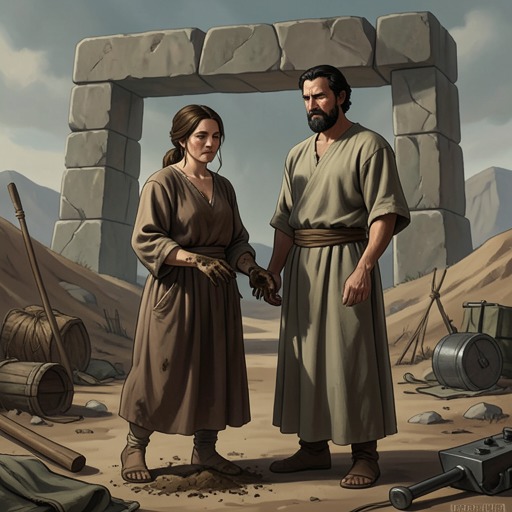
De Beauvoir emphasizes that the conditions of the pre-agricultural period differed so greatly from those of modern life that even women’s relative physical strength is unknown. Women carried heavy loads, but this task may have left men free to defend a traveling group from animal or human attack. Reports and traditions also describe women taking part in wars and vendettas, suggesting that women could be robust and capable of fighting. The evidence therefore resists a simple account in which physical incapacity alone explains women’s subordination.
She nevertheless considers male physical advantage consequential in an environment marked by rudimentary tools and continual resistance to nature. Reproductive demands, meanwhile, could limit women’s ability to work and defend themselves. Pregnancy, childbirth, and menstruation might interrupt activity for extended periods; without birth control, frequent pregnancies could consume much of women’s time and strength. These pressures mattered in groups that relied on hunting, gathering, and fishing and whose resources were meager.
Reproduction, Subsistence, and Risk
In this reconstruction, dependence arose from the relation between bodily demands and collective survival. Women caring for themselves and their children could need protection, while hunting and fishing provided food associated with men’s activity. The resulting imbalance did not follow from anatomy in isolation: it took shape where pregnancy and child care met a difficult subsistence economy, limited tools, and the dangers of the surrounding environment.
De Beauvoir contrasts the reproductive function with activities that involve projects extending beyond immediate survival. Giving birth and breast-feeding, as she describes them, are natural functions rather than projects through which women can claim a higher meaning for their existence. When domestic work is made compatible with motherhood the principal available activity, it can confine women to repetitive labor: tasks recur without producing anything new. By contrast, the maker and hunter expand their reach through instruments, travel, and risk. The dugout canoe, for example, represents more than the return with food: it makes possible the conquest of the sea and an opening toward future projects.
Repetition and Historical Change
The contrast between repetitive domestic labor and project-making action gives the period its significance in De Beauvoir’s broader argument. She presents the subordination of women as historically persistent, but not as an unchangeable consequence of nature. Her account asks how material conditions turned reproductive vulnerability into social dependence and how that dependence shaped women’s access to activities recognized as meaningful and future-directed.
That distinction also clarifies why the pre-agricultural period is a reconstruction rather than a simple origin story. The evidence does not establish a single social arrangement or prove that women lacked strength or courage. Instead, the analysis identifies pressures that could restrict their freedom while showing how the meaning of those pressures depends on collective life and available forms of work. The period thus helps explain the historical formation of inequality without making biology destiny.