Production and Reproduction
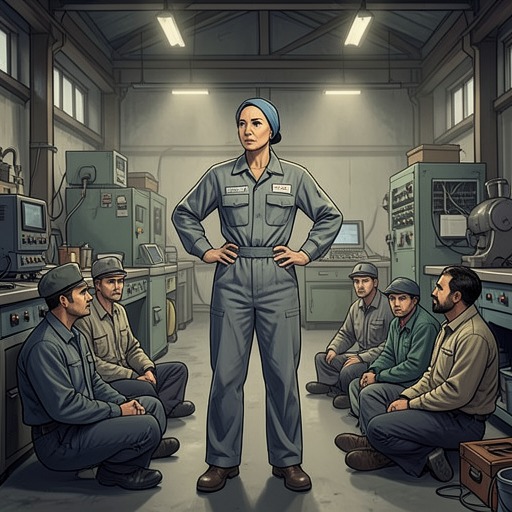
The Second SexProduction and reproduction are inseparable dimensions of social life, but the book argues that societies have distributed their burdens and value unequally. Women’s reproductive and domestic labor has often restricted their participation in paid work and public projects, while the social arrangements surrounding that labor have helped make their dependence appear natural. Yet neither biology nor economic class alone explains the relation: emancipation requires attention to the particular conditions of reproduction, individual freedom, and the institutions that determine who performs necessary work and who can shape a future beyond it.
The Historical Division of Labor
The book traces women’s subordination not to an unchanging biological law but to the interaction of reproductive demands, tools, property, and social organization. In the earliest conditions it discusses, pregnancy, childbirth, and menstruation could diminish women’s capacity for work, while the absence of birth control and frequent pregnancies absorbed much of their time and strength. In groups with limited resources, births created further demands even as women’s reproductive burdens constrained their ability to expand production. The argument is not that women were dispensable to group survival: both sexes were necessary. Rather, control over the balance between reproduction and production came to be exercised by men, whose activities were accorded greater social value.
The account contrasts bodily reproduction with productive activity understood as a project that transforms the world. Giving birth and nursing are natural functions, it argues, but do not by themselves provide the socially recognized means to claim a higher status. Domestic work, compatible with the demands of motherhood, can therefore confine women to repeated tasks, while men’s hunting, fishing, tool-making, and other ventures are represented as acts that extend human power and open a future. The distinction concerns not an inherent difference in worth but a hierarchy of activities: labor that sustains life is treated as repetitive and private, while labor framed as invention, conquest, or public production becomes a source of prestige.
A later technological shift sharpens that hierarchy. In the account of early agriculture, women’s work in gardening and household production formed an important part of economic life when land was held by the clan and tools required less intensive labor. The arrival of metal tools and the plow expanded cultivation and made heavy labor central. Men’s appropriation of land and enslaved labor accompanied the rise of private property; men also came to claim authority over women. Paternal inheritance replaced maternal transmission through the clan, and the patriarchal family took shape around property passed from father to son. As domestic work lost standing beside production outside the home, women’s social oppression became bound to their economic subordination.
Limits of an Economic Explanation
The book draws on historical materialism to show how work and technology change the practical meaning of physical differences. A bodily limitation matters in relation to the task and the tools available: machinery that can be operated without exceptional muscular strength can make women equal in productive capacity, while pregnancy’s demands vary according to whether births are imposed and whether society provides support and childcare. These examples unsettle the idea that a fixed physical difference dictates an unchanging social role.
But the argument also rejects the claim that private property, technology, or class position alone can explain women’s condition. The invention of a stronger tool did not itself require domination; the outcome depended on projects of expansion and on a prior human tendency to establish sovereignty over an Other. Nor can women’s situation simply be equated with that of a class of workers. Workers may organize against employers and seek the abolition of their class position; women, the book argues, are bound to men by shared homes, interests, and a biological relation that makes a simple opposition impossible. Women seek the abolition of the consequences imposed by sexual difference, not the disappearance of their sex.
That difference makes reproduction impossible to treat as just another job or public service. Pregnancy and motherhood engage a woman’s time and energy, but also personal and erotic values that cannot be commanded or administered as inert resources. A state may not directly compel childbirth, yet laws and customs can narrow women’s choices by imposing marriage, banning contraception or abortion, or restricting divorce. The book therefore challenges a purely economic account of emancipation: removing class barriers or attaching women directly to the state does not necessarily undo male authority or free individual lives from prescribed reproductive duties.
Work, Wages, and Reproductive Burdens
Women’s entry into paid work has created economic grounds for emancipation, but access to employment has not meant equal standing or straightforward solidarity with male workers. Employers have welcomed women’s labor partly because women have often accepted lower wages, a pattern that depresses women’s wages overall. Men workers, in turn, have sometimes treated women as cheap competition rather than as allies. The book presents union organization as a practical condition for women to defend their interests without being set against the working class as a whole.
The scale of women’s employment makes the material issue concrete. In France, a survey covering 1889–93 found that a woman received only half a man’s wages for a day’s equal work. A 1908 survey reported that women working at home earned no more than twenty centimes an hour at the highest rates, with earnings falling as low as five centimes. Women’s participation in work continued to expand, particularly around the labor crisis and war of 1914–18; before the war, the cited census counted 42 percent of French women aged eighteen to sixty as working. Yet the book places such figures beside the persistent difficulty of reconciling paid production with reproduction and domestic responsibility.
That difficulty is not simply a matter of women’s employment. Across much of history, fertility was not regulated in ways that gave women reliable control over pregnancy. The book describes life for many women as a succession of pregnancies, while public attitudes could simultaneously favor population growth and worry about poverty or national weakness. Contraceptive practices existed in antiquity, but the account characterizes them as limited and associated with prostitutes and physicians; it says they were not evident again in its historical record until the eighteenth century. In that century, efforts to limit births spread from wealthier groups to wider populations, and coitus interruptus became more common; condoms, initially used against venereal disease, became more widely used for contraception after vulcanization, around 1840. Birth control was officially available in Anglo-Saxon countries, while French propaganda and the sale of contraceptive devices were prohibited even as contraception remained widespread.
Domestic Labor and Unequal Freedom
The distinction between production and reproduction persists even where women possess formal rights. The book stresses that marriage continues to place heavier burdens on women: childcare and housekeeping remain almost exclusively their responsibility, and in France a tenacious antifeminist tradition makes men regard participation in women’s assigned chores as demeaning. When women are expected to combine these obligations with employment, their daily situation becomes harder than their spouses’. The problem is thus institutional as well as personal: the family depends on work that is treated as women’s private duty, while women’s access to work and public life is judged without accounting for the time domestic responsibilities consume.
The account of peasant women shows how productive and domestic labor can accumulate rather than substitute for one another. Women may share their husbands’ economic interests and responsibilities, and sometimes exercise considerable moral authority within the household. Yet they also tend the garden and animals, do heavy agricultural tasks, prepare meals, manage the home, and care for children. Their day begins early with feeding animals and serving meals, moves between childcare and field or household work, and ends with further domestic tasks. Respect within the household, where it exists, does not erase the material weight of this combined workload.
Housework can also provide a constrained form of activity and self-expression. A wife may make her home her own by choosing and arranging objects and by supervising its upkeep; even when she has help, she may insist on watching over and judging the work so that the household bears her imprint. This activity can bring a sense of competence and personal investment, but it does not free her from the limits of domesticity. Its products must continually be maintained, and its social recognition does not equal independent affirmation or access to the broader projects through which freedom is exercised.
Reciprocity, Freedom, and the Problem of Emancipation
The book places women’s condition beside other forms of subordination while emphasizing the differences among them. Women are not a numerical minority, and their subordination cannot be traced to a single historical event with a clear before and after. Unlike workers, Black people, or Jews, women are dispersed among men and tied to them through home, employment, economic interests, and family relations. Those divisions also cross women themselves: class and race can place a woman in closer solidarity with men of her own group than with women of another. These conditions make collective organization difficult and help explain why women’s gains have often been conceded rather than won through an independent movement capable of acting as a unified subject.
At the same time, the book compares the justifications used to subordinate women with those used against Black people. The ruling group may first confine a population to an inferior position and then cite the resulting conditions as proof of its inferiority. The parallel illuminates a shared mechanism of oppression, not identical histories or circumstances. Women’s social position, like the position of groups reduced to an imposed stereotype, must be understood as something made and maintained rather than treated as a natural verdict.
The standard for emancipation is consequently not a claim that women are happy in a prescribed role, nor the substitution of one abstract economic measure for another. The book evaluates institutions by the concrete opportunities they offer individuals and defines freedom through the capacity to pursue projects and open a future. Reproductive and domestic labor matter because their allocation can restrict that capacity, not because the work itself lacks human value. A society that seeks equality must account for women’s particular situation without reducing women either to workers or to reproductive bodies; technology and employment can alter material constraints, but only changes in the organization of care, family life, and individual choice can turn formal possibility into lived freedom.