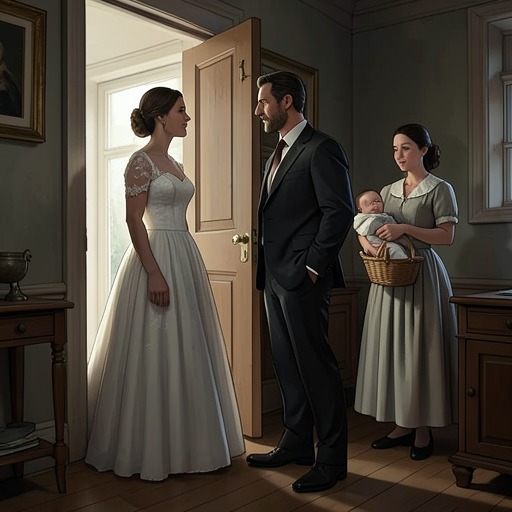
The Battle of the Sexes
The Second SexThe Battle of the Sexes, as analyzed in The Second Sex, is a historically changing relation of power, not a timeless hostility built into anatomy. Women and men are mutually necessary, yet the relation has been organized so that man claims the position of essential subject and woman is made the inessential Other. The resulting antagonism is at once material, social, and intimate: it arises from women’s restricted freedom, and changes as they try to escape the roles imposed on them.
Definition and Historical Ground
The book begins from a contrast between relations in which the status of “Other” can shift and the relation between the sexes, in which men have presented themselves as the essential term and women as pure alterity. Women are not a numerical minority, nor can their subordination be traced to one datable conquest comparable to slavery in the United States, colonial conquest, or the Jewish Diaspora. They have always lived among men, and the sexes have remained bound within a shared social world. This apparent permanence has helped make women’s dependence seem natural, even though nature, like historical reality, is not immutable.
The difference between women’s position and other subordinated groups also lies in the obstacles to collective action. Proletarians and Black people can posit themselves as a group and say “we”; women have rarely been able to establish that shared political subject. They have no separate territory or common labor solidarity, and are dispersed among fathers and husbands through homes, work, economic interests, and social conditions. Class and race divisions further unsettle any simple unity: bourgeois women may be allied with bourgeois men rather than working-class women, while white women may be allied with white men rather than Black women. The bond between women and their oppressors is therefore not a relation between wholly separate camps but one formed within a couple and a society whose two components are necessary to each other.
This analysis also distinguishes the comparison between women and other oppressed groups from an equation of their histories. The book notes that women and Black people have both been subjected to paternalistic arguments that praise the supposedly contented, childlike, or “true” member of the subordinated group. Those in power then cite the condition they have imposed as proof of natural inferiority. But antisemitism operates differently in the account: the Jew is treated as an enemy without a recognized place, rather than simply as an inferior assigned a place. The comparison clarifies recurring mechanisms of oppression while preserving differences in their historical circumstances.
Material Conditions That Sustain Conflict
The relation is maintained not only by ideas but by arrangements of work, income, and dependence. Employers welcome women as low-paid workers, while male workers may view their employment as cheap competition. In France, an 1889–93 survey found that a woman received half a man’s wages for a day’s equal work; in 1908, women’s home-working rates ranged from five to twenty centimes an hour. The book argues that the conflict between labor’s cause and women’s emancipation cannot be resolved by assuming automatic solidarity. Integration into unions gives women a way to defend their interests without being used against workers as a whole.
Paid work can give women a route away from dependence, but employment alone does not settle the conflict. Pregnancy, childcare, and housework remain disproportionately women’s responsibilities, while social expectations make men’s participation in domestic labor seem demeaning. A married woman may therefore face the double burden of earning a living and managing a household, with less scope than her spouse to combine work and family life. Economic opportunity and domestic obligation pull in opposite directions: the former may enable independence, while the latter keeps women’s time and energies tied to repetition.
The rural woman makes this inequality concrete. In addition to field labor—sowing, plowing, harvesting, and other heavy work—she tends the garden, animals, and household, prepares meals, washes and mends, and bears and cares for children. Her day begins at dawn and continues through farm work and domestic tasks into the evening. Although she may share her husband’s responsibilities and property, and may even possess substantial moral prestige or practical authority, she often lacks leisure and time to care for her own health. Men can go to town, meet other men, visit a café, play cards, hunt, or fish; she remains on the farm. The contrast shows why nominal respect or shared economic responsibility does not amount to equal freedom.
Marriage and the ideal of romantic rescue can reinforce the same dependence. Girls are raised for marriage rather than for independent development, and the prospect of a “Prince Charming” promises a rise in social position that years of work may not offer. That expectation divides women’s effort: because they receive less specialized training and commit less fully to a profession, they may remain disadvantaged at work, which in turn strengthens the perceived need to find a husband. Work can make a woman conscious of her capacity to emancipate herself, yet economic inequality and the prospect of a fortunate marriage continue to tempt her away from independence. The conflict is thus sustained both by material limits and by ideals that make subordination appear to be a path to happiness.
From Immanence to an Open Future
The book interprets these material constraints through an existential distinction between immanence and transcendence. Every subject seeks to justify existence through projects that surpass the present and open toward an indefinite future. When a person’s freedom is confined to repetitive activity, existence is reduced to an imposed fact; when that restriction is imposed from outside, it becomes oppression. Woman’s predicament is that she is an autonomous freedom but is made to assume the position of the Other, treated as an object and confined to immanence while another consciousness claims sovereignty.
Reproductive and domestic labor illustrate how this confinement is constructed. Giving birth and nursing, the account argues, are natural functions rather than projects that by themselves confer a broader social meaning. When the duties of motherhood are used to assign women to housework, daily labor becomes repetitive and produces no recognized future-directed achievement. By contrast, the figure of Homo faber expresses himself through making and invention: even a simple tool extends his power, while building a canoe, a dam, or a skyscraper enlarges the world and projects an outcome beyond the present. The contrast is not that women are incapable of projects, but that social arrangements have historically denied them comparable opportunities to undertake and receive recognition for them.
The allocation of risk has also helped shape the hierarchy. The book contrasts the man who hunts or fights, risking his life for the group, with the woman excluded from warrior expeditions. From this exclusion grew a valuation that placed life-giving below life-risking and life-taking. The historical prestige attached to dangerous action thus supported male claims to transcendence, while women’s reproductive and domestic responsibilities were treated as mere biological necessity. The argument locates the conflict in the social value assigned to different activities, not in an inevitable antagonism between the sexes.
This distinction helps explain why biological experience can become socially consequential without being destiny. At puberty, the girl’s imagined future of passivity becomes embodied as an approaching adult role; the present can seem like a transition spent waiting for a man, imagined as liberator and source of happiness. Menstruation may likewise become a source of shame and anxious self-scrutiny. The account links that distress to the perspective in which the girl learns to regard her body as suspect, rather than treating biological difference as proof that women cannot work or act. Women athletes, travelers, and workers may accommodate periodic discomfort; the decisive limitation arises when bodily experience is interpreted within a situation that gives women few outlets and confirms an already cultivated sense of inferiority.
Domestic repetition gives this confinement its daily form. A housewife may wash dishes, dust furniture, and mend clothes only for them to become dirty, dusty, or torn again. Her labor begins again the next day, struggling against disorder without securing a lasting conquest. The account recalls a poor woman living with her husband and seven children in a wooden shack, who tried to make the home pretty but could not overcome the conditions that kept it a hovel. It also invokes the sixteen-year-old student who dreaded housecleaning day and imagined a future without it. Such examples connect the structure of the Battle of the Sexes to the distribution of time: one party is expected to maintain the present, while the other is more readily associated with projects that lead beyond it.
The Conflict’s Changing Forms
The account rejects the idea that sex-specific hostility is an original curse. Even the praying mantis, invoked as an image of female hostility, is described as devouring the male only when other food is lacking and in the service of the species. Human beings, however, belong not only to biological life but to historical becoming. Sexuality may express the totality of a situation, but it does not by itself dictate a destiny or explain human conduct. The supposed battle between an eternal feminine and an eternal masculine obscures the different historical forms the conflict takes on earth.
Under confinement, a woman may try to draw a man into the same prison of immanence, so that she no longer bears confinement alone. The mother, wife, or lover can become a jailer within a society whose rules already place women below men. In this reading, attempts to dominate or diminish men are defensive responses to an inferiority imposed by social arrangements, not evidence of an immutable female essence. Oppression creates a state of war because the person treated as inessential cannot simply accept the loss of sovereignty.
The modern conflict takes a different shape as women try to escape rather than to make men share their confinement. They seek entry into the world of work, action, and creation on equal terms. The man who insists on remaining the sovereign subject may answer this claim by treating his companion as no concrete equal; she may respond aggressively to that refusal. What had seemed like a war between fixed, separate spheres becomes a confrontation between two freedoms, each capable of seeking to dominate the other. The book’s insistence on reciprocity therefore does not mean that equality has already been achieved: it identifies the recognition of women as subjects as the condition still being contested.
The conflict also appears in contrasting approaches to femininity and sexuality. The woman trained to be passive may make herself an object and seek power by arousing desire, attempting to hold the man through the very passivity imposed on her. The emancipated woman instead seeks active participation and refuses to accept passivity as her assigned role. A related tension appears when some women seek recognition for their thought and work while also relying on sexual appeal or inherited forms of deference to secure masculine support. The account recognizes that such strategies can confuse the demand for equality, but also argues that men act duplicitously when they demand that women abandon old advantages while withholding the equal standing that would make the exchange fair.
Significance and Unresolved Reciprocity
The Battle of the Sexes is therefore neither simply a private quarrel between individuals nor an abstract contest between two eternal types. It is the interpersonal form of a historical hierarchy that distributes autonomy, work, leisure, risk, and the power to define what counts as a valuable life. Economic dependence and domestic labor make inequality concrete; ideals of marriage and femininity make it appear desirable or natural; the denial of women’s collective identity obstructs the political force that might change it.
The analysis leaves the conflict open rather than declaring a final reconciliation. Neither sex is satisfied under the existing relation, but the book asks whether their antagonism expresses a temporary stage of human history or an unchangeable fate. Its answer is that no physiological destiny requires eternal hostility. The prospect of fraternity depends on replacing the relation in which one freedom dominates and the other is defined as inessential with a reciprocal recognition of two subjects. Until that change is realized in concrete social life, calls for harmony risk concealing the unequal conditions that generate the struggle.