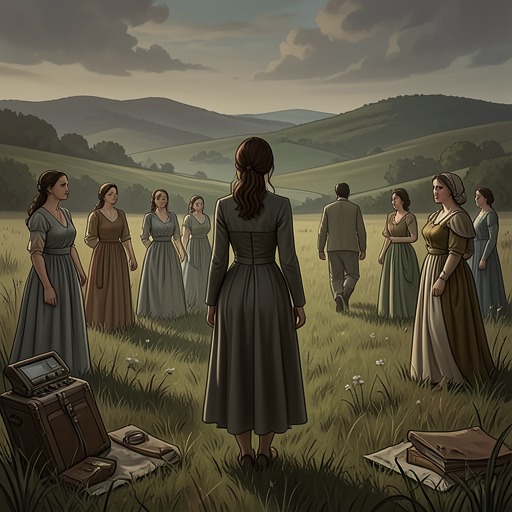
The problem of woman has always been a problem of men
The Second SexThe problem of woman has always been a problem of men is a formulation by Simone de Beauvoir that places the definition of womanhood within a history of male power. In The Second Sex, it names a central asymmetry: men have treated themselves as the universal subject, while women have been made into a problem defined in relation to them. The English wording also turns on a grammatical choice: “woman” means not simply an individual woman, but woman as a social institution and concept.
The Phrase in Context
The phrase appears in the book’s account of how Beauvoir came to examine her own identity. In 1946, she began outlining an autobiographical essay to explain why the first sentence that came to mind when she tried to define herself was “I am a woman.” That question becomes the starting point for a wider inquiry into the distinction between a male subject and a female object, a distinction that shapes both individual lives and the book’s analysis.
Beauvoir’s claim does not present womanhood as a question women alone have posed or controlled. It points instead to the way men have historically organized the terms in which women are understood. The wording makes that structure visible: the “problem” is not simply women’s existence, but the social framing that makes woman an issue to be defined from a male standpoint.
Translation and Meaning
The English translation deliberately renders the French phrase Le problème de la femme a toujours été un problème d’hommes as “The problem of woman has always been a problem of men.” Its translators explain that la femme can mean “the woman,” “woman,” or, depending on context, “women.” Here, “woman” without an article conveys woman as an institution or concept: femininity as determined and defined by society, culture, and history.
That choice distinguishes the phrase from a claim about one particular woman or a collection of individual women. It keeps attention on the category itself—how it is made meaningful and who has authority to define it. The English sentence thus preserves the book’s movement from Beauvoir’s personal question to an analysis of a wider social arrangement.
Historical Stakes
The book’s argument is presented against a history in which women’s opportunities and legal standing remained sharply restricted. When Beauvoir began her project in 1946, French women had only recently gained the vote; legal birth control in France would not arrive until 1967, and legal abortion until 1975. The phrase’s claim about men’s role in defining woman therefore has material as well as conceptual stakes: the problem belongs to institutions and conditions that shape women’s autonomy.
The formulation does not claim that one book or one author brought about later changes in laws and attitudes. Rather, Beauvoir’s work marks a point from which a new understanding could begin. Its enduring force lies in making the act of definition itself an object of scrutiny: if woman has been framed as a problem by men, that framing can be examined rather than accepted as natural or inevitable.