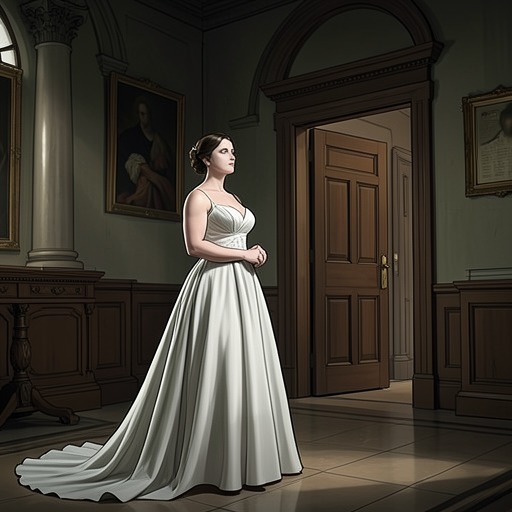
Yasnaya Polyana
The Second SexYasnaya Polyana is the estate to which Sophia Tolstoy travels after her September 23, 1862 wedding. In Simone de Beauvoir’s account of marriage as a threshold that can close rather than open a woman’s future, the estate becomes the setting for Sophia’s separation from her family, her uneasy first days beside Leo Tolstoy, and her diary’s record of the loneliness and disillusionment that follow.
Arrival and Separation
Sophia leaves her family on her wedding evening, in autumn rain. Her diary describes the departure as a wrenching break: she saves her mother’s farewell for last, hears her cry as she climbs into the carriage, and weeps during the journey. Leo is attentive to her needs, but his care does not ease the fear of leaving everyone she loves. The couple speaks little before stopping at Birioulev, where the rooms, furnished in red rep, feel unwelcoming. There Sophia silently serves tea when Leo asks her to do the honors, still too uneasy to address him familiarly or call him by name.
They reach Yasnaya Polyana twenty-four hours after leaving her family. The journey thus brings Sophia not into an established intimacy but into a new household with a man she has known as her fiancé for only a week, and whose past and interests seem foreign to her. The estate marks the physical destination of the wedding journey and the beginning of her separation from the life she has left behind.
The Diary at Yasnaya Polyana
Sophia resumes her diary on October 8, anxious in her new surroundings. She struggles with the fact that her husband has loved before her. Her childhood ideal had been of a beloved man who was wholly new and pure; despite recognizing the childishness of that ideal, she finds it difficult to relinquish. His kisses prompt the painful thought that she is not the first woman he has loved.
The diary makes the estate more than a backdrop to a marriage. It preserves Sophia’s own account of the emotional disjunction between the wedding’s promise and its aftermath: she had admired the celebrated writer she married, yet after their passionate embraces on the wooden balcony at Yasnaya Polyana she felt disgust at carnal love. Away from her family and cut off from her past, she experiences her life beside him as empty and cold, as though it had become an eternal sleep.
Marriage and Confinement
Yasnaya Polyana anchors Beauvoir’s broader analysis of a newly married woman’s loss of an imagined future. Marriage brings Sophia into adult life, but the transition does not feel like a freedom she can direct. The young wife is no longer sheltered by her parents, yet her husband cannot replace the security or authority of her family or grant her independence. In the solitude of the new home, she is tied to a man who remains more or less a stranger and faces the prospect of becoming a mother in turn.
The estate consequently stands within a larger contrast between the girl’s open-ended hopes and the wife’s prescribed routine. Beauvoir describes the home as enclosing the young woman’s share of the world, with familiar domestic tasks repeated day after day. Sophia’s diary gives that argument a specific human setting: the move to Yasnaya Polyana is at once a journey to her husband’s home and an abrupt departure from the people, past, and possibilities she had known.