Discovery of Oil in Czechoslovakia and Contest for the Right to Exploit It
The Secret of ChimneysHerzoslovakia’s oil discovery gives the country’s unresolved political future an immediate financial stake. The struggle over its concessions draws British officials, a restorationist party, and competing financier groups into the succession question: oil rights and loans are tied to the choice of king, while the prospect of Count Stylptitch’s memoirs threatens to disrupt the arrangement. The eventual revelation that Anthony Cade is Prince Nicholas makes the contest over resources inseparable from the hidden identity of the claimant who stands next in line.
From revolution to a resource contest
The oil question arises against the legacy of revolution. Anthony recounts that King Nicholas IV’s marriage to Queen Varaga, whose claimed royal ancestry was fabricated, contributed to discontent in a country where the population valued the monarchy’s perceived legitimacy. An uprising overthrew the royal order and established a republic. The memoirs of Count Stylptitch, who remained committed to monarchical principles after moving to Paris, arrive in that unsettled political climate. At the same time, reports of oil discoveries lead Anthony to suspect that powerful outsiders are beginning to take an interest in Herzoslovakia.
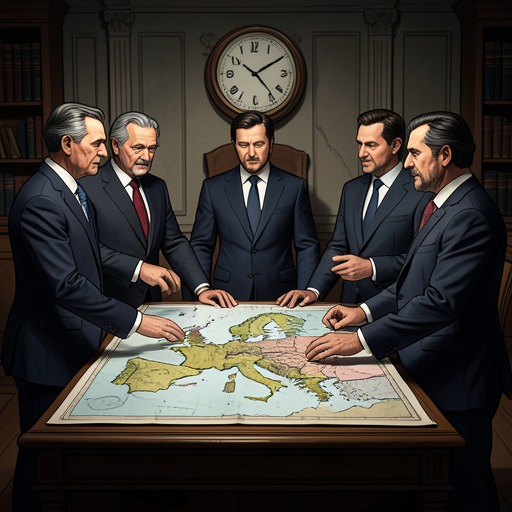
The new resource does not simply promise revenue; it gives foreign actors a reason to influence the country’s political direction. George Lomax tells Lord Caterham that the oil concessions must go to a British company and that Prince Michael Obolovitch’s visit will allow the deal to be conducted at Chimneys under cover of a shooting party. The proposed restoration therefore joins political recognition, finance, and commercial rights in one arrangement.
Competing claims and financial backing
The restoration plan depends on a loan. Lomax explains that supporters of the monarchy are prepared to offer the crown to Prince Michael, who has the support of the British government, in return for financing of about a million pounds from Isaacstein and Co. The loan is intended to help put Michael on the throne; the associated concessions give the financier a stake in the outcome. The succession is thus treated not only as a question of dynastic legitimacy but also as a bargain with practical commercial returns.
Battle’s questioning of Lomax and Isaacstein exposes a second claimant and a rival financial alignment. Lomax identifies Prince Nicholas as probably next in the line of succession. Isaacstein says that Nicholas had presented himself as more sympathetic to modern ideas and republican principles than Michael, and had offered concessions to a group of American financiers in exchange for their support. Meanwhile, the Herzoslovakian Loyalist Party backs Michael. The competing offers make the succession a contest between political camps and competing sources of capital, each seeking to secure influence through the claimant it supports.
The memoirs and the danger of disclosure
Count Stylptitch’s manuscript threatens the secrecy on which the restoration negotiations depend. Lomax insists that its publication at that moment could ruin the plan, even though Lord Caterham doubts that scandalous reminiscences would be unwelcome to readers. The dispute reveals a difference between public appetite for sensational material and the political consequences of its disclosure: the danger lies not in whether the memoirs will sell, but in what they might expose while the crown and concessions are being negotiated.
The manuscript’s arrival coincides with the oil reports, Prince Michael’s expected visit, and rumors surrounding the death of Count Stylptitch. Anthony recognizes that these developments may be connected, though he initially describes their connection as suggestive rather than established. His own immediate commission is to deliver the manuscript to a London publisher by October 13 in exchange for a thousand pounds. He considers taking his earnings to Herzoslovakia and aligning himself with the republic, even imagining that he might become its president. That early, half-playful intention contrasts with the later discovery that his identity makes him relevant to the royal succession itself.
Nicholas, identity, and the unresolved deal
After Prince Michael’s murder, Battle points out that Prince Nicholas is the next heir and says there is reason to believe he had been in the United States, raising money on his expectations. The fact that a claimant’s whereabouts and identity are uncertain becomes politically consequential: the financing and concession negotiations cannot be separated from the question of which prince can actually assume the throne.
At the end, Anthony resolves that uncertainty by telling Isaacstein that he is Nicholas. He explains that he had spread the report of his own death in the Congo and had emerged from there as Anthony Cade, having promised Isaacstein a prince. The revelation changes the meaning of the earlier competition: Nicholas was not merely an absent alternative claimant seeking American support, but Anthony himself. The oil concessions remain a bargaining instrument in a wider struggle over restoration, finance, and succession, while the exposed identity makes the concealed claimant a participant in the negotiations.