Herzoslovakian Revolution
The Secret of ChimneysThe Herzoslovakian Revolution ended the Obolovitch monarchy with the deaths of King Nicholas IV and Queen Varaga and the proclamation of a republic. In the novel, that upheaval is both a remembered political catastrophe and an active force: the question of succession gives a later restoration scheme its stakes, while the queen’s survival and concealed identity connect the old regime’s violence to the murders at Chimneys.
Causes and Overthrow
King Nicholas IV’s marriage to Queen Varaga had made the royal household vulnerable to popular resentment. As Anthony Cade recounts, Varaga had been a Paris music-hall performer before the king arranged for her to be presented as Countess Popoffsky, supposedly of Romanov descent. She was married to Nicholas at the cathedral in Ekarest, with two reluctant archbishops officiating, and crowned queen. The king secured his ministers’ acquiescence, but that political arrangement did not win the public’s acceptance.
Anthony describes Herzoslovakia as aristocratic and reactionary, with a strong preference for rulers regarded as genuinely royal. Discontent and suppression preceded a final uprising: insurgents stormed the palace, killed the king and queen, and proclaimed a republic. The event is presented not merely as a change of government but as the destruction of the ruling family and the beginning of a new political order.
Survivors and the Unsettled Past
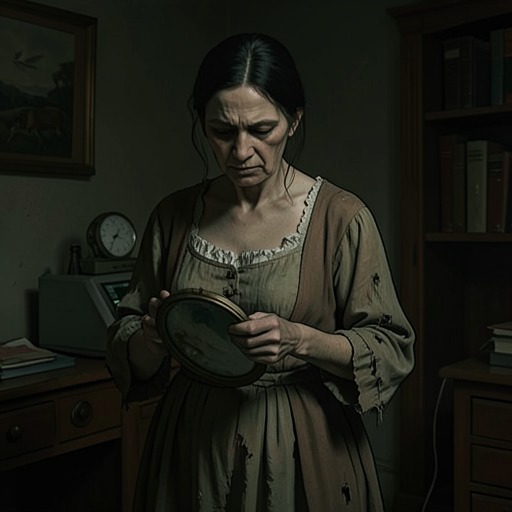
The revolution’s apparent conclusion concealed a crucial uncertainty about Queen Varaga’s fate. At Chimneys, Baron Lolopretjzyl insists that she and the king were killed on the palace steps and that her body was recovered. Anthony counters that the body was mutilated beyond recognition, leaving room for a deception. His reconstruction is that Varaga escaped, eventually reached America, and lived in hiding, fearing the Comrades of the Red Hand, who had helped promote the revolution and regarded her as an enemy.
That possibility turns the revolution’s aftermath into part of the present-day mystery. Anthony connects Varaga’s later concealment to her return under another identity and her eventual search for the historic diamond. The former queen’s past is therefore not safely confined to a defeated dynasty: the uncertainty surrounding her death allows it to re-enter the story as a concealed identity with direct consequences.
Republic and Restoration Politics
The republic endured after the uprising, though Anthony says political violence continued, including the assassination of presidents. Count Stylptitch, a committed monarchist, went to Paris after Nicholas’s death. He was later approached about returning to serve as president, but refused, remaining loyal to his monarchical principles. His reported involvement in Balkan political intrigues also suggests that the exile had not withdrawn from politics altogether.
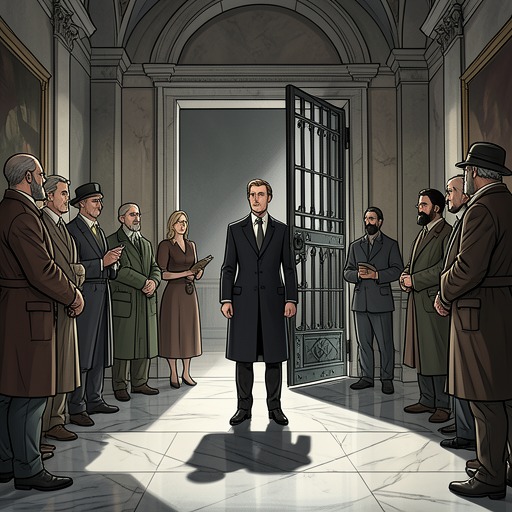
Years later, a proposed restoration made the revolution’s unresolved legacy a practical matter. George Lomax explains that people in Herzoslovakia want to restore the monarchy and are prepared to offer the crown to Prince Michael Obolovitch, who has the support of the British government. The plan is tied to finance: Prince Michael is willing to grant concessions to Isaacstein and Company in exchange for a loan of about a million to secure his accession. The competing claims of hereditary right, foreign support, and commercial advantage show how the republic’s founding upheaval continues to shape decisions beyond the country.
Succession and the Revolution’s Consequences
The revolutionary past also creates the conditions for a succession crisis. When Superintendent Battle asks who stands next in line after Prince Michael’s murder, George Lomax reluctantly identifies Prince Nicholas as the likely heir. Battle confirms that Prince Nicholas Obolovitch is Michael’s first cousin and reports that he had recently been in the United States, raising money against his prospects. These exchanges reveal that the restoration question depends not only on political support but on the survival and identity of the claimant.
The mystery’s final disclosure changes the meaning of that uncertainty. Anthony admits that Prince Nicholas was believed dead because he had spread a report of his own death; he then identifies himself as Nicholas Sergius Alexander Ferdinand Obolovitch, living under the name Anthony Cade. His assumed death and adopted identity have allowed him to reappear as the potential heir. The revolution thus has consequences reaching beyond the fall of the monarchy: its violence, altered political order, and disputed succession make a concealed prince central to the possibility of restoration.
Narrative Significance
The revolution is initially recounted as background, but its details steadily become clues. The king’s controversial marriage explains the popular revolt; the reported deaths establish why the dynasty is thought to have ended; and the later restoration negotiations expose the material interests built around hereditary claims. The possibility that Queen Varaga survived then unsettles the accepted account of the uprising, just as Anthony’s revelation unsettles the assumption that Prince Nicholas is dead.
The contrast between a republic born from palace violence and a restoration pursued through diplomacy, loans, and concessions gives the political history its continuing force. The revolution appears finished in the public record, yet its disputed survivors and heirs remain active in the plot. Its decisive consequence is not only the replacement of a monarchy by a republic, but the creation of a contested past that can still determine who may rule.