King Nicholas IV
The Secret of ChimneysKing Nicholas IV is the former king of Herzoslovakia, whose marriage to Queen Varaga became a flashpoint in the conflict between the monarchy and the country’s aristocratic, reactionary populace. His assassination in a revolution ended his reign and established a republic, but did not settle the question of who might inherit the throne; years later, Nicholas’s presumed-dead cousin is identified as the next heir in a new restoration effort.
Reign and Marriage
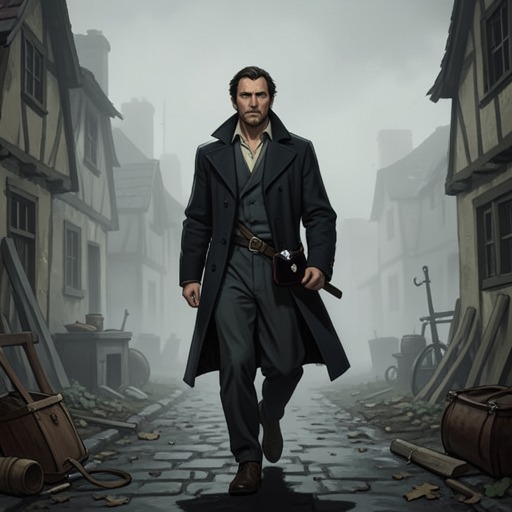
Anthony Cade describes Herzoslovakia as a Balkan state whose last king, Nicholas IV, was assassinated about seven years before the events of the novel. The country had been a republic ever since. The account presents the revolution not as a distant constitutional change but as an enduring source of political instability.
Nicholas married a Paris music-hall performer whose origins and supposed royal lineage were matters of dispute. She was presented as Countess Popoffsky and said to have Romanoff blood; Nicholas married her in the cathedral at Ekarest, with two unwilling archbishops conducting the ceremony, and she was crowned Queen Varaga. He secured the ministers’ acquiescence, but, as Anthony explains, failed to reckon with a populace that valued supposedly authentic royal standing. The marriage thus exposed a divide between the king’s ability to arrange political approval and the public’s refusal to accept the queen’s claimed status.
Revolution and Death
Discontent over the royal marriage grew amid repression. The rising that followed stormed the palace, killed Nicholas and Queen Varaga, and proclaimed a republic. The king’s death was therefore both a personal end and the decisive rupture that brought down the Obolovitch monarchy.
The republic endured, although Anthony characterizes its politics as persistently turbulent, including the assassination of more than one president. Nicholas’s overthrow did not erase royalist feeling or the possibility of restoration. Instead, his death became the historical premise for later disputes over whether the monarchy should return and who could legitimately occupy its throne.
Legacy and Succession
Years after the revolution, supporters of restoring the monarchy were prepared to offer the crown to Prince Michael, whose cause had the support of the British government. The proposed arrangement linked restoration to a substantial loan from Herman Isaacstein’s company and to concessions in return. The memoirs of Count Stylptitch threatened to disrupt those negotiations, showing how the history of Nicholas’s reign remained politically sensitive rather than merely biographical.
After Prince Michael’s murder, the succession question returned to the foreground. George Lomax identifies Prince Nicholas Obolovitch, Michael’s first cousin, as the next heir. The claim later acquires a personal dimension when Anthony Cade tells Isaacstein that he had spread the report of his own death in the Congo and had emerged under the name Anthony Cade. He identifies himself as Nicholas Sergius Alexander Ferdinand Obolovitch. The revelation connects Nicholas IV’s extinguished reign to the possibility of a living dynastic successor, while underscoring that the restoration project depends on contested histories, concealed identities, and political bargains.