Queen Varaga’s concealed identity
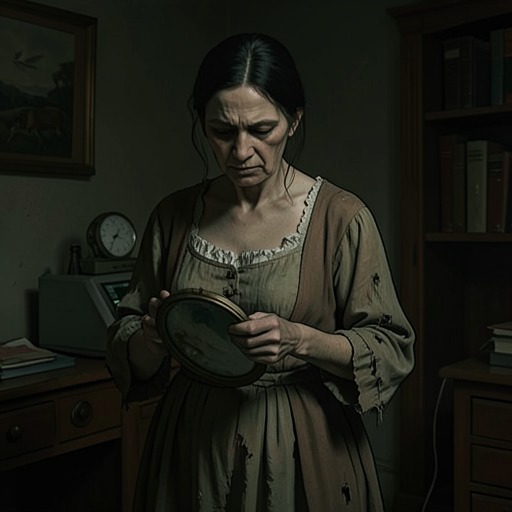
The Secret of ChimneysQueen Varaga’s concealed identity begins with Angèle Mory, a Parisian actress whose assigned role in a revolutionary conspiracy became the opening to a more ambitious self-invention. Recruited to ensnare King Nicholas IV, she instead won his love, entered Herzoslovakian royalty as Countess Varaga Popoleffsky, and became queen. Her royal persona hid her origins, her earlier criminal associations, and a secret correspondence with King Victor; after her death was reported in a revolution, the letters bearing Virginia Revel’s name exposed how thoroughly identity had been used as disguise and instrument.
From actress to queen
Before she became Queen Varaga, Angèle Mory was a young actress at the Folies Bergeres in Paris. The Sûreté suspected that she was connected to the daring robberies carried out by King Victor, who then operated under the name Captain O’Neill, but the authorities had not secured proof. This association placed her in a world of assumed names and covert operations before her royal life began.
When King Nicholas IV was due to visit Paris, the Sûreté received special instructions to protect him and to monitor the Comrades of the Red Hand, a revolutionary organization. The group approached Angèle with a large bribe: she was to captivate the young king and draw him to a place where the conspirators could act. She accepted their offer, apparently agreeing to serve as bait in their plan.
The assignment did not stay within the limits her employers intended. Angèle won King Nicholas’s love, and he showered her with jewels. She saw a possibility beyond becoming a king’s mistress: she wanted to be a queen. Introduced into Herzoslovakia as Countess Varaga Popoleffsky, supposedly a distant offshoot of the Romanoffs, she eventually became Queen Varaga. Her rise recast a hired actress as a figure of dynastic legitimacy, with a manufactured lineage helping disguise the distance between her origins and her public status.
The royal identity and its dangers
The transformation gave Angèle a title and a public role, but it did not erase the circumstances that had brought her to the king. The Comrades of the Red Hand regarded her eventual course as betrayal and twice tried to kill her. The conflict between revolutionary sponsors and royal consort made her new position dangerous: the identity she had adopted was not simply an escape from her former life, but a stake in the political struggle that had first drawn her into it.
A revolution eventually broke out in Herzoslovakia, and both the king and queen were believed to have perished. Their bodies were recovered horribly mutilated and scarcely recognizable, in a scene described as evidence of popular fury toward the low-born foreign queen. That report appeared to close the story of Angèle Mory by fixing her in public memory as a dead monarch. The later disclosure of her continuing ties and concealed communications complicates that apparent ending: the queen’s political identity and her private life were not as fully extinguished as the reported deaths suggested.
Secret correspondence and borrowed names
Even from the Herzoslovakian court, Queen Varaga continued to correspond with her former confederate, King Victor. The evidence presented to Virginia Revel leaves open whether King Victor had devised the larger scheme from the beginning, but it establishes that the queen and he remained connected. Their letters were written in English for safety and signed with the name of an English woman then at the Embassy.
That woman was Virginia Revel. The letters were addressed to Captain O’Neill at his rooms in Paris and read as intimate communications from a guilty woman to her lover. Using Virginia’s name did more than conceal the queen’s identity: it transferred the appearance of guilt to an uninvolved person whose denial might not be believed. The forged signature made identity a practical tool of concealment, turning a recognizable public name into a shield for clandestine correspondence and a possible liability for its unwitting owner.
When the truth was explained, Virginia recognized the letters and said that she had long wondered about them. Her response gives the revelation a personal consequence: the apparent mystery of documents carrying her name was not merely a matter of political intrigue, but an unexplained intrusion into her own identity. Bill Eversleigh reacted indignantly to the trick. The disclosure therefore exposes both the queen’s deception and the vulnerability of someone whose name has been appropriated to support it.
Royal status and criminal continuity
The account links the queen’s concealed past to the fate of the royal jewels. After the king and queen were assassinated, jewels that had fallen into the hands of the crowd made their way to Paris. It was discovered that in nine cases out of ten the principal stones had been replaced by paste, including stones among the famous Herzoslovakian collection. The account presents this as evidence that Angèle’s old activities continued beneath her royal status: becoming queen had not meant abandoning the methods associated with her earlier life.
The letters to King Victor acquire an additional significance in light of that discovery. They connected the queen to her former associate, while the movement of the altered jewels suggested that her criminal practice endured after her rise to the throne. The evidence does not establish that King Victor directed every part of her conduct, but it places their relationship alongside the continuing pattern of concealment and substitution: a borrowed signature, a fabricated aristocratic ancestry, and valuable stones replaced with imitations.
Queen Varaga’s concealed identity is thus not a single disguise but a succession of public and private selves. Angèle Mory became Countess Varaga Popoleffsky and then queen without severing her links to King Victor or the criminal world attributed to her earlier years. Her reported death seemed to make the royal identity final; the recovered letters and the trail of substituted jewels instead reveal a life in which status, name, and appearance repeatedly obscured the person and activities beneath them.